
OPEN FROM 9AM TO 5PM – CLOSED ON WEEKENDS
Choosing the right spray booth can shape paint quality, worker comfort, energy use, and production consistency. Global buyers face many options, including crossdraft, downdraft, side-draft, open-face, enclosed, portable, powder-coating, water-wash, and dry-filter designs. Each type controls air movement differently. Each creates trade-offs.
As industrial finishing consultant Steve Love explains, “A spray booth is not just a box with a fan; it is a controlled process.” That view matters when comparing suppliers. A polished exterior means little if airflow is uneven, filters clog quickly, or lighting leaves shadows across a vehicle panel. Buyers should examine booth dimensions, airflow direction, filtration stages, fan performance, noise levels, maintenance access, and control systems. They should also verify documentation, installation requirements, and applicable workplace and environmental standards in the destination market.
This guide compares ten common spray booth types for international purchasers. It focuses on practical selection rather than impressive specifications. A compact dry-filter booth may suit a small workshop, while a downdraft booth can support demanding automotive refinishing. Powder applications require different ventilation and recovery considerations. No single design wins everywhere.
That is the difficult part.
Supplier claims still need testing. A catalogue cannot reveal every operating weakness. Real experience includes checking filter loading after long shifts, standing inside the work zone, and asking how quickly replacement parts arrive. Some recommendations may change after site measurements. That is acceptable. Careful buyers leave room for reconsideration before committing to a costly spray booth.
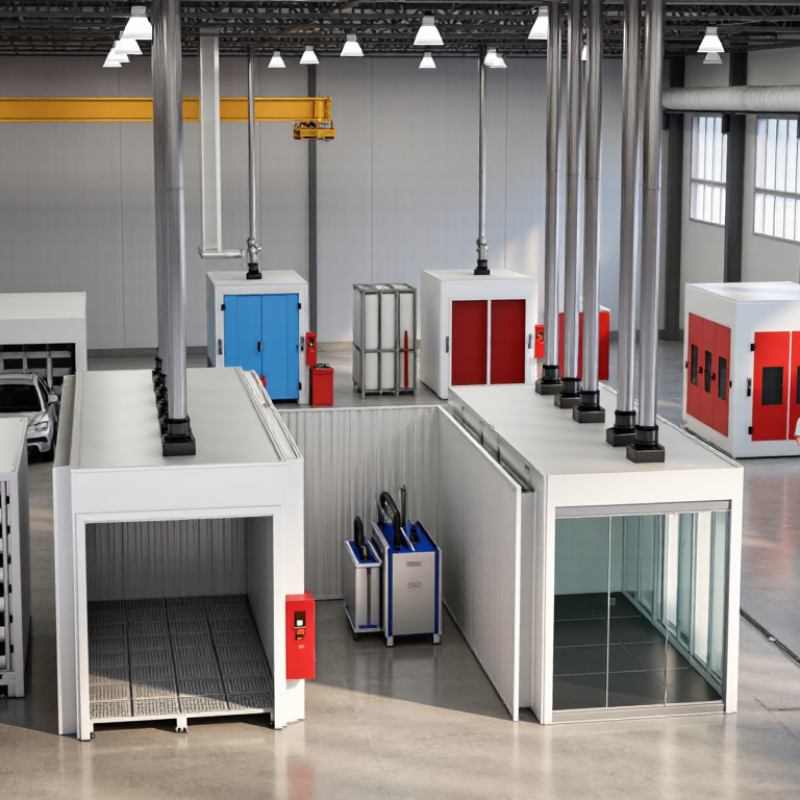
Spray booths control overspray, airborne particles, and solvent vapors. Their core parts include a chamber, airflow system, filters, lighting, exhaust duct, and control panel. Common designs include crossdraft, downdraft, side-draft, open-face, enclosed, dry-filter, wet, pressurized, walk-in, and robotic booths. Each type changes capture efficiency, installation cost, and maintenance effort.
Airflow is the operating principle. Clean air enters the booth, moves across the workpiece, and carries contaminants toward filters or an exhaust stack.
OSHA 29 CFR 1910.107 requires mechanical ventilation, suitable electrical equipment, and grounding for spray-finishing operations. NFPA 33 also sets requirements for booth construction, airflow, ignition control, and fire protection.
These rules are practical benchmarks, not optional decoration. EPA AP-42 emission-factor guidance reminds buyers that coating processes can release volatile organic compounds, depending on material and application conditions. A clean filter is not a complete safety strategy. Poorly balanced airflow can leave a visible haze near corners.
Tips: Measure face velocity at several points, not only near the center. Check filter pressure weekly. Ask for airflow testing records and replacement-filter specifications. In my view, buyers often overvalue booth size and undervalue exhaust design. That choice can create uneven finishes, higher energy use, and uncomfortable working conditions. A perfect booth does not exist; the correct design depends on coating volume, workpiece shape, local climate, and verified maintenance skills.
Spray booths are best classified by airflow, structure, and application. Airflow strongly affects finish quality, overspray control, and worker visibility. Crossdraft booths move air horizontally across the workpiece. Semi-downdraft booths direct air from the ceiling toward the rear exhaust. Downdraft booths pull contaminated air downward through the floor, helping reduce surface dust. Side-draft designs offer a practical middle ground. Open-face booths suit smaller parts, while enclosed booths provide better process control.
Structure creates another useful classification. Common options include panelized booths, walk-in rooms, tunnel booths, portable units, and modular systems. Each design supports different production volumes and installation limits. Application also matters. Automotive refinishing may require a downdraft layout and precise lighting. Furniture work often needs wide access for cabinets or long panels. Industrial coating lines may favor tunnel booths with steady part movement. Powder coating booths usually require specialized recovery and filtration arrangements. These categories overlap. A booth can be modular, downdraft, and designed for furniture at the same time.
Tips: Match booth size to the largest workpiece, not today’s average item. Check airflow readings at several points, because one strong reading can mislead. Confirm filter access, lighting, cleaning space, and maintenance procedures before purchase. Specifications can look impressive. Real performance may still vary with door position, filter loading, and operator habits. A perfect classification is rarely possible; a careful site assessment remains more reliable.
Top 10 Spray Booth Types for Global Buyers
Ten Spray Booth Types for Different Coating and Production Needs
Spray booth selection starts with the coating, workpiece size, and production rhythm. An open-face booth suits furniture panels, metal frames, and occasional spraying. An enclosed booth provides stronger containment for repeatable finishing. Crossdraft booths move air from the front toward rear filters, while side-draft designs pull overspray across the operator’s working area. Downdraft booths draw air downward through the floor, helping reduce dust on automotive-sized parts. Semi-downdraft models balance performance and investment. They can fit medium-scale workshops.
Dry-filter booths are practical for common liquid coatings and simpler maintenance. Water-wash booths capture overspray through a wet curtain, but they require water treatment and regular sludge removal. Pressurized booths support controlled environments when temperature, humidity, and cleanliness matter. Powder coating booths use cartridge or cyclone recovery systems and need suitable grounding. Mobile booths help short production runs or changing layouts. Modular booths offer easier expansion when output grows.
In practical commissioning, airflow readings matter more than a brochure’s airflow figure. Check filter loading, lighting, access doors, and operator visibility. A booth may look efficient but perform poorly after filters become saturated. That part is often underestimated. I would also test noise levels during a full shift, not for five minutes. Local ventilation, fire protection, electrical, and worker-safety requirements must be verified by qualified professionals. Production teams should record coating consumption, cleaning time, and defect rates before choosing a final configuration.
Spray booth selection should begin with the coating process, not appearance. Crossdraft, downdraft, side-draft, open-face, enclosed, and walk-in booths manage airflow differently. Dry-filter and water-wash designs control overspray through separate methods. Compact booths suit small parts, while explosion-protected systems support higher-risk applications when properly specified.
Airflow must capture particles before they reach workers or escape the enclosure. Measure face velocity, pressure loss, and replacement-air volume during commissioning. A booth that feels powerful may still create dead zones near corners. Exhaust ducts need suitable materials, access panels, and safe discharge locations. Local authorities may also require fire detection, grounding, alarms, and documented maintenance.
Energy use deserves equal attention. Variable-speed fans can reduce power during lighter workloads, but incorrect settings may weaken capture. Heat recovery can lower heating demand in cold regions, although its design must prevent contaminant transfer. Emissions performance depends on filters, coating chemistry, operating habits, and inspection frequency. Keep filter-loading records and replace media before airflow collapses.
Global buyers should request airflow drawings, noise data, electrical specifications, and test records. Verify requirements with qualified local professionals because standards differ by country and industry. No booth is perfect. A lower purchase price can become expensive through energy waste, filter disposal, or repeated compliance changes.
Top 10 Spray Booth Types for Global Buyers
How Buyers Can Compare Specifications and Select the Right Booth
Buyers often compare dry-filter, water-wash, downdraft, crossdraft, side-draft, open-face, enclosed, portable, curing, and modular spray booths. Each type suits different products, coating volumes, floor plans, and maintenance routines. A low purchase price can become expensive when filters clog quickly or airflow becomes unstable.
Start with the workpiece dimensions and coating process. Record its length, height, width, weight, and turning space. Then check booth airflow, air changes, capture velocity, fan capacity, lighting, filter area, and noise levels. A large booth is not automatically better. Poorly balanced airflow may leave overspray on corners, floors, or freshly coated surfaces.
Material handling also matters. Compare door clearance, floor loading, trolley access, exhaust routing, and cleaning time. Ask whether the booth supports water-based or solvent-based coatings under applicable local requirements. Electrical components, ventilation, fire protection, and emissions controls should be reviewed by qualified professionals. Specifications can look impressive on paper. They still need site verification.
During supplier discussions, request airflow test records, filter replacement data, installation drawings, and maintenance schedules. Check whether measurements use the same units and operating conditions. This is where comparisons often become imperfect. A booth rated at one airflow may perform differently after filters collect residue. Leave room for future production changes, but do not pay for unused capacity. The right choice depends on measurable process needs, not a fashionable booth layout.
Comparative suitability scores are based on typical airflow control, overspray containment, maintenance requirements, and application flexibility. Higher scores indicate stronger overall suitability for general industrial finishing.
Buyers should also verify booth dimensions, airflow velocity, filtration stage, fire protection, VOC regulations, electrical classification, heating requirements, and local compliance standards before selecting a model.