| United States |
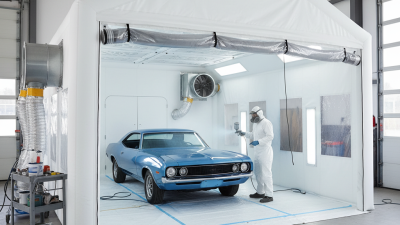
Crossdraft
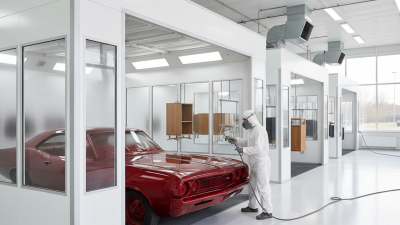
Downdraft
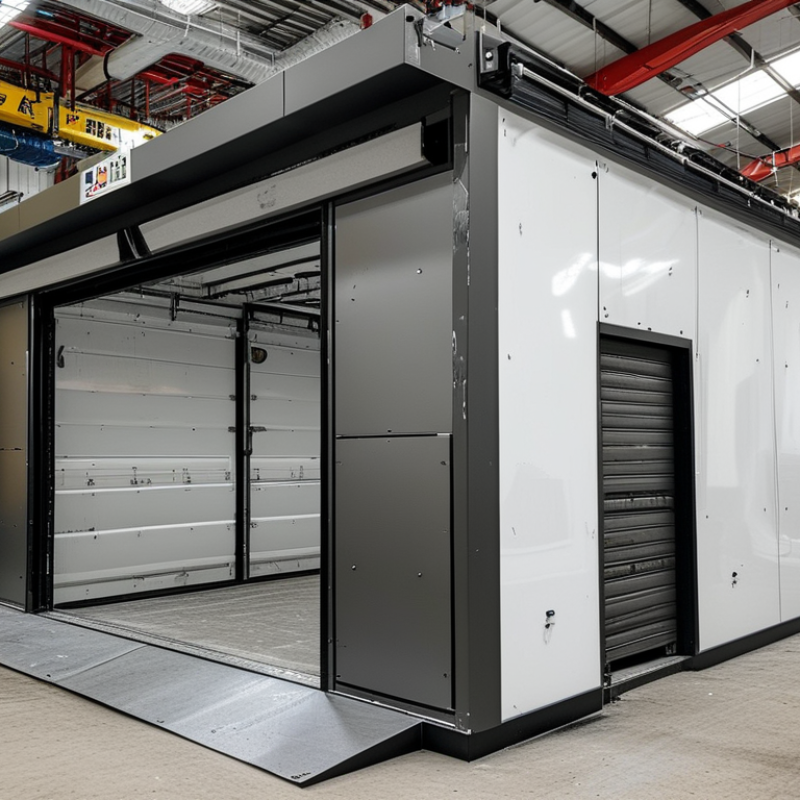
Temporary enclosure
|
Automotive refinishing, industrial parts, agricultural equipment, machinery, and maintenance coatings. |
OSHA 29 CFR 1910.94(c) for spray-finishing operations; NFPA 33 requirements for spray application using flammable or combustible materials; local building, electrical, fire, and air-quality permits may also apply.
|
Mechanical exhaust should discharge outdoors where required, maintain suitable airflow, and prevent recirculation of contaminated air. Electrical equipment in classified areas should be appropriately rated. Fire protection, ignition-source control, grounding, and accessible emergency shutoff are normally required.
|
VOC and hazardous-air-pollutant rules may be set by the Environmental Protection Agency and state or local agencies. Overspray filtration, compliant spray equipment, waste-paint management, and recordkeeping may be required.
|
Confirm the authority having jurisdiction, permit pathway, booth listing or field-approval requirements, exhaust termination, makeup air, filter type, fire suppression interface, and whether the rental includes installation and commissioning.
|
| Canada |
Modular booth
Containerized system
Open-face booth
|
Industrial maintenance, transportation equipment, metal fabrication, commercial vehicles, and component finishing. |
Provincial or territorial occupational-health rules apply. Common compliance references include the Canadian Electrical Code, local fire codes, WHMIS requirements for hazardous products, and applicable municipal building and air-quality rules.
|
The installation should provide controlled exhaust, safe makeup air, grounding and bonding, suitable electrical classification, and protection against ignition sources. Cold-weather projects require freeze protection and heated makeup-air planning.
|
VOC limits, solvent handling, waste disposal, and emission approvals vary by province and municipality. Filters should be selected for the coating chemistry and replaced before pressure drop affects airflow.
|
Identify the province, municipality, winter design temperature, electrical certification route, ventilation discharge location, fire-separation requirements, and responsibility for hazardous-waste disposal.
|
| European Union / EEA |
CE-marked modular booth
ATEX-suitable configuration
Low-VOC process
|
Automotive, aerospace components, industrial machinery, furniture, metal products, and controlled finishing environments. |
ATEX Directive 2014/34/EU concerns equipment and protective systems for potentially explosive atmospheres. ATEX Workplace Directive 1999/92/EC concerns worker protection and hazardous-area management. EN 16985:2023 addresses spray booths for organic coating material.
|
The operator should complete hazardous-area classification and use equipment suitable for the identified zone. Ventilation, airflow monitoring, interlocks, grounding, emergency stop functions, and ignition-source control should be documented.
|
VOC emissions may be regulated under the Industrial Emissions framework, national rules, and local permits. Solvent-based coating operations may require abatement or approved operating procedures; water-based coatings can reduce, but not eliminate, compliance obligations.
|
Request the EU Declaration of Conformity, technical file information, ATEX equipment data, zone classification, airflow test results, noise data, filter specifications, and documentation in the local language where required.
|
| United Kingdom |
Relocatable booth
Downdraft booth
Maintenance enclosure
|
Vehicle repair, industrial coating, fabrication, plant maintenance, and contract finishing. |
The Dangerous Substances and Explosive Atmospheres Regulations 2002, Control of Substances Hazardous to Health Regulations 2002, Provision and Use of Work Equipment Regulations 1998, and applicable fire-safety and environmental-permitting rules are relevant.
|
A documented risk assessment, hazardous-area assessment, effective local exhaust ventilation, suitable electrical equipment, housekeeping, grounding, and emergency procedures are expected. LEV systems should be examined and tested at appropriate intervals.
|
VOC controls may arise from local-authority environmental permits and solvent-emission requirements. Used filters, solvent residues, and contaminated materials must be handled as controlled waste when applicable.
|
Confirm DSEAR zoning, LEV testing responsibilities, planning or building-control needs, fire-risk assessment, electrical certification, operator training, and waste-transfer documentation.
|
| Australia and New Zealand |
Modular spray booth
Crossdraft system
Outdoor temporary unit
|
Automotive repair, mining equipment, agricultural machinery, marine work, industrial maintenance, and fabricated products. |
Australia commonly references AS 4114.1 and AS 4114.2 for spray-painting booths, including design, construction, installation, and commissioning. Work health and safety duties are implemented through jurisdiction-specific legislation. New Zealand requirements include applicable WorkSafe guidance and local building, electrical, and hazardous-substance rules.
|
Exhaust airflow, fan selection, hazardous-area electrical equipment, fire protection, separation distances, grounding, and safe access should be engineered for the coating process. Hot and remote locations require attention to makeup-air temperature and equipment derating.
|
State, territory, or local environmental authorities may control VOC emissions, odour, outdoor exhaust, and waste handling. Overspray arrestors and correct filter loading are important for both emissions and fire risk.
|
Verify the applicable state or territory, certification and inspection route, hazardous-substance inventory, cyclone or high-wind anchoring, weather protection, electrical requirements, and exhaust discharge clearance.
|
| Japan |
Compact booth
Factory modular booth
Low-emission process
|
Automotive refinishing, precision components, machinery, electronics enclosures, and factory maintenance. |
Requirements may involve the Industrial Safety and Health Act, Fire Service Act, Building Standards Act, local fire-prevention ordinances, and applicable Japanese Industrial Standards. Local authorities determine many installation and fire-safety details.
|
Exhaust design, solvent storage, ignition-source control, grounding, fire separation, and ventilation performance should be reviewed with the local fire department and building authority. Compact sites require careful access and emergency-egress planning.
|
VOC and odour controls can be influenced by the Air Pollution Control Act, local ordinances, coating type, and facility scale. Filter selection and solvent-recovery or adsorption systems may be appropriate for higher-emission processes.
|
Confirm Japanese-language documentation, local fire-department consultation, floor loading, seismic anchoring, electrical requirements, exhaust noise limits, and whether the temporary installation is treated as a building or equipment installation.
|
| China |
Factory modular booth
Dry-filter booth
High-volume enclosure
|
Automotive, rail, heavy equipment, furniture, metal products, and general industrial coating. |
Common references include GB 14444-2006 for safety regulations relating to spray-painting rooms and paint booths, together with applicable national, provincial, and municipal fire, electrical, occupational-health, and environmental standards.
|
The project should address airflow, explosion-risk control, electrical protection, grounding, fire separation, safe solvent storage, emergency shutdown, and inspection access. Local fire and environmental authorities may impose additional requirements.
|
VOC limits and treatment requirements vary by industry and locality. Dry filters, activated-carbon adsorption, catalytic or thermal oxidation, and other controls may be required depending on solvent load and emission concentration.
|
Confirm the city and industrial-zone rules, local acceptance process, Chinese technical documents, fire-review requirements, VOC treatment method, exhaust-stack specifications, and hazardous-waste contractor arrangements.
|
| India |
Industrial booth
Portable enclosure
Crossdraft system
|
Automotive components, engineering products, machinery, fabricated steel, commercial vehicles, and maintenance work. |
Compliance may involve the Factories Act framework as implemented by the relevant state, electrical and fire authorities, hazardous-chemical rules, local pollution-control-board consent, and applicable Indian Standards.
|
Ventilation, fire prevention, explosion-risk control, electrical safety, grounding, safe solvent storage, and worker respiratory protection should be documented. Dust and overspray accumulation must be controlled through housekeeping and planned filter changes.
|
State Pollution Control Boards may regulate VOCs, particulate emissions, stack design, consent conditions, and hazardous waste. Water-based coatings can reduce solvent emissions but still generate overspray and contaminated waste.
|
Identify the state and industrial zone, required consent or authorization, fire NOC pathway, power supply, monsoon protection, ambient-temperature range, exhaust height, and operator PPE and training needs.
|
| Middle East |
Containerized booth
Outdoor modular booth
Climate-controlled booth
|
Oil and gas maintenance, construction equipment, marine assets, transport fleets, steel structures, and shutdown projects. |
Requirements are normally set by the national or municipal authority, civil-defence authority, occupational-safety rules, fire code, and project-specific standards. International fire and hazardous-area practices are often used as technical references.
|
High ambient temperatures, sand, humidity, and outdoor exposure affect fan selection, filtration, cooling, makeup air, and enclosure integrity. Fire detection, extinguishing provisions, grounding, hazardous-area equipment, and emergency access require project review.
|
VOC, odour, dust, and waste controls depend on the country, free-zone rules, project permit, and client requirements. Closed-loop or higher-efficiency filtration may be preferred near occupied areas.
|
Confirm civil-defence approval, hazardous-area classification, outdoor anchoring, wind loading, cooling capacity, dust filtration, generator compatibility, noise limits, and permit conditions for temporary structures.
|
| Latin America |
Portable booth
Crossdraft booth
Containerized unit
|
Automotive repair, agricultural machinery, mining equipment, industrial maintenance, and general metal finishing. |
Requirements vary by country and municipality and may include national occupational-safety standards, fire-code approval, electrical certification, hazardous-chemical rules, and environmental licensing.
|
Safe exhaust discharge, airflow, grounding, fire protection, ignition-source control, emergency shutdown, and adequate separation from occupied or ignition-prone areas should be verified before operation.
|
Local authorities may regulate VOCs, particulate emissions, odour, wastewater, contaminated filters, and solvent waste. Environmental requirements are often more stringent in major urban and industrial zones.
|
Confirm the country, state or province, municipality, local-language manuals, import and electrical certification, fire inspection, waste contractor, climate conditions, and availability of replacement filters.
|