

OPEN FROM 9AM TO 5PM – CLOSED ON WEEKENDS
The global demand for Silicone Adhesive is expanding across electronics, automotive, construction, healthcare, and renewable energy. Fortune Business Insights projects steady market growth through 2032, supported by durable bonding and weather resistance. Grand View Research also identifies construction, transportation, and electronics as major application sectors. These reports differ in market size estimates, however. That difference deserves attention.
For global buyers, manufacturer selection involves more than comparing catalog prices. A reliable supplier should demonstrate consistent viscosity, documented curing conditions, and stable batch performance. Technical teams often examine peel strength, shear strength, elongation, temperature resistance, and substrate compatibility. A clear technical data sheet matters. So does laboratory evidence. ISO 9001 certification can support process confidence, but it cannot replace independent product testing. Buyers should request recent certificates, safety documentation, sample evaluations, and references from comparable projects.
This 2026 overview examines leading Silicone Adhesive manufacturers through a practical purchasing lens. It considers product breadth, manufacturing capacity, customization, export experience, quality control, and technical support. Regional supply chains also receive attention, especially for buyers managing lead times and changing compliance requirements. Some rankings remain debatable because private manufacturers disclose limited financial and production data. That limitation should be acknowledged, not hidden. The strongest supplier on paper may perform poorly on a difficult substrate or in a humid factory. Careful testing remains essential. A small trial can reveal more than a polished brochure.
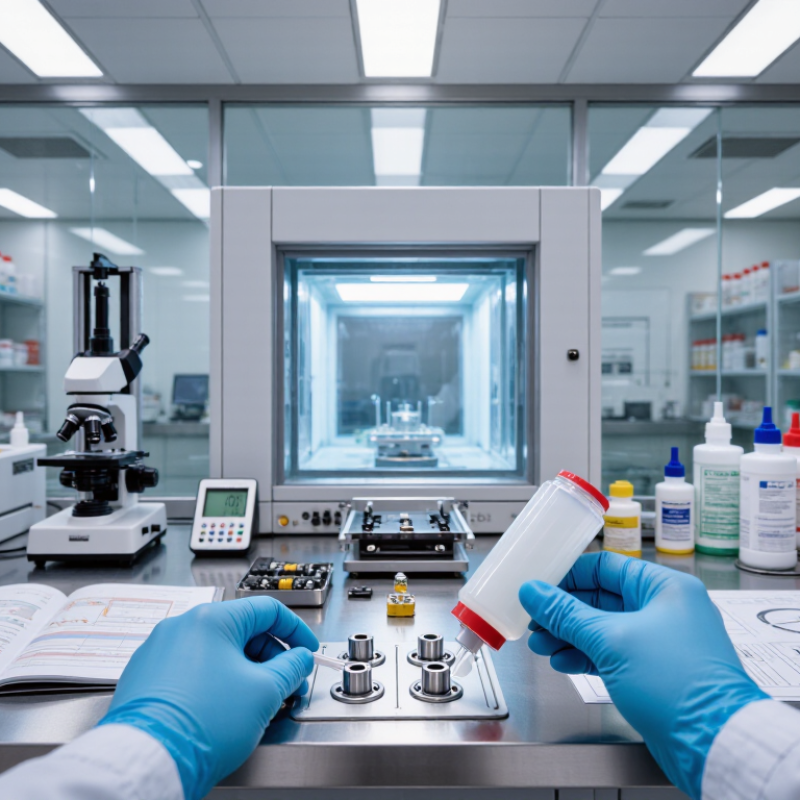
Silicone adhesives are flexible bonding materials made from silicone polymers and curing agents. They form a rubber-like layer as moisture, heat, or another trigger completes the curing process. Unlike rigid epoxies, they can absorb vibration, movement, and temperature changes without cracking quickly.
Global buyers use them for glass, metal, coated surfaces, plastics, and electronic components. A window frame may face rain and sunlight, while an LED assembly may experience repeated heating and cooling. Silicone adhesives help seal gaps and maintain contact in these conditions. Their resistance to moisture and many weathering effects makes them practical for construction, lighting, transportation, and industrial equipment.
But selection requires more than checking a technical data sheet. Buyers should compare cure speed, viscosity, hardness, adhesion, working temperature, and packaging stability. A fast-curing product can improve production flow, yet it may reduce adjustment time. Surface preparation also matters. Dust, oil, or an incompatible coating can weaken an otherwise suitable bond. Small test panels often reveal problems before a full shipment is approved. That step may feel slow. It is usually cheaper than repairing failed assemblies. In my experience, buyers sometimes focus too heavily on price and overlook storage conditions, shelf life, or regional climate. That is a mistake worth reviewing.
In 2026, global buyers will meet several types of silicone adhesive manufacturers. Integrated producers control raw materials, formulation, curing, and packaging. They often support stable supply and consistent batch performance. Specialty formulators focus on demanding applications, such as electronics, automotive sealing, optics, or high-temperature assembly. Their technical teams usually adjust viscosity, cure speed, hardness, and adhesion for specific substrates.
Contract manufacturers produce adhesive under a buyer’s specifications. They can help companies reduce equipment costs or enter new markets faster. However, their quality depends on process control, testing discipline, and communication. Regional manufacturers may offer shorter delivery routes and practical local support. Their product range can be narrower. No supplier is perfect. A careful buyer should compare capability, not only price.
Tips: Request technical data sheets, safety documents, and recent batch records. Test samples on the actual materials, including glass, aluminum, plastics, or coated surfaces. Check one-part RTV, two-part systems, or pressure-sensitive grades against your curing conditions. Ask how the manufacturer manages shelf life, moisture exposure, packaging, and lot traceability. Independent testing can verify tensile strength, peel adhesion, temperature resistance, and aging performance. Some suppliers provide impressive samples but weak production consistency. A factory audit, even a remote one, may reveal storage problems or unclear inspection steps.
The comparison below summarizes major silicone adhesive technology categories available from global manufacturers. Performance figures are typical industry ranges and may vary by formulation, substrate, test method, and curing conditions.
| Manufacturer Technology Type | Base Chemistry | Curing Mechanism | Typical Cure Time | Typical Service Temperature | Typical Tensile or Shear Strength | Typical Elongation | Common Global Applications |
|---|---|---|---|---|---|---|---|
| RTV-1, Acetoxy-Cure Silicone Adhesive | Polydimethylsiloxane with acetoxy-functional crosslinking agents | One-part, moisture-cured; releases acetic acid | Skin formation: approximately 5–30 minutes; full cure: approximately 24–72 hours, depending on thickness and humidity | Approximately −50°C to 200°C; specialized grades may reach about 250°C | Approximately 1–3 MPa tensile strength | Approximately 200–500% | General glass bonding, sealing, appliance assembly, low-cost industrial maintenance, and non-sensitive metal or ceramic joints |
| RTV-1, Neutral-Cure Silicone Adhesive | Polydimethylsiloxane with alkoxy-, oxime-, or amine-functional systems | One-part, moisture-cured; low-corrosion or non-corrosive cure options | Skin formation: approximately 10–40 minutes; full cure: approximately 24–96 hours | Approximately −50°C to 180°C; high-temperature grades may reach about 250°C | Approximately 1.5–4 MPa tensile strength | Approximately 150–600% | Electronics housings, coated metals, plastics, mirrors, lighting, transportation components, and construction joints |
| RTV-2, Addition-Cure Silicone Adhesive | Vinyl-terminated silicone polymer with hydride crosslinker and platinum catalyst | Two-part, platinum-catalyzed addition cure; low volatile by-products | Approximately 10 minutes to 24 hours; accelerated grades may cure in minutes with heat | Approximately −60°C to 200°C; some formulations operate near 250°C | Approximately 2–7 MPa tensile strength or 0.5–3 MPa lap-shear strength | Approximately 100–400% | Electronic potting, sensor protection, medical-device assembly, optical components, and precision industrial bonding |
| Heat-Cured Silicone Adhesive | High-consistency or liquid silicone rubber with peroxide or platinum curing systems | One-part or two-part thermal cure | Approximately 5–60 minutes at 100–180°C, depending on grade and component thickness | Approximately −60°C to 250°C; short-term exposure may exceed 300°C for selected grades | Approximately 3–10 MPa tensile strength | Approximately 100–600% | Automotive gaskets, aerospace components, high-temperature seals, molded assemblies, and demanding electrical insulation |
| UV- or Visible-Light-Curable Silicone Adhesive | Light-reactive silicone polymer with photoinitiator package | UV, visible-light, or dual-cure system for shadowed areas | Approximately 5–120 seconds under suitable light intensity; secondary cure may require moisture or heat | Approximately −50°C to 180°C; specialized grades may reach about 200°C | Approximately 1–5 MPa tensile strength or 0.5–3 MPa lap-shear strength | Approximately 50–400% | Optical bonding, medical disposables, miniaturized electronics, display components, and high-throughput assembly lines |
| Silicone Pressure-Sensitive Adhesive | Silicone elastomer or resin blended for permanent tack | Pre-cured or thermally cured coating; bonds through pressure and surface contact | Immediate handling bond; final adhesion may develop over several hours | Approximately −40°C to 200°C; selected products may operate above 200°C | Typically reported as peel adhesion: approximately 1–10 N/25 mm, depending on substrate and test method | Usually high flexibility; often greater than 100% | High-temperature tapes, labels, medical electrodes, release liners, insulation systems, and flexible electronics |
| Thermally Conductive Silicone Adhesive | Silicone matrix filled with ceramic materials such as alumina, aluminum nitride, or boron nitride | Moisture, addition, or heat cure, depending on formulation | Approximately 1–72 hours at room temperature; heat-accelerated versions cure faster | Approximately −50°C to 180°C; some grades are rated near 250°C | Approximately 0.5–5 MPa lap-shear strength | Approximately 20–200% | LED modules, power electronics, battery systems, heat sinks, sensors, and thermal interface assemblies |
| Electrically Insulating Silicone Adhesive | Silicone elastomer with electrically non-conductive fillers or additive packages | RTV-1, RTV-2, UV, or heat cure | Approximately 10 minutes to 72 hours, depending on cure technology | Approximately −60°C to 200°C; selected grades may reach 250°C | Approximately 1–6 MPa tensile strength or 0.5–4 MPa lap-shear strength | Approximately 50–500% | Wire and cable protection, coil insulation, transformers, circuit-board protection, connectors, and electrical enclosures |
| Low-Volatility or Low-Outgassing Silicone Adhesive | Purified silicone polymers with controlled low-molecular-weight content | Usually addition-cure, heat-cure, or specially formulated neutral cure | Approximately 1 hour to 7 days, depending on temperature and product design | Approximately −60°C to 200°C; aerospace grades may be qualified for wider ranges | Approximately 1–6 MPa tensile strength or 0.5–4 MPa lap-shear strength | Approximately 50–400% | Space hardware, optical instruments, vacuum equipment, sensors, camera modules, and contamination-sensitive electronics |
| Medical- and Skin-Contact Silicone Adhesive | High-purity silicone elastomer designed for biocompatibility and gentle adhesion | Platinum addition cure or controlled pressure-sensitive adhesive technology | Instant adhesion for pressure-sensitive grades; approximately 1–48 hours for curable systems | Often approximately −40°C to 150°C; qualification depends on the finished device | Formulation-specific; commonly optimized for controlled peel and low-trauma removal rather than maximum structural strength | Often approximately 100–700% | Wound dressings, medical tapes, wearable sensors, tubing, ostomy products, prosthetic interfaces, and medical-device assembly |
Choosing a silicone adhesive supplier requires more than comparing price per kilogram. Grand View Research estimated the global silicone adhesives market at about USD 3.45 billion in 2023, with continued growth expected through 2030. This expansion attracts new suppliers, but capacity does not prove consistency. Ask for batch records, technical data sheets, safety data sheets, and traceable raw-material information. A serious supplier should explain viscosity, cure speed, hardness, tensile strength, elongation, and temperature resistance in measurable terms.
Product quality becomes clearer through controlled testing. Request samples from at least three production batches. Test adhesion on your actual substrates, not only on polished laboratory panels. Check surface preparation, humidity, cure depth, and bond strength after heat aging. ASTM and ISO methods can support comparison, but test conditions must remain identical. MarketsandMarkets has identified electronics, automotive, and construction as important demand areas, each requiring different performance priorities. One formula cannot suit every application.
Look closely at process control. Ask whether the supplier monitors moisture, mixing accuracy, packaging integrity, and shelf life. A clean factory tour helps, yet it is not proof. No single test predicts every field failure. In practice, weak documentation can matter as much as weak adhesion. A supplier may offer excellent first samples, then vary during scale-up. That risk deserves a written corrective-action process, retained samples, and periodic requalification. Report forecasts also differ by methodology, so treat market figures as guidance, not certainty.
Global buyers evaluating silicone adhesive manufacturers in 2026 should treat compliance as a purchasing requirement, not a marketing detail. A reliable supplier should provide current ISO 9001 records, batch traceability, technical data sheets, safety data sheets, and certificates of analysis. Documents must match the actual product grade.
Details matter.
For regulated applications, additional evidence may be necessary. Medical projects can require biocompatibility testing, such as ISO 10993 evaluation. Electronics buyers may request RoHS and REACH declarations. Construction applications often need fire, VOC, or regional building compliance documents. These requirements differ by destination, adhesive chemistry, and final use. One certificate rarely covers everything.
Export preparation also includes correct HS classification, commercial invoices, packing lists, country-of-origin details, and durable packaging. Each container should show the batch number, production date, expiry date, storage temperature, and net weight. Silicone adhesives can lose performance when exposed to heat during long transit. Insulated shipping may be sensible, but it should be validated rather than assumed.
In supplier audits, I look for consistent records across samples, labels, and invoices. Small mismatches create customs delays. Sometimes, a supplier has excellent laboratory results but weak document control. That gap deserves attention. Buyers should request a recent production sample, confirm shelf-life data, and review complaint-handling procedures before placing a large order. Compliance is not finished when the shipment leaves the factory. Feedback from installation sites should continue shaping supplier reviews.
Global Certifications, Compliance, and Export Requirements
Selecting a silicone adhesive manufacturer requires more than comparing quoted prices. Grand View Research estimates the global silicone adhesives market could grow at about 7% annually through 2030. That growth increases supplier choice, but also increases quality variation. Buyers should request recent batch records, technical data sheets, and independent test results. Check viscosity, cure speed, bond strength, and temperature resistance under actual production conditions. A laboratory result may not reflect a humid factory floor.
Application fit matters. Electronics may require low outgassing and electrical insulation. Construction projects may need weathering resistance, movement capability, and stable adhesion to glass or metal. Ask whether the manufacturer supports addition-cure, condensation-cure, or specialty formulations. Confirm curing time at your site temperature. Small details matter. A few hours can disrupt assembly schedules.
Procurement teams should also examine audit systems, raw-material traceability, packaging quality, and technical response times. ISO-based processes are useful, but certification alone proves little about daily consistency. Request samples from multiple production lots. Compare them after heat, moisture, and aging tests. Industry research from MarketsandMarkets identifies construction, transportation, and electronics as important demand sectors, yet regional requirements differ sharply. Local regulatory knowledge and clear documentation therefore deserve real weight. A cheaper supplier may still cost more through rejected parts, delayed customs clearance, or reformulation. The difficult question is often overlooked: can this manufacturer repeat the same result next year?

