What Are the 7 Best Portable Spray Booths in 2026?
A portable spray booth can make small painting projects cleaner and more controlled, but the right choice depends on the work. A model suited to miniatures may feel cramped when you place a larger panel inside. In 2026, shoppers can compare compact foldable enclosures, tabletop units, and larger tent-style designs. Their prices and features vary, and product names alone do not tell the full story.
Useful details include the booth’s interior dimensions, fan airflow, filter design, setup time, and storage footprint. Picture a workbench with a paint cup, a lamp, and a project that barely fits. A few extra inches can matter. So can a filter that is easy to replace. Noise matters, too, especially in a shared room.
This guide compares seven portable spray booth options using available product specifications and practical selection criteria. It highlights where each design may fit, what buyers should verify, and which trade-offs deserve attention. A listed airflow figure does not guarantee the same results in every setup; duct length, filters, and room conditions can affect performance. Check the manufacturer’s instructions, and use appropriate protective equipment and ventilation for your materials. No booth is perfect. Some specifications may also be unclear or change between product versions, so confirm current details before buying.
What a Portable Spray Booth Is and How It Works
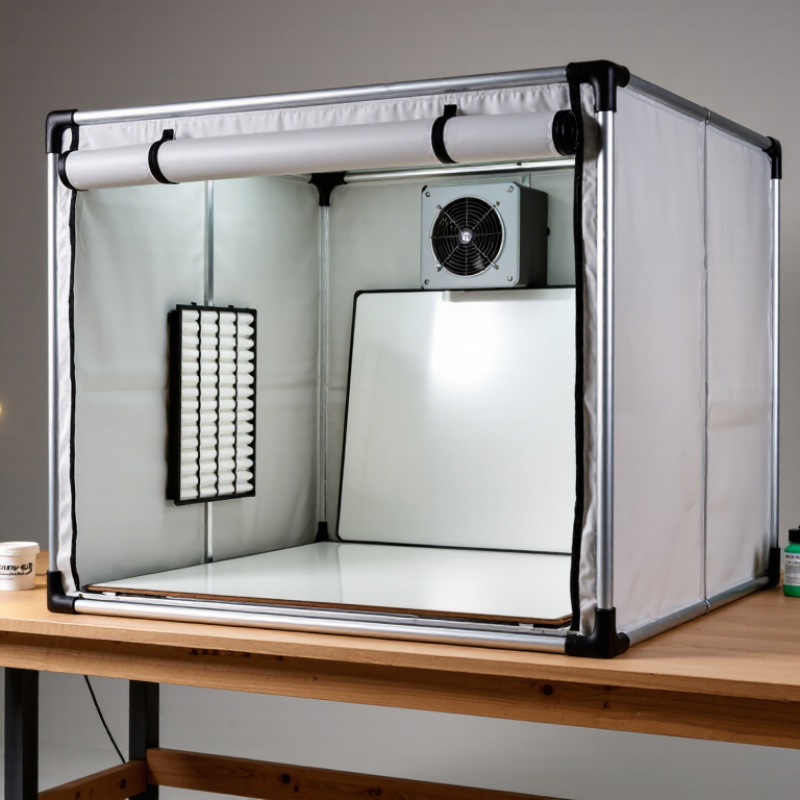
A portable spray booth is a movable enclosure that helps contain paint mist while directing contaminated air toward a filter or exhaust opening. Typical units use a frame, flexible walls, intake screens, and a fan. The fan draws air across the work area, carrying overspray away from the painter. Filters can capture paint particles, but they do not automatically remove every solvent vapor. Ventilation and suitable respiratory protection still matter.
Airflow is the key. OSHA’s spray-finishing standard, 29 CFR 1910.107, specifies an average air velocity of 100 feet per minute for certain spray-booth situations; the applicable requirements depend on the booth and operation. In practice, airflow can drop when filters load with paint or the setup is poorly sealed. A lightweight booth may also shift in a draft. Measure airflow, inspect filters, and follow the equipment instructions. I would not assume “portable” means suitable for every coating or workspace.
Tips: Place the exhaust path away from people and ignition sources. Check filters before each session, and replace them when airflow weakens. Keep the floor clear. Small setup details matter.
Key Features to Compare When Choosing a Portable Spray Booth
What Are the 7 Best Portable Spray Booths in 2026?
Key Features to Compare When Choosing a Portable Spray Booth
A useful comparison starts with the work you actually plan to do. Measure your largest piece, then check the booth’s interior clearance and opening size. A frame that folds quickly is helpful, but not if it feels unstable once assembled. Look for clear setup instructions and sturdy joints. Portability also depends on packed dimensions, carry weight, and whether the booth fits through your workspace door.
Airflow and filtration deserve close attention. Check the stated airflow, filter type, and how easily filters can be replaced. A booth should direct overspray toward its extraction area, not back across your workbench. Consider the fan’s noise and power requirements, too. Numbers can look reassuring on a product page; they do not always reflect performance in a crowded or poorly ventilated room. Follow the manufacturer’s instructions and provide suitable ventilation.
Tips: Before buying, sketch your setup and measure the space around it. Leave room for the workpiece, hoses, and safe movement. Check filter availability and replacement costs. A small test assembly can reveal awkward seams or loose connections. I’ve found that this detail is easy to overlook.
The 7 Best Portable Spray Booths in 2026
The seven best portable spray booths in 2026 suit different spaces and projects. A tabletop booth works for small parts and miniatures; a pop-up enclosure folds away between sessions. Both are easy to store. A fan-and-filter model adds controlled airflow, while a compact canopy gives larger pieces more room. These are practical booth styles, not a lab-tested ranking.
For frequent use, consider a modular frame with replaceable panels, a dual-filter setup for heavier workloads, or a wheeled booth that moves between work areas. Check the usable opening, filter availability, fan specifications, and assembly time before choosing. A wide booth can feel convenient, but it may need more floor space and careful airflow planning. Bigger is not always better.
Look for a stable frame, clear setup instructions, and filters suited to the coating and task. Keep the booth away from clutter, and follow the coating and equipment makers’ ventilation and safety guidance. A bright work light helps reveal missed edges, though glare can hide them too. I would compare filter replacement costs, not just the purchase price. That detail is easy to miss.
What Are the 7 Best Portable Spray Booths in 2026?
A format-based comparison of portability and working capacity, rated from 1 (low) to 5 (high). Scores are editorial assessments, not laboratory measurements or manufacturer specifications.
Compact tabletop and pop-up fabric booths are generally easier to move, while walk-in and modular panel formats typically provide more room for larger projects. Before choosing any booth, verify its extraction and filtration setup, intended coating materials, fire-safety provisions, and compliance with local requirements.
How to Match a Booth to Your Project and Workspace
Match the booth to the largest item you plan to coat, not just your usual project. Measure its width, height, and depth, then leave room to move around it without brushing against wet paint. A folding frame may fit a spare room, but the assembled booth still needs clear space for its exhaust duct and safe entry. Measure twice.
For small parts, a compact booth can reduce overspray and make cleanup easier. Furniture panels or bicycle frames may need a wider opening and more working room. Check the stated airflow and filter arrangement, and confirm the exhaust can be routed as directed. A fan that sounds powerful is not proof of suitable airflow. Space matters.
Consider setup time, storage, and the surface beneath the booth. A washable floor covering can catch drips, while a stable frame is less likely to shift when you adjust a workpiece. Follow the booth and coating instructions for ventilation, filters, and protective equipment. Keep the work area clear of ignition sources when required by the product guidance. One detail is easy to miss: a portable booth does not automatically control fumes in the rest of the room. If the space feels cramped or airflow is uncertain, reconsider the setup before spraying.
Setup, Ventilation, and Safety Considerations
A portable spray booth works only when its enclosure, fan, duct, and filters are matched to the coating task. Set it on level ground, secure the frame, and keep the exhaust path short and unobstructed. Measure the booth opening rather than guessing from fan noise. OSHA’s spray-finishing rule, 29 CFR 1910.107, specifies average airflow of at least 100 feet per minute across openings for conventional dry booths; water-wash designs have a 50-fpm threshold. These figures apply to defined booth types, not every portable setup. A tape measure can fool you.
Before spraying, check airflow with a suitable meter and inspect filters for loading or gaps. Exhaust should discharge safely outdoors, away from doors, air intakes, and people. Keep ignition sources out of the booth area, and use equipment rated for the environment. OSHA and NFPA 33 provide useful technical references; follow the requirements applicable to your location and materials. Wear the protective equipment specified by the coating’s safety data sheet. Small details matter: a loose duct joint can leak overspray, while a clogged filter can reduce airflow. I would not treat a “portable” label as proof that ventilation is adequate. Recheck the setup when wind, temperature, or booth position changes.