OPEN FROM 9AM TO 5PM – CLOSED ON WEEKENDS

What Is an Agricultural Bearing and How Does It Work?

An Agricultural bearing supports rotating parts in equipment used for planting, harvesting, tilling, and crop handling. It reduces friction between moving components, helping shafts, wheels, and rollers turn smoothly under demanding conditions. Unlike many industrial bearings, it often faces dust, mud, moisture, vibration, and uneven loads.

A typical Agricultural Bearing contains rolling elements, raceways, seals, and a housing or mounting surface. As the shaft rotates, balls or rollers carry the load while limiting metal-to-metal contact. Grease forms a protective film inside the bearing. Seals help keep out soil particles and water, although no seal remains perfect forever. Small failures begin quietly.

Field experience shows that bearing life depends on more than load capacity. Correct alignment, suitable lubrication, proper installation, and regular inspection matter just as much. A loose set screw, damaged seal, or unusual vibration can create costly downtime during a narrow harvest window. Operators may notice heat, noise, or grease leakage first. These signs should not be ignored.

This guide explains what an Agricultural Bearing is, how it works, and where it fits within modern farm machinery. It also considers common designs, material choices, maintenance practices, and failure symptoms. Manufacturer specifications and recognized engineering guidance should support every selection. In practice, however, real machines are rarely ideal. Soil conditions change, maintenance records may be incomplete, and even experienced technicians can overlook early wear. Careful observation remains essential.

What Is an Agricultural Bearing and How Does It Work?

What Is an Agricultural Bearing?

An agricultural bearing is a machine component that supports a rotating shaft. It allows parts to move smoothly with less friction. You can find bearings in combines, seeders, tillers, irrigation equipment, and other farm machinery. Their job sounds simple. Yet farm work is harsh. Dust, mud, moisture, vibration, and uneven loads can reach nearby components. A typical bearing contains inner and outer rings, rolling elements, and a cage. Seals or shields help protect these parts from contamination.

During operation, the shaft turns inside the bearing while the rings carry the load. Rolling elements transfer force across a smaller contact area. This reduces heat and energy loss. Radial loads push from the side, while axial loads act along the shaft. Some agricultural bearings handle both. The correct design depends on speed, shaft size, load direction, and working conditions. A bearing that fits poorly may create noise, heat, and early wear.

In field inspections, listen for grinding or irregular clicking. Feel the housing carefully for unusual heat. Follow the equipment maker’s specified clearance, lubricant, and mounting method. Too little grease causes friction. Too much grease can also raise operating temperature. Seals deserve attention because a small tear may admit abrasive soil. A bearing can look clean outside while its raceway is already damaged. That is easy to miss. Replacement decisions should consider operating hours, contamination, vibration, and the cost of unexpected downtime.

What Is an Agricultural Bearing and How Does It Work?

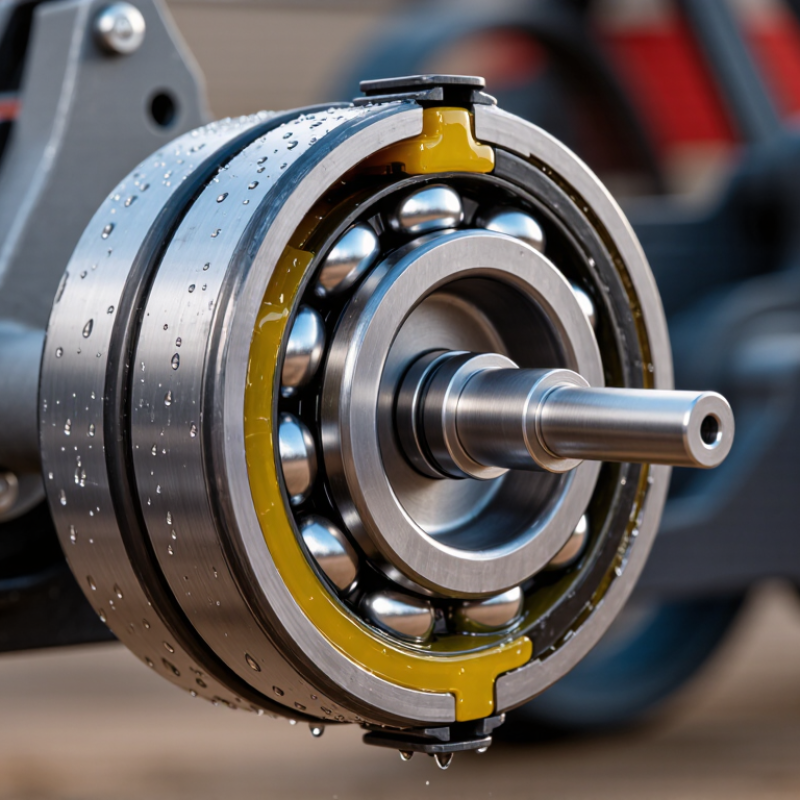
Agricultural bearings support rotating shafts and wheels while reducing friction and carrying radial or axial loads. Their sealed construction helps protect internal rolling elements from dust, moisture, soil, and crop residue. The chart shows representative operating speeds for common agricultural bearing applications; actual values vary by machine design and working conditions.

How Agricultural Bearings Are Designed

What Is an Agricultural Bearing and How Does It Work?

How Agricultural Bearings Are Designed

Agricultural bearings are designed for dust, moisture, vibration, and uneven loading. A bearing supports rotating shafts while reducing friction between moving surfaces. Field inspections often show the same weakness: contamination enters through damaged seals. The bearing may look sound, but fine soil can quietly polish its internal raceways.

Design begins with the working environment. The 2022 USDA Census of Agriculture recorded about 1.9 million U.S. farms and 880 million acres in operation. This scale reflects highly varied conditions, from dry grain fields to wet livestock areas. Engineers therefore consider load direction, speed, shock, temperature, and cleaning practices. Seals must block mud without creating excessive friction. Grease capacity also matters.

Load calculations commonly follow ISO 281, which estimates basic rating life from dynamic load capacity and applied load. However, real field life can differ. A clean calculation cannot fully predict crop residue, poor alignment, or sudden impacts. That limitation deserves attention. The Food and Agriculture Organization reports that agriculture remains a major user of global freshwater resources, so washdown and wet operating conditions cannot be ignored. Designers may use corrosion-resistant materials, protected seals, and stronger cages where exposure is severe. Small details matter. A slightly misaligned shaft can create heat, noise, and premature wear before failure becomes visible.

How an Agricultural Bearing Works

An agricultural bearing supports rotating shafts in planters, harvesters, pumps, and tillage equipment. Its basic action is simple. Rolling elements carry the load between inner and outer rings. This reduces sliding friction while the shaft turns. A cage keeps the balls or rollers evenly spaced. Seals help retain grease and block dust, water, and crop residue.

According to ISO 281, basic rating life, L10, represents the point where 10% of identical bearings may fail under stated conditions. The calculation uses load, speed, and bearing capacity. Real machines rarely match laboratory conditions. Soil dust changes the result. So does a bent shaft. Grease also loses performance when heat and moisture enter the housing. A clean calculation is not a clean bearing.

FAO AQUASTAT reports that agriculture accounts for roughly 70% of global freshwater withdrawals. That statistic matters because irrigation equipment often works near water, mud, and fertilizer residue. During inspection, technicians should check rough rotation, seal damage, looseness, and unusual heat. A practical test is simple: rotate the shaft by hand after shutdown. Grinding or tight spots deserve attention. Many failures are blamed on the bearing itself, but poor alignment and over-tightened seals can create the first damage. Maintenance records should include operating hours, grease intervals, contamination, and replacement reasons. Without those details, failure analysis becomes partly guesswork.

Where Agricultural Bearings Are Used

What Is an Agricultural Bearing and How Does It Work?

Where Agricultural Bearings Are Used

Agricultural bearings support rotating shafts in demanding farm machinery. They reduce friction between moving parts and help equipment operate smoothly. Their sealed housing also limits damage from dust, mud, crop residue, and moisture.

You can find them in tractor wheels, disc harrows, seed drills, planters, and combine harvesters. They also work inside balers, forage cutters, irrigation systems, and grain conveyors. A planter bearing may guide a small metering shaft through long planting hours. A combine bearing may support a heavy drum while handling vibration and changing loads. These applications rarely offer clean conditions. Fine soil can enter through a worn seal, while excess grease can attract more debris. This detail is easy to overlook.

Field maintenance teams usually inspect noise, heat, looseness, and uneven rotation. A rough sound often signals damaged rolling elements. Excessive play may point to wear, poor alignment, or loose mounting hardware. Replacement timing should follow the machine manual and actual operating conditions. No inspection method is perfect. A bearing can look acceptable and still fail internally.

Tips: Clean the surrounding area before inspection. Check seals after muddy work. Use the specified lubricant and amount. Avoid forcing a bearing onto its shaft with impact. Record operating hours, unusual noise, and temperature changes. These simple notes can reveal repeated loading problems before harvest becomes urgent.

What Is an Agricultural Bearing and How Does It Work? - Where Agricultural Bearings Are Used

Agricultural Equipment or Location Common Bearing Type How the Bearing Works Primary Load or Motion Typical Protection Key Operating Requirement
Tractors and drive axles Tapered roller bearing Tapered rollers run between an inner cone and an outer cup, supporting combined radial and axial loads. High radial load with axial load from gears and wheels Oil or heavy grease, protected by housings and seals Correct preload, alignment, and contamination control
Disc harrows and tillage shafts Agricultural disc-harrow bearing Rolling elements reduce friction while the bearing housing supports the rotating disc shaft. Heavy radial load, shock, and vibration Dust seals, flingers, labyrinth features, and grease lubrication Resistance to soil, dust, impact, and occasional moisture
Planter seed-metering units Deep-groove ball bearing Hardened balls roll in raceways to allow smooth, accurate rotation of metering components. Moderate radial load and continuous rotation Sealed-for-life or shielded construction Low friction, consistent speed, and protection from seed dust
Combine harvester threshing and separating systems Self-aligning ball or spherical roller bearing The internal spherical design accommodates limited shaft misalignment while carrying rotating loads. High radial load, vibration, and possible shaft deflection Heavy-duty seals and grease lubrication Misalignment tolerance, heat control, and reliable sealing
Baler pickup and feeding assemblies Mounted insert bearing A bearing insert is secured inside a housing and supports the shaft without requiring a separate bearing seat. Radial load with intermittent shock Rubber or metal seals with relubrication provision Simple replacement, secure shaft locking, and debris exclusion
Mower and rotary cutter gearboxes Ball bearing or tapered roller bearing The rolling elements support gearbox shafts and maintain controlled clearance as torque is transmitted. Radial load, axial load, and high rotational speed Gear oil or grease inside a sealed gearbox Correct internal clearance, lubrication level, and temperature control
Irrigation pumps and water-handling equipment Deep-groove ball bearing or angular-contact bearing Balls carry the rotating shaft while the bearing arrangement manages radial forces and pump thrust. Continuous radial load with possible axial thrust Contact seals, shields, and water-resistant grease where required Moisture resistance, correct shaft alignment, and adequate lubrication
Conveyors for grain, feed, and harvested crops Pillow-block bearing or take-up bearing The housing supports the conveyor shaft and allows adjustment for belt tension and alignment. Moderate radial load and continuous rotation Sealed housing, flingers, and periodic grease replenishment Protection from abrasive dust, easy alignment, and service access
Manure spreaders and slurry equipment Heavy-duty spherical roller or mounted bearing Rolling elements support slow, heavily loaded shafts and accommodate limited misalignment. High radial load, shock, and contamination exposure Multi-lip seals, grease, and protective bearing housings Chemical resistance, sealing performance, and low-speed load capacity
Sprayer booms, pivot points, and folding mechanisms Plain bushing or spherical plain bearing A sliding surface or spherical liner permits controlled oscillation where continuous rotation is not required. Oscillating motion with radial and occasional axial load Grease grooves, protective seals, or corrosion-resistant surfaces Low-speed movement, wear resistance, and corrosion protection
Agricultural bearings reduce friction between moving parts, maintain shaft alignment, and transfer radial or axial loads. Their service life depends mainly on correct selection, sealing, alignment, lubrication, load capacity, and protection from dust, soil, moisture, crop residue, and chemicals.

How to Select and Maintain an Agricultural Bearing

Agricultural bearings support rotating shafts in planters, combines, balers, and irrigation equipment. They carry radial loads, absorb limited axial force, and reduce friction between moving parts. Selection starts with the shaft diameter, load, speed, and operating temperature. A dusty planter may need sealed insert bearings, while a heavily loaded trailer axle may require tapered roller bearings. Incorrect internal clearance can create heat, vibration, and early fatigue.

USDA NASS reported about 1.9 million U.S. farms in the 2022 Census of Agriculture. That scale makes unplanned bearing failure costly during short planting and harvest windows. The FAO AQUASTAT database estimates agriculture accounts for roughly 70% of global freshwater withdrawals. Excessive pressure washing can force water past seals and remove lubricant. Clean equipment matters, but cleaning technique matters more. A bearing that looks clean may already contain abrasive moisture.

Tips: Check temperature, noise, shaft play, seal damage, and grease condition during routine inspections. Lubricate according to the bearing maker’s specification, not habit. Use the correct grease type and avoid mixing incompatible products. Tighten fasteners to the specified torque. Keep spare bearings dry and wrapped. A perfect maintenance schedule does not exist. Soil, weather, and workload change quickly. One missed inspection can matter, so operators should record small changes before they become failures.

Amet mattis vulputate enim nulla aliquet. Id porta nibh venenatis cras sed felis dictumst vestibulum rhoncus est.
This error message is only visible to WordPress admins

Error: No feed found.

Please go to the Instagram Feed settings page to create a feed.

Quick links