

OPEN FROM 9AM TO 5PM – CLOSED ON WEEKENDS
Choosing an intramedullary nail manufacturer is more than comparing product catalogs. Buyers need to assess implant design, material quality, production consistency, and the evidence behind a supplier’s claims. A nail may look straightforward on a product page. In practice, its dimensions, locking options, instrumentation, and compatibility can affect surgical workflow and inventory planning.
This guide introduces 10 manufacturers for global buyers and offers a practical starting point for supplier research. It considers factors such as product range, quality-management systems, technical documentation, manufacturing capabilities, and after-sales support. These details matter. So do clear responses to questions about traceability, packaging, and product changes. Buyers should verify current certificates and market-specific requirements directly with each company; approvals and availability can vary by region and product. No shortlist can replace due diligence.
A polished website is not proof of dependable supply. Ask for relevant documentation, review the manufacturer’s experience, and confirm how it handles training, complaints, and service needs. Where possible, compare specifications against the intended clinical application with qualified professionals. This process takes time. It can also reveal gaps that a brief comparison misses. The companies featured here may suit different purchasing priorities, but no single manufacturer will fit every hospital, distributor, or market. Use the list as a starting point, then make decisions based on verified information and local clinical needs.
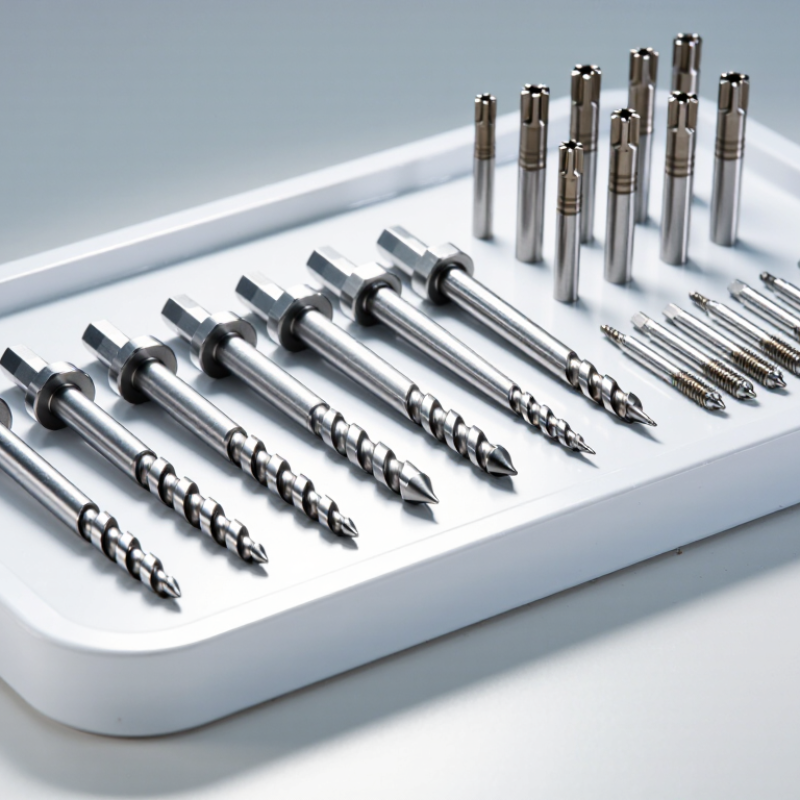
An intramedullary nail is a metal rod placed inside the central canal of a long bone to help stabilize a fracture. Surgeons commonly use these implants for selected breaks in the femur, tibia, or humerus. It is not a cast. The nail sits within the bone, while locking screws near its ends help limit rotation and changes in length.
During surgery, the team uses imaging to guide the nail through a small opening and check its position. The exact approach depends on the fracture’s location, pattern, and the patient’s condition. A nail can share the load with the healing bone, which may support earlier movement in suitable cases. But it does not make every fracture simple, and recovery varies.
After surgery, follow-up visits and X-rays help clinicians assess alignment and bone healing. Patients may need to limit weight-bearing or follow a tailored rehabilitation plan. Details matter: a fracture close to a joint, for example, may require a different fixation strategy. Even a well-positioned implant cannot replace careful monitoring. Healing can be uneven, and the reasons are not always obvious at the first appointment.
When comparing intramedullary nail manufacturers, look beyond catalog images and unit price. Ask how the manufacturer controls the full process, from material receipt to final inspection. Details matter. Request documentation for material composition, dimensional tolerances, and lot traceability. A reliable record should connect a finished nail to its production batch and inspection results.
Review the quality system and the evidence behind product claims. Ask for test methods, acceptance criteria, and examples of inspection records—not just a certificate on a website. Ask for evidence. Check whether fatigue, corrosion, and mechanical testing match the intended product and stated use. Also clarify how sterilization is validated, packaging integrity is checked, and changes to materials or processes are communicated. These details can reveal gaps that a polished brochure will not.
Assess practical support, too. Can the supplier provide clear drawings, sizing information, instructions for use, and timely answers to technical questions? Confirm lead times, batch consistency, complaint handling, and the process for investigating a quality concern. Not just promises. Compare responses across several suppliers, and record what remains unclear. No checklist removes every doubt; requirements also vary by market and product type. A careful buyer should verify current documentation with qualified procurement and clinical teams before making a decision.
When comparing 10 intramedullary nail manufacturers, global buyers should assess more than catalogue size. The World Health Organization’s Global Status Report on Road Safety 2023 estimates 1.19 million road deaths annually and 20–50 million non-fatal injuries. These figures show the scale of road trauma, not demand for nails specifically. That distinction matters. A supplier’s portfolio should clearly state nail lengths, diameters, material options, locking configurations, and compatible instruments. Surgeons need practical choices for different anatomies and fracture patterns, not just a broad product list.
Review technical documentation alongside product samples. Ask for fatigue and torsion test reports, including test methods and acceptance criteria. Check whether traceability, sterilization information, and clinical evidence are clearly documented. Quality certificates are useful, but they do not replace product-specific evidence. No ranking is perfect. A polished brochure can still leave unanswered questions about instrument availability or after-sales support. Buyers should also verify registration requirements in each intended market and assess how reliably a manufacturer can supply replacement instruments. A short trial with the surgical team may reveal issues that a spreadsheet misses, such as awkward targeting handles or unclear depth markings. Be cautious when comparing claims that use different test methods.
For global buyers, an intramedullary nail’s quality records matter as much as its dimensions. A polished implant is not enough. Request current quality-system certificates, material traceability, sterilization validation, and evidence that packaging protects devices during shipping. Check these records against the destination market’s requirements, not only the manufacturer’s domestic rules. Regulatory pathways differ: one market may require product registration and local representation, while another may request additional clinical or technical documentation. Requirements can change, so verify them with the relevant authority or a qualified regulatory specialist.
Look beyond certificates. Ask for inspection criteria covering nail diameter, length, locking-hole position, and surface finish. Find out how the manufacturer contains and investigates nonconforming lots. These details matter when a surgeon needs a specific screw trajectory or a hospital audits a lot number months later. A factory audit can help, but it offers only a snapshot. Buyers may put too much confidence in tidy files; production controls and follow-up evidence deserve equal attention.
Compare requirements in a simple matrix: applicable rule, required evidence, responsible party, and renewal date. Keep records aligned with the exact implant configuration and sterilization method. Translation gaps can cause delays. So can unclear responsibility. A capable manufacturer should explain what it can document and where the importer or distributor must act, without treating one certificate as universal approval.
Selecting an intramedullary nail manufacturer starts with the fracture patterns and procedures your clinicians treat most. A system suited to femoral trauma may not fit tibial or humeral cases. Ask surgeons to assess nail diameters, lengths, locking options, and the targeting jig in a hands-on evaluation. Small details matter. A drill guide that shifts during use can slow a procedure. Confirm material specifications, sterilization methods, packaging integrity, and instrument availability. Check that product documentation meets the requirements of your destination market; registration pathways vary.
Tips: Request a sample technical file, a current catalogue, and a written list of included instruments. Ask how the supplier handles lot traceability, complaints, safety notices, and replenishment of common sizes. Verify lead times against actual order history, not just a sales estimate. Keep the questions concrete.
Compare the full system cost, including implants, reusable instruments, training, shipping, and replacement parts. Ask for evidence of quality controls and relevant market authorizations, then have your regulatory or quality team verify them independently. Discuss surgeon training and technical support for initial cases. A responsive contact helps, but cannot replace clinical judgment. No checklist is perfect. Ask about stockouts and delayed deliveries; vague answers are a reason to pause. Choose a supplier whose product range, documentation, service, and supply record match your hospital’s case mix.
Use this manufacturer-selection matrix to compare suppliers against your clinical, regulatory, and market requirements. It is a due-diligence guide, not a ranking of specific manufacturers.
| No. | Evaluation dimension | What to verify | Why it matters to global buyers | Useful evidence or questions |
|---|---|---|---|---|
| 1 | Regulatory authorization | Confirm the device’s registration or authorization status in each intended market, including the exact device variants covered. | Requirements differ by jurisdiction. A clearance or certificate in one market does not automatically authorize sale in another. | Request current certificates, registration details, and applicable labeling. For the United States, confirm the relevant FDA pathway and device-specific status; for the EU, check applicable MDR requirements. |
| 2 | Quality management system | Check the scope, validity, and issuing body of the manufacturer’s quality-system certification, and whether it covers the relevant manufacturing site and device activities. | A certificate’s scope and site coverage matter; certification alone does not establish that a particular product is approved for your market. | Ask for an ISO 13485 certificate and audit or quality documentation appropriate to your procurement process. |
| 3 | Clinical indications and portfolio | Match the authorized indications and available nail configurations to your case mix, such as femoral, tibial, or humeral fixation and the relevant fracture patterns. | An extensive catalogue is useful only when its indications, sizes, and instruments fit local clinical practice and approved labeling. | Request product-specific instructions for use, size ranges, locking options, and indications. Have qualified clinicians assess clinical suitability. |
| 4 | Materials and traceability | Identify the implant material and verify the material specifications, production controls, and lot-level traceability for the offered device. | Material choice affects device properties and must be considered alongside the product’s validated design and intended use. | Ask for material specifications and relevant test documentation. ASTM F136 is a specification for wrought Ti-6Al-4V ELI alloy for surgical implant applications; verify whether it applies to the particular product. |
| 5 | Design verification and testing | Review evidence that the design and relevant performance characteristics have been evaluated for the intended use and product configuration. | Intramedullary fixation devices have product-specific design and performance considerations; a test result should be interpreted in its stated scope. | Ask whether ASTM F1264, a standard specification for intramedullary fixation devices, is applicable to the product and request the supporting test summary where available. |
| 6 | Instrument system and compatibility | Confirm which targeting devices, reamers, insertion tools, and locking instruments are required, supplied, and compatible with the implant system. | Complete, well-supported instrumentation helps hospitals plan operating-room workflows, training, and inventory. | Request an instrument list, compatibility matrix, cleaning instructions, and information on replacement parts and instrument-set availability. |
| 7 | Clinical and post-market evidence | Assess evidence relevant to the specific device, indications, and patient population, along with the manufacturer’s processes for complaints and safety actions. | Evidence from a different design or indication may not directly support the product being evaluated. | Request clinical evaluation or study information where available, published evidence, complaint-handling procedures, and applicable recall or field-safety-action information. |
| 8 | Sterilization and packaging | Establish whether implants are supplied sterile or non-sterile, and check validated sterilization information, packaging integrity, and shelf-life claims. | Hospitals and distributors need clear instructions for storage, handling, and any required reprocessing. | Review the label and instructions for use. Applicable sterilization standards depend on the method; examples include ISO 11135 for ethylene oxide, ISO 11137 for radiation, and ISO 17665 for moist heat. |
| 9 | Supply reliability and market support | Evaluate product availability, lead times, minimum order quantities, distribution arrangements, and continuity plans for critical sizes and instruments. | Supply constraints can affect case scheduling and inventory planning, especially when a system has many size and configuration options. | Request written service levels, forecast and replenishment procedures, local stock information, and escalation contacts for urgent orders. |
| 10 | Training, service, and total cost | Compare training and technical support, instrument maintenance, warranty terms, and the full cost of implants, sets, logistics, and servicing. | Purchase price alone does not capture the operational cost of adopting and maintaining an implant system. | Request a transparent quotation, service and warranty terms, training plan, and the expected costs of instrument replacement or maintenance. |

