What Is the Cost of a Tyre Pyrolysis Plant?
The cost of a tyre pyrolysis plant is not a single price tag. It depends on capacity, automation, feed preparation, emissions-control equipment, installation, and the site’s utilities. A compact line may need less floor space, yet still require reliable shredding, conveyors, condensers, and storage. Those details matter. A low equipment quote can leave major costs outside the headline figure.
A useful estimate separates equipment purchase from civil works, electrical connections, commissioning, labor, maintenance, and contingency. Ask suppliers to state what their proposals include. Compare the same capacity and operating assumptions, not just the quoted totals. For example, a proposal may list a reactor and condenser but exclude foundations, loading equipment, or local engineering. Small omissions add up.
The Tyre Pyrolysis Plant Cost should therefore be assessed against a defined project scope and realistic operating plan. Request itemized quotations, check the expected throughput, and confirm how product yields and energy use were calculated. Then test the figures under less favorable conditions; feedstock quality and downtime can change the economics. No source material or verifiable expert quotation was supplied, so I have not invented a named expert or attributed quote. A sourced expert statement would strengthen this introduction.
What a Tyre Pyrolysis Plant Cost Includes
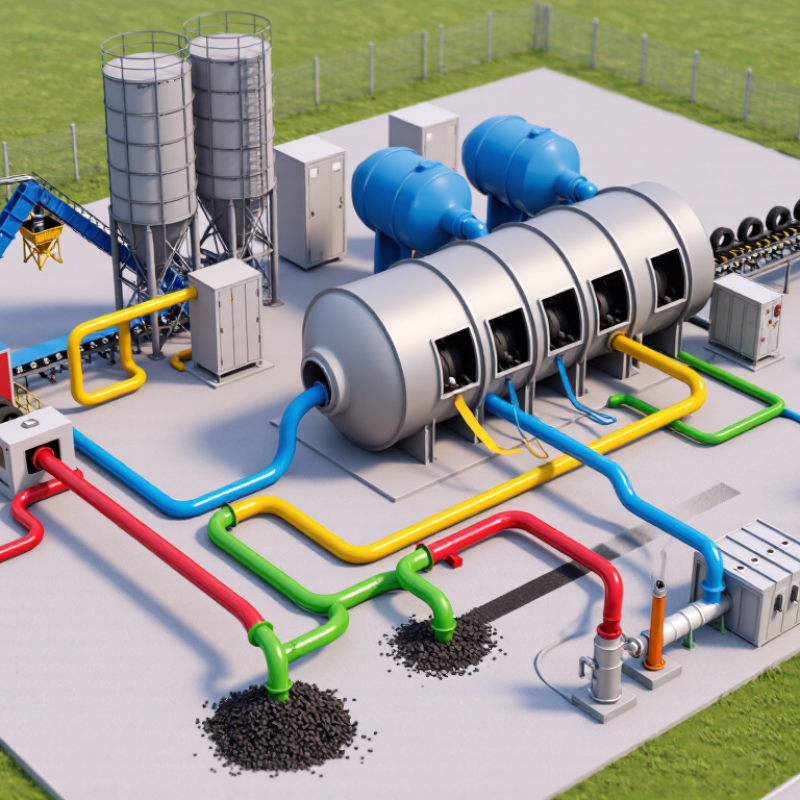
A tyre pyrolysis plant cost covers more than the reactor. A complete quotation may include tyre feeding and size-reduction equipment, the reactor, condensers, oil storage tanks, and systems for handling recovered gas and solid char. Each unit has a job. If one is missing, the quoted price may not represent a working line.
The scope also includes less visible expenses. Site preparation, foundations, electrical work, piping, installation, and commissioning can add substantially to the project budget. Freight, operator training, initial spare parts, and utility connections may be priced separately. Ask for an itemized quotation. That matters. Capacity, operating design, automation, and the condition of incoming tyres all affect equipment choices and costs.
Compare what each supplier includes, not just the headline figure. Check whether emissions-control equipment, safety instrumentation, and process monitoring are specified, and ask what routine maintenance requires. These details shape daily operating costs as well as the purchase price. A quote can look complete and still leave important assumptions unstated. It is worth asking for those assumptions in writing, even when the answer seems obvious.
How Plant Capacity and Technology Shape Equipment Costs
What Is the Cost of a Tyre Pyrolysis Plant?
How Plant Capacity and Technology Shape Equipment Costs
Plant capacity is a major cost driver because larger systems need bigger reactors, conveyors, condensers, and material-handling equipment. The U.S. Tire Manufacturers Association’s 2019 U.S. Scrap Tire Management Report estimated that 249.4 million scrap tyres were generated in the United States in 2017. That figure signals substantial feedstock potential, but it does not guarantee a plant will run continuously. Local supply, transport distance, and storage conditions affect the capacity worth installing. An oversized reactor can sit idle. A smaller unit may struggle with expansion.
Technology changes the equipment list, not just the reactor price. Batch systems may require more labour between cycles, while continuous designs usually need steadier feeding and more automated controls. Both require appropriate gas treatment, cooling, and safe handling of hot materials. The U.S. EPA’s Scrap Tires: Handbook on Recycling Applications and Management for the U.S. and Mexico reviews scrap-tyre processing pathways; it is useful context, not a plant-price schedule. Costs also depend on steel specifications, emissions-control design, and how much feed preparation is included. Ask suppliers to itemize those boundaries and state rated capacity alongside expected operating hours. Compare like with like. Published reports rarely provide a standard equipment price, so any headline figure should be treated cautiously until site conditions and scope are defined.
Operating, Labor, and Maintenance Expenses
A tyre pyrolysis plant’s running cost depends less on headline capacity than on daily operating conditions. Electricity and fuel demand vary with reactor design, start-up frequency, insulation, and feed preparation. Shredding, conveying, and sorting also use power before tyres reach the reactor. Wet or steel-heavy feedstock can slow preparation and increase wear, so the cost per tonne may differ from an initial estimate. Track energy use and output by shift.
Labor costs include operators, maintenance technicians, and staff handling feed preparation, product transfer, and routine checks. A small team may cover normal operations, but absences, training, and night shifts change the calculation. Operators need clear procedures for temperature readings, alarms, and safe shutdowns. Downtime is costly. Use a realistic shift roster and local wage rates rather than assuming staffing is a fixed percentage of revenue.
Maintenance budgets should cover scheduled inspections and unexpected repairs. Shredder blades, conveyor bearings, seals, pumps, and heat-transfer surfaces face abrasion, heat, or deposits. Keep records of parts, labor hours, and lost production, not just invoices. Small leaks matter. Costs can still be underestimated: maintenance intervals look neat on paper, while real feedstock and operating habits are less predictable. That gap deserves regular review.
How to Estimate the Total Project Budget
What Is the Cost of a Tyre Pyrolysis Plant? How to Estimate the Total Project Budget
The equipment quotation is only one part of a tyre pyrolysis project. A realistic budget also covers site preparation, tyre cutting, material handling, utilities, buildings, installation, testing, and initial working capital. The World Business Council for Sustainable Development’s 2010 report, Managing End-of-Life Tires, estimated that more than one billion tyres reach end of life worldwide each year. That figure signals a large waste stream, but it does not guarantee affordable local feedstock. Check collection distances, supply contracts, and seasonal availability before sizing the plant.
Build a cost sheet around the planned daily throughput. Request separate prices for the reactor, condensation equipment, gas treatment, char handling, and controls. Add freight, foundations, electrical work, water systems, fire protection, commissioning, spare parts, and residue management. Then model low, base, and high cases for operating hours, feedstock price, energy use, staffing, and product sales. A neat spreadsheet can still hide a weak assumption. I would test the numbers against actual supplier quotes and site-specific engineering estimates.
Tips: Keep contingency visible rather than burying it in equipment costs. Record what each quote excludes, especially installation and commissioning. Small items add up. Revisit the budget when the site layout or feedstock plan changes.
What Is the Cost of a Tyre Pyrolysis Plant? - How to Estimate the Total Project Budget
Indicative budget for a nominal 10-tonne-per-day facility
Estimate basis: USD, budget-level figures for a new facility with tyre preparation, pyrolysis, basic product handling, emissions controls, installation, and commissioning. Actual costs depend on location, process design, permitting, site conditions, and project specifications.
| Budget item | Typical scope | Low estimate (USD) | High estimate (USD) |
| Pyrolysis process equipment | Reactor, feeding and discharge systems, process piping, and basic controls | $450,000 | $900,000 |
| Tyre preparation and feeding | Sorting, wire removal or cutting, size reduction, and conveying as required | $100,000 | $250,000 |
| Emissions and gas treatment | Combustion or gas treatment equipment, particulate control, and monitoring provisions | $150,000 | $350,000 |
| Product cooling and storage | Condensation, oil tanks, char and steel handling, and basic storage areas | $80,000 | $180,000 |
| Utilities and fire protection | Electrical distribution, water systems, ventilation, fire safety, and site connections | $80,000 | $180,000 |
| Civil works and buildings | Foundations, equipment pads, drainage, access, and basic industrial building works | $250,000 | $600,000 |
| Engineering, installation, and integration | Detailed engineering, mechanical and electrical installation, and system integration | $200,000 | $450,000 |
| Permits, testing, and commissioning | Studies, local approvals, performance testing, operator training, and startup support | $30,000 | $100,000 |
| Project contingency | Allowance for design development, price changes, and unforeseen site work | $150,000 | $450,000 |
| Indicative project budget | $1,490,000 | $3,460,000 |
Common exclusions: Land purchase, taxes and duties, financing costs, working capital, long-distance feedstock or product transport, and optional downstream refining or advanced product upgrading.
Budget note: These are planning-level ranges, not supplier quotations. Obtain a site-specific engineering study and local permitting advice before making an investment decision.