10 Gantry Mill Buying Tips for Global Buyers
Buying a Gantry Mill is not simply a matter of comparing spindle power and table size. Global buyers must examine accuracy, service access, delivery risks, energy use, and long-term operating costs. The machine may look impressive under showroom lights. Its real value appears months later, during heavy cutting, alignment checks, and urgent maintenance.
Recent reports from the International Federation of Robotics, Gardner Intelligence, and the German Machine Tool Builders’ Association (VDW) show continuing investment in automation, digital monitoring, and flexible production. These trends affect Gantry Mill selection directly. A low purchase price can become expensive when software, tooling, training, or spare parts are excluded. That detail is easy to miss. It happens often.
Dr. Wilfried Schäfer, Executive Director of the VDW, has emphasized, “Digitalization is no longer an option; it is a necessity.” His point matters for buyers comparing remote diagnostics, machine connectivity, and production data systems. However, digital features should not replace practical questions. Can technicians reach the spindle safely? Is the guideway protected from chips? Will the supplier support the machine in your region?
This guide presents 10 Gantry Mill buying tips for global buyers. It considers technical capability, supplier reliability, compliance, installation conditions, and ownership cost. Some recommendations may seem obvious. They are still overlooked. A careful buyer should challenge every specification, request measurable proof, and test assumptions before signing a purchase order.
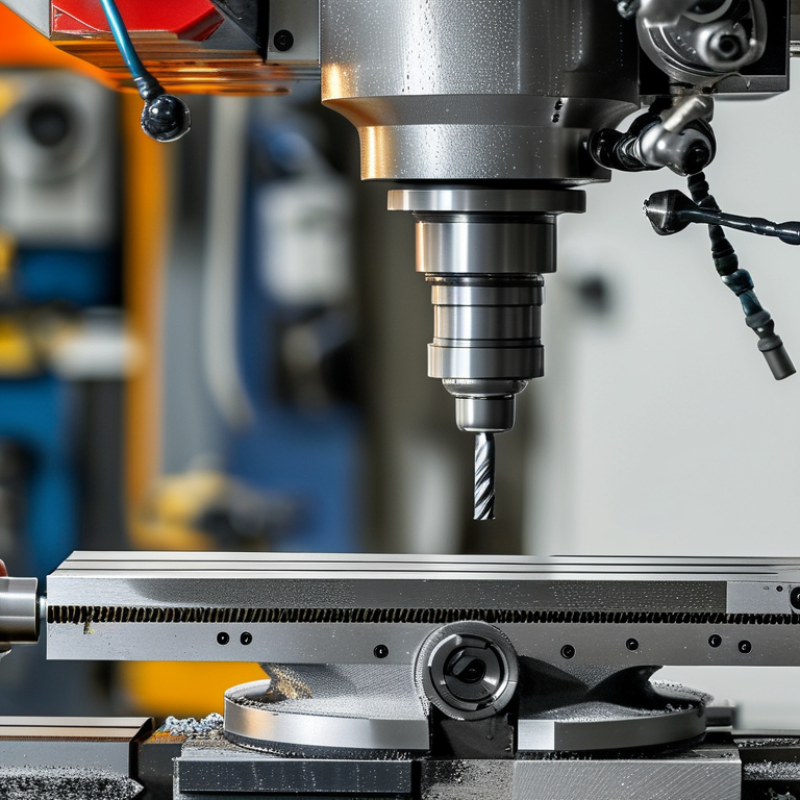
Define Your Gantry Milling Requirements and Workpiece Profile
Define your gantry milling requirements before comparing machines. Record the workpiece length, width, height, weight, and material. Include the largest realistic part, not only your average job. A steel frame may need deep travel, while an aluminum panel may require higher spindle speed. Measure loading space around the machine too. A perfect machine can still fail if the crane cannot reach the table.
Tip: Draw a simple workpiece profile. Mark holes, pockets, curved surfaces, and tight corners. Note each critical tolerance and surface finish. These details influence table size, spindle power, tool length, and axis travel. Leave room for fixtures and clamps. I have seen buyers choose enough travel for the part, but not enough space for safe fixturing.
Tip: Separate essential requirements from convenient features. A heavy casting may need greater table capacity and slower acceleration. Thin plates may need careful clamping to prevent vibration. Review your cutting data with an experienced application engineer, and request test-cut evidence when possible. A first estimate is often wrong. Material hardness, fixture stiffness, and tool reach can change the result. Recheck the profile using your least favorable workpiece, because occasional oversized parts often become the most expensive production problem.
Compare Machine Structure, Travel Range, and Load Capacity
10 Gantry Mill Buying Tips for Global Buyers
A gantry mill’s structure determines how confidently it cuts large workpieces. Compare fixed-gantry and moving-gantry designs carefully. A fixed gantry usually offers stronger support for heavy cutting, while a moving gantry can preserve floor space. That advantage may disappear when the table carries uneven loads. Check the manufacturer’s stated rigidity tests, not only the maximum table weight. ISO 230-1 provides methods for evaluating machine-tool geometric accuracy, including positioning behavior and alignment. Ask for recent inspection records.
Travel range must match your real parts, not your largest imagined project. Measure workpiece length, fixture height, tool reach, and chip-clearance space. A 3,000 mm X-axis may provide less usable travel after fixturing. Small details matter. The Z-axis deserves special attention, because a tall fixture can reduce available cutting depth. According to Grand View Research, the broader CNC machine market was valued at about USD 88.9 billion in 2023, showing strong investment pressure, but market growth does not guarantee suitable specifications.
Load capacity should include the workpiece, fixture, pallets, and cutting forces. Ask whether the published rating is static or recommended for continuous machining. A 10-ton table rating may not support repeated off-center loading safely. I have seen buyers compare only maximum load and overlook distribution. That is a costly assumption. The International Federation of Robotics reported 541,302 industrial robots installed worldwide in 2023, reflecting rising automation demand. Still, automation cannot correct poor foundation design, insufficient travel, or an inaccurate load estimate.
Evaluate Spindle Performance, Accuracy, and Control Systems
For global buyers, spindle performance should be judged beyond maximum speed. A high rpm rating means little without stable torque across the working range. Ask for torque curves, thermal data, and rated duty cycles. During acceptance testing, cut steel, aluminum, and harder materials at realistic feeds. Listen for vibration, watch surface marks, and check whether the spindle temperature rises steadily. Short bursts can hide weaknesses.
Accuracy depends on the entire gantry structure, not only the spindle. Review positioning accuracy, repeatability, backlash, and thermal compensation data. Request a laser calibration report and a ballbar test when available. A practical check includes machining a test pocket, measuring its corners, and comparing dimensions after several hours. Thermal drift often surprises buyers. Do not trust one cold reading. A clean report may still miss workshop conditions, which is a weakness worth discussing.
The control system should support look-ahead processing, tool compensation, alarm history, and reliable program recovery. Test how quickly operators can edit offsets, preview toolpaths, and identify faults. Global teams also need clear language options, training materials, and secure remote support procedures. Ask whether the controller records spindle load and vibration trends. Do not ignore training. Some evaluations overemphasize hardware and underestimate daily operator decisions. I would revisit that balance before approving the purchase.
Calculate Total Ownership Cost Before Making the Final Purchase
A gantry mill can look affordable until every operating expense enters the calculation. Purchase price is only the starting point. Global buyers should estimate freight, insurance, import duties, installation, foundation work, and commissioning. A low quote may hide expensive site preparation.
In purchasing reviews, I build a five-year ownership model before comparing machines. It includes electricity, cutting tools, coolant, lubrication, operator training, software updates, inspections, and planned maintenance. Add the cost of production downtime. One service visit can involve travel, replacement parts, and several lost shifts. Ask for realistic energy data under normal cutting conditions, not only laboratory figures.
Small details matter. Check voltage compatibility and local electrical requirements. Confirm whether technical support covers your time zone and language. Request maintenance schedules, spare-part lead times, warranty limits, and written installation responsibilities. Reliable suppliers should explain assumptions clearly and provide verifiable performance information. Independent references from similar industries can reveal practical problems that brochures omit.
My first ownership spreadsheet missed floor reinforcement and crane rental. That error changed the final budget significantly. Estimates are never perfect. Review them with your maintenance manager, electrician, freight agent, and production team. Include currency changes and inflation, especially for long delivery periods. Calculate cost per productive hour, not only the machine’s purchase price. A cheaper mill may become costly when its downtime, training burden, or difficult servicing slows daily production.
10-Year Total Ownership Cost of a Gantry Mill
A practical cost model for global buyers comparing the full financial impact of a gantry mill purchase.
The estimate uses a typical 10-year ownership period and includes acquisition, installation, tooling, energy, maintenance, downtime, and residual value. Costs are illustrative industry benchmarks in USD and should be adjusted for machine size, operating hours, local labor rates, energy prices, import duties, and service conditions.