

OPEN FROM 9AM TO 5PM – CLOSED ON WEEKENDS
Choosing the right Flat Bottom Pouches begins with the product, not the pouch shape. Coffee beans, pet food, protein powder, and dried snacks each create different packaging demands. A pouch that stands neatly on a retail shelf may still fail under heat, pressure, or repeated handling. That detail matters.
The Flexible Packaging Association reported that flexible packaging represented approximately 21% of the United States packaging market by value in 2023. Its State of the Flexible Packaging Industry report also emphasizes lightweighting, material efficiency, and continued sustainability pressure. Smithers’ The Future of Flexible Packaging to 2028 identifies convenience, shelf appeal, and improved barrier performance as major market drivers. These findings explain why Flat Bottom Pouches are increasingly considered for products requiring efficient storage and strong visibility.
Practical selection requires more than comparing prices. Product weight, filling speed, oxygen sensitivity, moisture exposure, seal temperature, and distribution distance should be tested together. A roasted coffee product may need a high-barrier laminate and a degassing valve. A powdered product may need reinforced seals and controlled dust management. Shelf stability also deserves evidence, not assumptions. Packaging trials should include drop testing, seal-strength testing, and accelerated storage studies. Small details matter.
The best specification is rarely the most complicated one. It is the one supported by testing and clear supplier documentation. Recyclable structures can be attractive, but their real performance depends on product protection and local recovery systems. That balance is easy to underestimate. This guide examines the technical and commercial factors behind selecting Flat Bottom Pouches, while acknowledging that no single format suits every product or market.
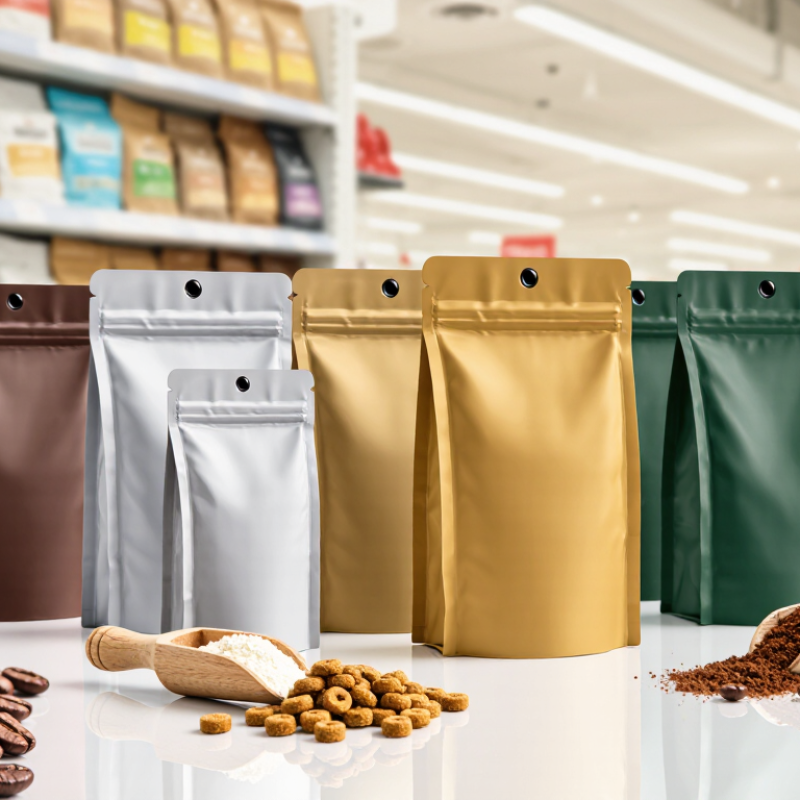
How to Choose Flat Bottom Pouches for Your Products?
Choosing a flat bottom pouch starts with the product, not the pouch shape. Identify the fill weight, density, moisture level, oil content, and expected shelf life. Fine powders may require stronger seals and controlled filling conditions. Oily products can challenge seal cleanliness. Fragile products may need puncture-resistant structures. Consider how the pouch will stand on a shelf, fit into cartons, and move through filling equipment. Small details matter.
Define your packaging goals before requesting samples. Do you need longer freshness, easy opening, resealability, or a larger display area? A high-barrier material may protect sensitive products from oxygen and moisture. A clear window can improve visibility, but it may reduce barrier performance. Ask for technical data and verify it with practical testing. Check seal strength, zipper function, drop resistance, and dimensional stability after filling. Laboratory results help, but production trials reveal problems faster.
I once focused too heavily on appearance and overlooked the pouch’s behavior on a fast filling line. That mistake caused uneven seals and avoidable waste. Measure the filled pouch, not only the empty sample. Confirm compatibility with your machine, product weight, and closure style. For food or other regulated products, request documented material suitability for the target market. Sustainability goals also need evidence; thinner material is not automatically a better choice. Packaging decisions often involve trade-offs. Test them openly.
Identify product requirements and packaging goals before selecting the pouch structure. The chart uses a practical 1–5 planning scale, where 5 indicates a high protection priority.
Coffee and nuts generally require strong oxygen and aroma protection, while powdered milk needs particularly high moisture protection. Light-sensitive products may also require an opaque or metallized layer. Final material selection should be confirmed through shelf-life testing, filling conditions, and recycling requirements.
Choosing flat bottom pouches starts with the product, not the pouch’s appearance. In packaging trials, I compare moisture, oxygen, light, and seal requirements. Roasted coffee needs strong oxygen protection and a reliable aroma barrier. Dry snacks often need moisture resistance and puncture strength. Powdered products require clean seals, because fine particles can create tiny leakage paths.
Paper-based structures offer a natural appearance and useful stiffness. However, paper alone provides limited protection against moisture and oxygen. Plastic films can create stronger barriers, especially when layered with aluminum or specialized barrier coatings.
Clear films help customers see the product, but they usually provide less light protection. Aluminum layers block light effectively, although they can reduce visibility and sometimes complicate recycling.
Do not trust appearance alone.
Ask for test data, including oxygen transmission rate, water vapor transmission rate, seal strength, and drop-test results. The correct values depend on shelf life, filling conditions, and storage climate. A pouch tested in a cool warehouse may perform differently in a hot, humid market.
I have seen attractive samples fail after repeated opening and handling. That mistake is easy to overlook. Review the zipper, bottom gusset, and seal area together.
Small changes in film thickness can affect both barrier performance and production speed. When evidence is incomplete, run a practical trial with real product, realistic transport, and enough storage time.
Choosing the right flat bottom pouch starts with your product, not the pouch design. Measure the product’s volume, weight, and settling behavior. Coffee, grains, snacks, and powders may need different internal space. A pouch filled too tightly can strain its seals. A pouch that is too large may look unfinished and waste shelf space.
Size matters. Leave a small headspace for clean sealing and easier handling. Shape also affects usability. A wider base improves stability, while a taller pouch may use less shelf depth. Consider how customers will pour, scoop, or reseal the product. From practical packaging tests, I have found that small changes in width can affect filling speed. My first estimate is not always right.
Tips: Fill a sample pouch before ordering in bulk. Check its standing position on a real shelf. Test the zipper with dry and oily contents. Confirm that the capacity matches the product’s actual density, not only its label weight. Take photos from several angles. They often reveal awkward proportions.
Material thickness and pouch capacity should work together. Heavy products may need stronger structures and reinforced seals. Lightweight contents may need less material but more volume. Ask the supplier for dimensional drawings and filling recommendations. Then test several sizes under normal storage conditions. A 500-gram pouch may not hold 500 grams of every product. Density changes everything.
Choosing flat bottom pouches starts with the closure, not the artwork. A resealable zipper suits products used over several days, such as snacks, coffee, or dry ingredients. For quick-use products, a simple heat seal may reduce cost and material use. Test the zipper with real product particles inside. Fine powder can enter the track and prevent a reliable seal. A closure that feels smooth in a sample may fail during repeated home use.
Features should support actual consumer habits. A wide opening helps users pour without spilling. A strong bottom gusset keeps the pouch stable on a crowded kitchen shelf. Clear panels can improve product visibility, but they may reduce barrier performance. Consider oxygen, moisture, light, and storage temperature before selecting the film structure. I have found that attractive packaging sometimes creates awkward handling. A pouch can stand well yet collapse during pouring. That detail deserves testing.
Tips: Fill sample pouches to their intended weight. Open and close each pouch at least twenty times. Check whether the zipper remains aligned after transport. Ask users to handle it with one hand. Include older users in testing, since small closures can be difficult to grip. Record complaints, not only positive feedback. Convenience is measurable through fewer spills, easier resealing, and confident storage. Reconsider any feature that looks useful but adds confusion.
| Flat Bottom Pouch Configuration | Typical Closure | Key Functional Features | Barrier and Protection Considerations | Consumer Convenience | Refillability | Best-Suited Product Categories | Selection Rating |
|---|---|---|---|---|---|---|---|
| Standard zipper pouch | Press-to-close zipper | Wide opening, stable flat base, resealable after opening, suitable for filling lines and manual packing. | Barrier performance depends on the laminate structure. A high-barrier film is appropriate for products sensitive to oxygen, moisture, light, or aroma loss. | Easy to open and close repeatedly; the flat base helps the pouch remain upright in cupboards or on shelves. | Good for dry products when the zipper and seal remain undamaged. | Snacks, dried fruit, confectionery, baking ingredients, pet treats, and household powders. | ★★★★★ |
| Child-resistant zipper pouch | Child-resistant press-to-close zipper | Requires an additional opening action, such as pressing designated areas while pulling the zipper. | Can be combined with odor, moisture, and oxygen barriers. A tamper-evident feature may be added separately. | Provides an extra safety barrier, but it is less convenient for some adults and may be unsuitable for products intended for quick access. | Good when the closure is used correctly and the zipper track stays clean. | Certain household, garden, chemical, and regulated product applications where child resistance is required. | ★★★★☆ |
| Spouted flat bottom pouch | Screw cap or tethered cap | Controlled dispensing, reduced spillage, and convenient pouring or squeezing. A large pouch may include a handle. | Requires a secure fit between the spout, cap, and pouch seal. Select liquid-compatible films and check resistance to puncture and leakage. | Convenient for on-the-go use and portion control; the cap must be replaced firmly after each use. | Generally suitable for repeated use if the spout and cap remain hygienic and leak-free. | Sauces, beverages, liquid seasonings, concentrates, personal-care products, and household liquids. | ★★★★★ |
| Tear-notch pouch | Heat seal with tear notch | Simple construction, low component count, easy initial opening, and strong seal integrity before opening. | Heat-sealed edges provide the primary protection. The package is usually not resealable unless a separate zipper or cap is added. | Very easy to open, but users need another container or clip after opening if the contents are not consumed at once. | Limited; normally intended for single-use or short-term consumption. | Single-serve snacks, sauces, samples, powdered mixes, and travel-size products. | ★★★☆☆ |
| Zipper pouch with degassing valve | Press-to-close zipper and one-way degassing valve | Allows carbon dioxide to escape while limiting outside air entry; includes an upright base for shelf display. | Useful for aroma-sensitive products. The valve does not replace the need for an appropriate oxygen and moisture barrier. | Easy to reseal and store upright. The valve supports freshness management without requiring frequent opening. | Good for dry products that release gas after filling or roasting. | Freshly roasted coffee and other dry, aroma-sensitive products that may release carbon dioxide. | ★★★★★ |
| High-barrier zipper pouch | Press-to-close zipper with heat-sealed top | Combines a resealable opening with a removable tamper-evident top seal. The flat bottom improves pack stability and cube utilization. | Suitable for products requiring strong protection against oxygen, water vapor, light, or aroma transfer. Barrier level must be verified against the product’s shelf-life target. | Offers visible first-opening evidence and convenient repeated access; the top seal must be removed before normal use. | Good for dry products when the zipper is kept free of product particles. | Nuts, protein powders, specialty foods, dehydrated meals, and sensitive dry ingredients. | ★★★★★ |
| Paper-look flat bottom pouch | Zipper, tin tie, or heat seal | Paper-based outer appearance with a functional inner sealing layer; offers a premium natural appearance and upright presentation. | Paper alone is not a reliable moisture or oxygen barrier. Performance comes from the inner coating or laminated structure, which should be specified and tested. | Attractive on shelf and easy to handle. The opening experience depends on the selected closure. | Usually good with a zipper; limited with a heat-only seal. | Bakery products, coffee, dry foods, pet treats, and products positioned with a natural or craft-style appearance. | ★★★★☆ |
| Handle-equipped flat bottom pouch | Zipper, spout, or heat seal with integrated handle | Improves carrying comfort for larger pack sizes; may include a reinforced handle area and a wide stable base. | Handle placement must not weaken the top seal or create stress points. The film and seal must support the filled weight. | Convenient for bulk products and repeated carrying, especially when the package is too large to grip comfortably around the body. | Depends on the selected closure; zipper and spout versions support repeated access. | Bulk pet food, garden products, laundry products, powdered beverages, and family-size dry goods. | ★★★★☆ |
| Freezer-grade flat bottom pouch | Heavy-duty zipper or heat seal | Designed for low-temperature handling, upright storage, and resistance to cracking or seal failure during freezing and thawing. | Use a film structure tested for the intended temperature range. Protection against moisture loss and freezer burn depends on the total package barrier and seal quality. | Convenient for organized freezer storage when the base remains stable and the zipper can be operated with cold hands. | Good if the closure remains flexible and clean after temperature cycling. | Frozen fruit, vegetables, prepared foods, ice products, and frozen pet-food portions. | ★★★★☆ |
Choosing a flat bottom pouch starts with how your product behaves during storage, transport, and filling. A dense powder needs stable seals and strong gussets. A snack may need oxygen and moisture barriers. Request technical data for film thickness, seal strength, puncture resistance, and barrier performance. Test filled samples, not empty pouches. Empty packaging can look perfect.
Quality standards should be supported by records, not confident promises. Ask for batch traceability, inspection procedures, and recent test reports. Check seal integrity after heat exposure, stacking, and drop testing. If the pouch touches food, cosmetics, or other regulated products, confirm applicable material and migration requirements in each selling market. Compliance depends on the product and destination. A general certificate may not cover your exact use. That detail is often missed.
Calculate total cost beyond the unit price. Include printing plates, setup fees, minimum order quantities, freight, storage, filling speed, and product loss from weak seals. A slightly higher price may reduce line stoppages. It may also lower waste. Compare quotations using the same pouch size, material structure, finish, and order volume. Otherwise, the comparison is misleading.
Ask about defect allowances and replacement terms. Then run a small production trial. This step can feel slow, but skipping it creates expensive surprises. One assumption may still be wrong. Review the results with your operator, quality team, and compliance adviser before placing a large order.

