Top 10 Carbon Black Masterbatch Manufacturers Worldwide
Carbon Black Masterbatch sits at the meeting point of pigment, polymer, and process control. A black pellet may look ordinary, yet its dispersion can shape color strength, surface appearance, conductivity, and production consistency. Small details matter: a streak on a molded panel, dust near a feeder, or uneven flow through an extruder can signal different formulation challenges.
Dr. George Wypych, a specialist in fillers and author of the Handbook of Fillers, offers a useful perspective. In paraphrase, his work points to this principle: “Performance depends on dispersion, not filler loading alone.” That is not a verified verbatim quotation, but it captures a practical consideration for buyers and compounders. Carbon black grade, carrier resin, loading, and processing conditions all deserve close attention.
This overview of the top 10 Carbon Black Masterbatch manufacturers worldwide is intended as a starting point, not a final purchasing verdict. It considers factors such as product range, technical support, production capabilities, and market presence. Company rankings can vary by region and application, and public information does not reveal every quality-control detail. That limitation matters. A supplier suited to film may not fit a demanding injection-molding line. Readers should compare technical data, request samples, and test performance under their own processing conditions. The best choice is rarely just the darkest pellet.
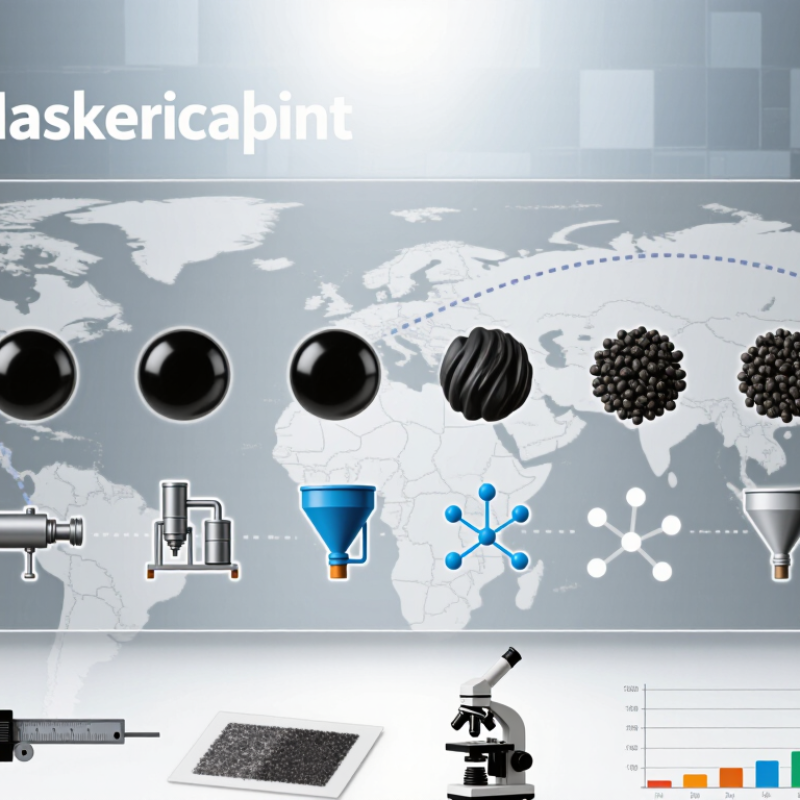
What Carbon Black Masterbatch Is and How It Works
Carbon black masterbatch is a concentrated blend of carbon black pigment, carrier resin, and sometimes processing additives. It is supplied as pellets, making it easier to dose into a base polymer than loose pigment. It is not dye. The carrier should be compatible with the plastic being processed; a mismatch can affect flow, surface appearance, or strength.
During extrusion or molding, heat softens the carrier and distributes the pigment through the molten plastic. Good dispersion helps prevent visible specks and uneven black areas. It can also support opacity and resistance to ultraviolet exposure, depending on the carbon black grade, concentration, and final product. Small details matter. A pellet that looks uniformly black does not guarantee an equally uniform finished part.
Processors typically check the formulation with trial runs, then inspect molded samples for color consistency and surface defects. They may also track melt flow and mechanical performance, since added pigment can influence both. More carbon black is not automatically better; excessive loading may complicate processing or weaken some properties. Results vary with resin, equipment, and mixing conditions, so real production tests remain important. Even careful trials can miss a later change in raw material or machine settings.
How Carbon Black Masterbatch Is Manufactured and Tested
Carbon black masterbatch begins with measured pigment, polymer carrier, and dispersing additives. Operators condition materials when moisture control is needed. Gravimetric feeders keep the recipe steady, while a twin-screw extruder applies heat and shear. The goal is to wet each pigment particle and break down agglomerates without damaging the carrier. Production records typically track melt temperature, screw speed, and torque. Pellets are cooled, cut, and checked for size and visible contamination. Small details matter.
Testing combines instrument readings with practical processing checks. A laboratory may measure moisture, melt flow rate, ash content, and color strength against an agreed specification. Thin molded plaques reveal streaks, specks, and shade variation. Microscopy or dispersion ratings can help identify poorly distributed carbon black. A let-down trial in the intended polymer is useful; behavior can shift with addition rate. Not every batch behaves. Results should be compared with retained samples and documented methods, not judged by appearance alone. Even then, one test cannot predict every production line; screw design and processing conditions can change the outcome. That limitation deserves attention.
Criteria for Evaluating Global Manufacturers
A useful comparison starts with the intended application, not a polished product sheet. PlasticsEurope’s Plastics – the Fast Facts 2024 report estimates global plastics production at 413.8 million tonnes in 2023. That scale makes consistency important: buyers should request batch-level data for carbon content, moisture, and melt flow, then verify results against agreed test methods. For example, ISO 1133 can assess melt mass-flow rate, while ASTM D1603 measures carbon black content in plastics. Numbers need context. A high loading figure alone does not prove good dispersion or reliable processing.
Ask suppliers to show microscope images or filtration-pressure results from production-representative samples. Check color strength, jetness, and performance at the proposed let-down ratio; then test the actual resin and molding conditions. A masterbatch that looks uniform in a pellet can still leave specks in a thin film. It happens. Review carrier-resin compatibility, technical support, traceability, and documented production controls, rather than relying on claims of “global capacity.” Request evidence from more than one lot. Also examine how suppliers manage process variation and energy use, but compare disclosed data carefully: reporting methods may differ. A perfect scorecard is unlikely, and I would treat missing test conditions as a real qualification gap.
Ten Leading Carbon Black Masterbatch Manufacturers Worldwide
A worldwide review of ten leading carbon black masterbatch manufacturers should compare performance, not just production scale.
Grand View Research valued the global masterbatch market at USD 12.24 billion in 2023 and forecast 5.4% annual growth through 2030.
Its broader carbon black market estimate was USD 20.68 billion for 2023, with projected 6.3% annual growth over 2024–2030.
These figures cover broader markets, not carbon black masterbatch alone. That distinction matters.
For a practical shortlist, examine pigment dispersion, batch-to-batch shade consistency, carrier-resin compatibility, and technical support. Ask for test data on the intended polymer and loading level; a smooth black pellet can still produce streaks in a thin film.
Assess production coverage and delivery reliability, too. A ranking can look precise while overlooking a buyer’s actual processing conditions. Treat “leading” as a starting point, not a guarantee.
Tips: Request a sample and run it on your own line. Check filter pressure, surface finish, and color after processing. Record results across more than one batch; one successful trial proves little.
Key Applications and Industry Developments
Carbon black masterbatch is used to color and protect plastic products where consistent blackness and light shielding matter. In agricultural film, it helps limit sunlight passing through the material. In pipes and cable insulation, it supports durable color and weather resistance. Small details matter. A few uneven specks can show clearly in a thin film.
Performance depends on how well the carbon black disperses in the carrier resin. Poor dispersion may create streaks, weak spots, or inconsistent surface appearance. Processors typically check melt flow, loading level, and compatibility with the target polymer before adjusting extrusion settings. There is no perfect recipe; a formulation that works in one line may need changes elsewhere.
Recent development focuses on concentrated formulations, more consistent dosing, and compatibility with recycled plastics. These changes can help reduce handling steps and support stable production, though results depend on the recycled resin’s quality. Testing remains essential. Color strength, dispersion, and mechanical performance should be checked on finished parts, not assumed from a data sheet alone. Some trade-offs are easy to miss. Higher loading may deepen color, but it can also affect processing or product properties.