10 Tips for Buying a Velociraptor Dinosaur Statue?
Buying a Velociraptor Dinosaur Statue involves more than choosing the sharpest claws or the largest display piece. A convincing model should reflect anatomy, posture, scale, and believable movement. Paleontologist Dr. David Hone has emphasized a useful reality: “Velociraptor was a turkey-sized animal, not the six-foot monster shown in Jurassic Park.” That detail can completely change your buying decision.
This guide introduces ten practical tips for selecting a reliable Velociraptor Dinosaur Statue. You will learn how to inspect skeletal proportions, foot placement, feather details, surface texture, and paint quality. A well-made statue should show balanced hips, a properly raised sickle claw, and a tail that supports the body naturally. Look closely. Small errors often reveal rushed production.
Material also matters. Fiberglass may suit outdoor displays, while resin can preserve sharper facial details indoors. Check the statue under bright light. Uneven paint, visible seams, or soft teeth may indicate weak craftsmanship. I once considered a dramatic model with oversized jaws, but its unstable feet changed my mind. Appearance alone is not enough.
Some recommendations remain subjective. Collectors may prefer cinematic aggression, while educators may demand scientific restraint. Neither preference is automatically wrong. However, buyers should understand the difference. A dependable seller should provide dimensions, weight, material information, care instructions, and clear photographs. These details support informed decisions and reduce disappointment. Use the following tips to compare statues carefully, question exaggerated claims, and choose a piece that remains impressive after the first glance.
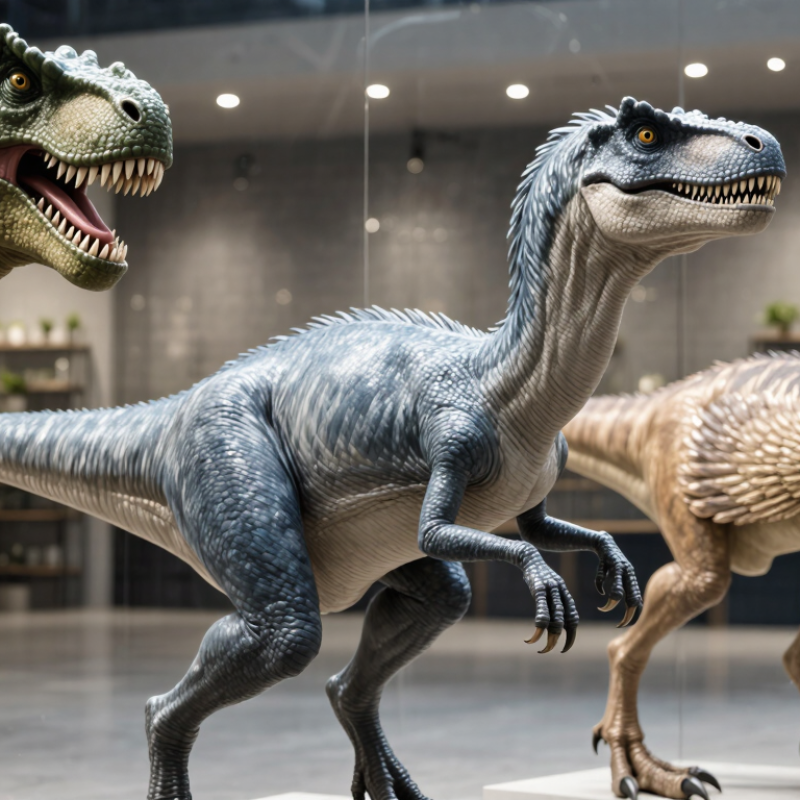
Define the Purpose and Placement of Your Velociraptor Statue
Before buying a velociraptor dinosaur statue, decide what role it should play. Is it a dramatic garden focal point, a museum-inspired display, or a playful indoor accent? Purpose controls scale, posture, texture, and viewing distance. A tall, open-jawed figure may suit a driveway, but it can overwhelm a narrow hallway. Measure the location carefully, including doorways and turning space. I once underestimated a statue’s tail length; the placement looked crowded and needed adjustment.
The 2023 Remodeling Impact Report from the National Association of REALTORS® and the National Association of Landscape Professionals estimated a 104% cost recovery for landscape maintenance. The report does not evaluate dinosaur statues, but it supports a useful principle: outdoor presentation influences perceived property appeal. Place the statue where lighting, planting, and walking routes support it. Avoid blocking steps, drains, windows, or emergency access. For public-facing spaces, confirm local display and safety requirements.
Tip: Match the statue’s scale to the viewing distance. A figure seen from six meters needs stronger silhouette details than one viewed closely. Choose a stable base, weather-resistant materials, and concealed anchoring where appropriate. Check wind exposure before installation. Indoors, protect delicate floors with non-slip pads and allow cleaning access. Do not rely only on photographs; proportions can feel different in person. A smaller statue may create more believable atmosphere than an oversized one. That choice is easy to regret.
Compare Statue Sizes, Materials, and Construction Quality
When buying a velociraptor dinosaur statue, compare scale before appearance. A 60-centimeter figure suits a shelf, while a 150-centimeter piece needs stable floor space. Measure doorways, stair turns, and display depth first. Scale matters. A dramatic pose can also shift the center of gravity. Check whether the feet sit flat, especially when the tail rises sharply.
Material affects weight, texture, and outdoor durability. PlasticsEurope reported global plastics production of 413.8 million tonnes in 2023. That figure shows resin is widely used, but it does not prove quality. Fiberglass-reinforced resin should have even surfaces, firm joints, and no hollow rattling sounds. Polyurethane can capture scales sharply, yet thin claws may chip during transport. Concrete offers impressive mass. The U.S. Geological Survey reported about 91 million metric tons of U.S. cement production in 2023. Concrete statues can feel permanent, but porous surfaces may absorb water and crack during freezing weather.
Construction details reveal more than glossy photographs. Inspect the neck, ankles, jaw, and tail connection. These areas carry stress. Look underneath. A metal armature, sealed seams, and stainless fasteners usually indicate stronger engineering. Ask for the statue’s weight, coating system, repair method, and outdoor exposure guidance. I would not trust vague claims such as “weatherproof.” Even a well-made sculpture may fade, loosen, or need repainting. My own judgment can be imperfect, especially under showroom lighting, so inspect close-up photographs and request a scale reference before paying.
10 Tips for Buying a Velociraptor Dinosaur Statue: Compare Size, Materials, and Construction Quality
Estimated dimensions are scaled from an adult Velociraptor mongoliensis measuring about 2 m in total length and approximately 0.5 m at the hip.
Size: Smaller scales suit shelves and cabinets, while half-scale and life-size pieces require substantial floor space.
Materials: Fiberglass and resin are common for large displays; polyurethane resin and reinforced plastics are often practical for smaller statues.
Construction quality: Check for internal reinforcement, stable feet, clean seams, realistic surface texture, and securely attached claws, teeth, and tail sections.
Check Dinosaur Accuracy, Sculpting Details, and Surface Finish
When buying a velociraptor dinosaur statue, inspect accuracy before admiring its size. The Paleobiology Database records more than 1,000 named dinosaur species, yet many reconstructions remain incomplete. Fossils confirm the sickle claw, narrow skull, and long balancing tail. They do not prove every feather pattern or color. A credible statue should reflect current research, not old movie imagery. Check the feet, hands, teeth, and hip structure closely. A strange posture often reveals weak reference work.
Tip: Compare the sculpt with museum references, peer-reviewed illustrations, and recent fossil studies. Look for a balanced center of gravity. I have seen impressive models fail here. The tail touched the ground, and the animal looked like a plastic tripod. That mistake is easy to miss in online photographs. Ask for side and rear views before purchasing. Scale drawings help expose oversized heads or tiny arms.
Sculpting details matter under direct light. Fine feather impressions, eyelid folds, claw edges, and skin transitions should appear deliberate, not randomly scratched. Surface finish needs equal attention. ISO 2813 defines gloss measurement methods, while ISO 4892-3 addresses accelerated weathering using fluorescent UV exposure. These standards show why a display piece should have an even coating and controlled sheen. A very glossy finish can erase feather texture. A completely dull coating may look unfinished. Check for bubbles, pinholes, seam lines, and uneven color around the mouth. Slight imperfections can occur in hand finishing. Still, obvious cracks deserve questions. Avoid assuming heavier means better; internal support and clean casting usually matter more.
Evaluate Seller Reliability, Pricing, Shipping, and Protection
10 Tips for Buying a Velociraptor Dinosaur Statue?
Seller reliability matters more than a dramatic product photo. Check the seller’s trading history, physical contact details, material descriptions, and recent buyer feedback. Look for consistent images showing the head, claws, base, and painted surface. A practical warning sign is vague wording such as “museum quality” without measurements or resin specifications. I once trusted polished photographs too quickly. That was a mistake.
Compare at least three prices with similar height, materials, and finishing. A low price may exclude a reinforced frame, secure packaging, or delivery insurance. Baymard Institute’s 2024 checkout benchmark records an average cart-abandonment rate of 70.19%. Unexpected shipping fees are a major reason, so request the complete delivered price before paying. Ask whether taxes, handling charges, and remote-area fees are included. Pricing still needs judgment.
Shipping protection deserves written confirmation. Request a double-wall carton, foam spacing, moisture protection, and a marked inspection process. For a large statue, ask how the crate handles claws, tail tips, and thin teeth. The 2024 retail returns report from the National Retail Federation estimated that 16.5% of annual retail sales were returned in 2022. That figure is not statue-specific, but it shows why clear return terms matter. Photograph the unopened package, then record damage before removing protective layers. Keep every message and invoice. A perfect inspection plan can still fail when the carrier mishandles an oversized parcel.