

OPEN FROM 9AM TO 5PM – CLOSED ON WEEKENDS
Choosing a Motorcycle CarPlay Screen is not simply a matter of buying the largest display. It is a safety, usability, and weather-resistance decision. Grand View Research reports continued growth in the global automotive infotainment market, driven by smartphone integration and connected services. However, motorcycle riders face harsher conditions. Rain, glare, vibration, gloves, and limited mounting space can quickly expose weak designs.
The National Highway Traffic Safety Administration reported that motorcyclists were about 28 times more likely to die in crashes than passenger-car occupants, based on vehicle miles traveled in 2022. This statistic does not make technology the enemy. It makes poor interface design unacceptable. Motorcycle electronics reviewer Ari Henning offers a useful principle: “The best accessory is the one you stop noticing once the ride begins.” That idea deserves careful testing, even if it sounds obvious.
A reliable Motorcycle CarPlay Screen should provide clear navigation, stable wireless connections, responsive controls, and dependable brightness without demanding constant attention. IP ratings matter. So do glove-friendly buttons and secure brackets. A screen that looks impressive in a showroom may shake, overheat, or become unreadable under direct sunlight. That is the uncomfortable part. Marketing claims are not road evidence.
This guide examines ten practical selection tips. It compares display size, audio support, installation, weather protection, power requirements, safety features, and long-term reliability. The goal is not to choose the most expensive unit. It is to choose the screen that quietly supports the ride, mile after mile.
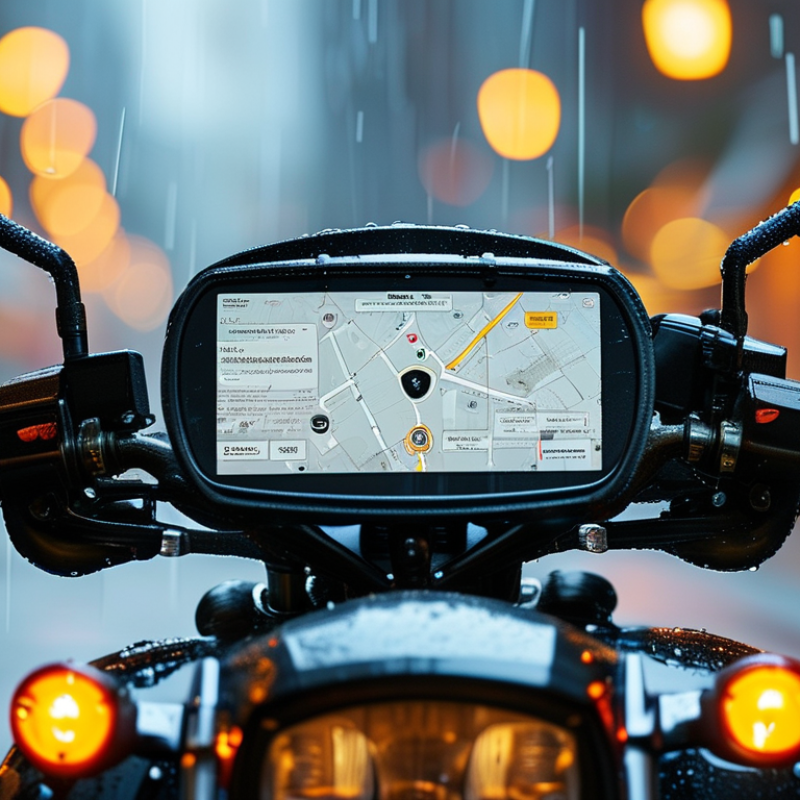
Define your riding needs before comparing screen sizes, speakers, or mounting systems. A daily commuter may need quick route guidance, while a weekend rider may prioritize weather resistance and offline navigation. Your use case matters more than a crowded feature list.
Pew Research Center’s 2024 Mobile Fact Sheet reports that 91% of U.S. adults own a smartphone. That makes phone integration practical, but not automatically safe. NHTSA’s 2021 Traffic Safety Facts reported that motorcyclists were 28 times more likely to die in crashes than passenger vehicle occupants, based on miles traveled. Keep interaction brief. Choose a display you can read with one glance, even under harsh sunlight.
Think through real riding moments. Will you operate the screen with winter gloves? Can you hear prompts through your helmet at highway speed? Does rain reach the mounting area? A compact screen may suit urban traffic, while a larger display can help on unfamiliar rural roads. Avoid touch controls that demand precise finger movements. I once favored a bright, feature-heavy unit in a showroom, then found its menus distracting on narrow roads. That choice still needs reconsideration. Check viewing angles, physical controls, brightness adjustment, waterproof ratings, and stable phone connection before purchase. Less can be better.
10 Tips for Choosing a Motorcycle CarPlay Screen?
Display size should support quick reading, not dominate the cockpit. A five-to-seven-inch screen usually offers useful map detail without blocking instruments or controls. The NHTSA Visual-Manual Driver Interface Guidelines recommend limiting individual glances to two seconds. That matters on a vibrating motorcycle. I once preferred a larger display, but it became distracting during tight turns.
Brightness deserves stronger attention than advertised screen size. The Illuminating Engineering Society identifies clear midday sunlight at roughly 100,000 lux. A screen below 500 nits can look weak under direct sun. For exposed handlebars, choose at least 800 nits, with automatic brightness adjustment and an anti-glare surface. Test it with polarized sunglasses. Some screens still appear dim, which is an easy detail to miss.
Weather resistance needs evidence, not vague language. Under IEC 60529, IP65 indicates dust protection and resistance to water jets, while IP67 adds temporary immersion protection. Neither rating proves resistance to long-term vibration, temperature swings, or poor cable sealing. Look for sealed connectors, a sun hood, and mounting hardware tested against vibration. SAE J1455 environmental practices are useful references, although motorcycles can experience harsher movement. Ask for the test conditions. Marketing often skips them.
| # | Selection Checkpoint | Recommended Specification | Why It Matters | Practical Checking Method |
|---|---|---|---|---|
| 1 | Display Size | Choose approximately 5–7 inches for most motorcycles. | A larger screen improves map readability, while an overly large unit can block instruments or controls. | Measure the available handlebar or dashboard area and confirm that the screen does not obstruct the speedometer or switchgear. |
| 2 | Screen Brightness | Look for a display rated at roughly 800–1,000 nits or higher for strong daylight visibility. | Motorcycle screens are exposed to direct sunlight, which can wash out low-brightness displays. | Check the published brightness rating and view the screen outdoors from different angles, preferably with sunglasses. |
| 3 | Weather Resistance | Prefer a clearly stated IP65 rating or better for the complete installed unit. | The rating indicates protection against dust and water jets, although it does not guarantee protection from every situation. | Verify that the rating applies to the screen, connectors, buttons, and cable entry points—not only to a removable cover. |
| 4 | Touchscreen Operation | Select a capacitive touchscreen that supports reliable operation with wet fingers or motorcycle gloves. | Gloves, rain, and vibration can make small or insensitive touch controls difficult to use safely. | Test common actions such as zooming, tapping, and swiping while wearing the gloves used for riding. |
| 5 | Phone Compatibility | Confirm support for the current versions of Apple CarPlay, Android Auto, or both, according to your phone. | Compatibility affects navigation, calls, messages, music, and voice-control functions. | Check the operating-system requirements and test both wired and wireless connection claims with your phone model. |
| 6 | Audio Connectivity | Look for Bluetooth support and, when needed, a wired audio output or connection to a helmet intercom. | Clear audio routing is essential for navigation prompts, calls, and music while riding. | Pair the screen with the helmet headset and verify automatic reconnection after turning the motorcycle off and on. |
| 7 | Mounting Stability | Use a vibration-resistant mount with adjustable viewing angles and hardware suited to the handlebar diameter. | Stable mounting reduces screen shake, improves readability, and helps protect connectors from repeated stress. | Check the supplied clamp range, locking mechanism, fastener quality, and clearance during full steering movement. |
| 8 | Power Requirements | Confirm compatibility with the motorcycle's 12-volt electrical system and use an appropriately fused connection. | Correct wiring helps prevent intermittent shutdowns, battery drain, and damage caused by unsuitable connections. | Review the input-voltage range, standby behavior, fuse guidance, and whether ignition-switched power is supported. |
| 9 | Temperature and Glare Performance | Choose a unit with a stated operating-temperature range and an anti-glare or optically bonded display when available. | Outdoor heat, cold, and reflections can affect responsiveness and visibility. | Compare the manufacturer's temperature specification with your riding environment and inspect the screen under reflected sunlight. |
| 10 | Safety and Convenience Features | Prioritize physical controls, voice access, automatic brightness, quick pairing, and a simple startup process. | Fewer manual steps reduce distraction and make the system easier to operate on the road. | Test startup time, voice commands, brightness adjustment, and access to essential functions without removing your gloves. |
Installation affects stability, visibility, and maintenance. A handlebar clamp suits riders who change motorcycles often. A fixed bracket looks cleaner, but it needs correct bolt spacing and careful torque. Test the screen while turning fully left and right. The cable must not stretch. It should also avoid the steering head and hot engine parts. I have seen neat installations fail because one cable rubbed against the frame.
Power options deserve equal attention. A built-in battery is convenient for short trips, yet frequent charging can become irritating. A switched 12-volt connection gives steady power, but installation requires a fuse and weather-resistant connectors. USB power is simpler, though some motorcycle USB ports deliver unstable output. The Bluetooth SIG’s 2024 Market Update projects 5.4 billion Bluetooth device shipments in 2024. That figure shows broad adoption, not guaranteed compatibility. Check Bluetooth calling, audio, and control profiles before buying.
Compatibility should include the phone, headset, navigation app, and operating system. Confirm support for both major mobile platforms if riders may change phones. Check screen brightness in direct sunlight, glove operation, and waterproof protection. NHTSA’s 2022 Traffic Safety Facts recorded 6,084 motorcycle rider deaths in the United States. A screen should reduce distraction, not create another one. Keep controls simple. Avoid touch-heavy menus. Some advertised ratings also need reflection; waterproof claims may not cover exposed connectors, pressure washing, or vibration. Test every function while parked. A perfect fit is not always a safe fit.
Evaluate navigation before visual style. Choose a bright display with adjustable contrast and large touch targets. A 2023 report from the World Health Organization attributes about 1.19 million annual road deaths to traffic crashes. That figure makes glance time important. Voice guidance should work clearly through helmet speakers, even near heavy wind noise. Offline maps are useful when mountain roads lose mobile coverage. I once trusted a weak signal and missed a turn. It was avoidable.
Audio controls should remain simple. Look for physical buttons or reliable handlebar controls, rather than tiny on-screen icons. Calling features need echo reduction, stable Bluetooth connections, and microphone placement near the rider’s mouth. NHTSA reported 3,308 distracted-driving deaths in 2022, with distraction contributing to 289,310 reported injuries. A screen cannot make riding safe. It can reduce unnecessary hand movement when designed carefully. Test pairing with gloves.
Safety alerts deserve serious checking. Select systems that support clear weather, traffic, and hazard notifications without flooding the display. Confirm automatic brightness, waterproof protection, anti-glare performance, and quick start-up. The WHO states that correctly worn helmets reduce fatal injury risk by 42% and brain injury risk by 69%. Do not let navigation compete with road awareness. I still prefer stopping for complex routes. More features are not always better.
Choosing a motorcycle CarPlay screen starts with durability, not a bright display. On a daily ride, rain can reach connectors, while vibration loosens weak brackets. Look for a sealed housing, corrosion-resistant fittings, and a mount that grips the handlebar firmly. Check the mount. I prefer testing every fastener by hand before a long trip. A clear screen should remain readable under direct sunlight, but brightness alone is not enough. Ask whether the unit tolerates temperature changes and repeated vibration. Product claims can sound impressive; published test details are more useful. Some screens survive light rain but fail after water enters the charging port. That difference matters. I once underestimated cable strain, and intermittent power followed. A small rubber bend or proper cable tie could have prevented it. That was my mistake.
Security includes physical and digital protection. Use a locking bracket or concealed release when parking in public areas. Avoid mounting the screen where it blocks mirrors, controls, or your view of traffic. Wireless connections should use current encryption, and the device should request only necessary phone permissions. Confirm that software updates are still provided after purchase. Price needs a wider calculation than the checkout figure. Add installation parts, replacement cables, protective covers, and possible service fees. The cheapest option may become expensive after one failed connector. Compare warranty length, repair procedures, response times, and local service availability. Keep receipts. Read recent customer reports, especially those describing faults after months of riding. Reliable after-sales support can matter more than a slightly sharper display.
Practical evaluation priorities for durability, security, price, visibility, and after-sales support
This 100-point evaluation framework gives the greatest weight to durability and security because motorcycle screens face vibration, weather, theft risks, and outdoor exposure. Price, visibility, and after-sales support should also be checked before purchase. Compare waterproof ratings, mounting stability, locking options, screen brightness, warranty coverage, and replacement-part availability.

