China Top Titanium Bolts Supplier for Global Buyers
China has become a significant source of titanium fasteners for aerospace, marine, chemical, medical, and high-performance equipment. Its broad manufacturing base supports machining, cold heading, heat treatment, surface finishing, and export inspection. For global buyers, however, low price alone is not enough.
The US Geological Survey identifies China as one of the world’s leading titanium sponge producers. Industry research from Grand View Research also reports steady growth in the global titanium market, driven by aerospace expansion, corrosion resistance, and lightweight engineering. These trends create real demand for Titanium Bolts, especially Grade 5 Ti-6Al-4V bolts used around aircraft structures, racing components, and seawater-exposed assemblies.
“Titanium offers an unusual combination of strength, low density, and corrosion resistance,” explains Matthew J. Donachie, author of Titanium: A Technical Guide. His observation remains practical on the factory floor. A bolt must fit correctly, hold its preload, and survive its working environment.
A dependable China Titanium Bolts supplier should provide mill certificates, dimensional reports, traceability records, and controlled packaging. Buyers should confirm ASTM F467, ASTM F468, ISO, or customer-specific requirements before ordering. Thread galling is still an overlooked risk. Proper lubrication and controlled installation matter.
Some purchasing teams focus too heavily on tensile strength. That can be a mistake. Thread condition, surface finish, batch consistency, and application temperature may decide service life. This introduction examines how qualified Chinese suppliers support global buyers with engineering control, transparent documentation, and practical quality assurance. Yet no supplier should be accepted without independent verification.
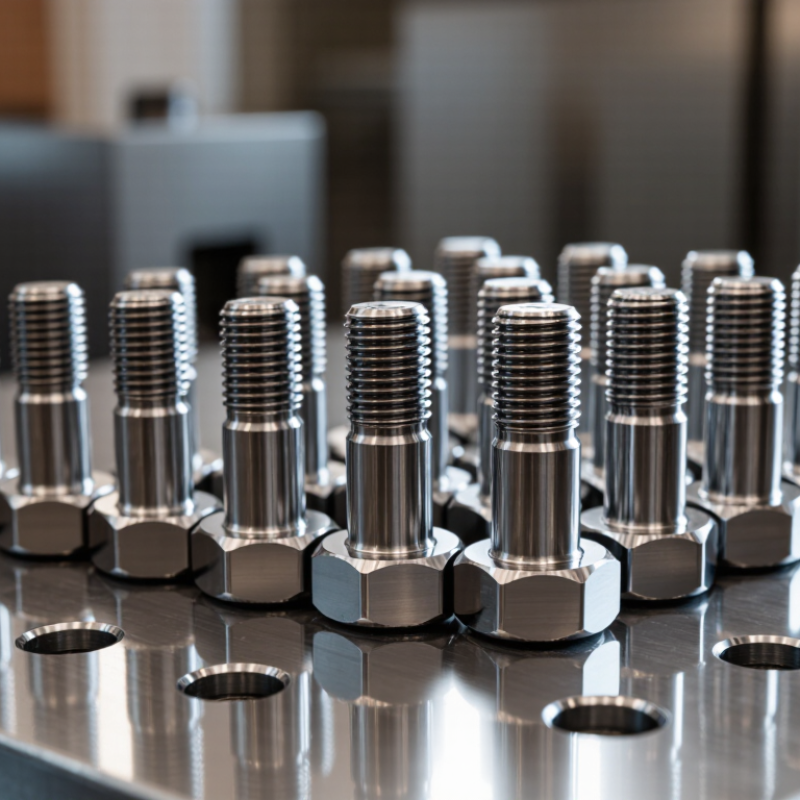
Titanium Bolts: Properties, Grades, and Industrial Uses
Titanium bolts combine low weight with strong mechanical performance. Their density is about 56% of steel. They also resist saltwater, chlorides, and many chemical environments. This makes them useful where ordinary steel fasteners corrode quickly. Titanium is nonmagnetic and transfers heat slowly. However, it can gall during installation. Clean threads, suitable lubrication, and controlled torque are essential.
Grade 2 is commercially pure titanium with good corrosion resistance and moderate strength. It suits marine equipment, chemical tanks, heat exchangers, and lightweight structures.
Grade 5, or Ti-6Al-4V, offers higher strength and is common in aerospace frames, racing components, and demanding industrial assemblies. Grade 23 provides improved ductility and fracture toughness for selected medical and aerospace applications.
Material choice should follow load, temperature, corrosion exposure, and certification requirements. The strongest grade is not always the best fit.
For global buyers, a reliable China-based supplier should provide mill certificates, heat numbers, dimensional reports, and thread-gauge records. Samples should match production lots, including head dimensions and surface finish. Titanium bolts need careful packaging because damaged threads can create expensive delays. Clear inspection criteria help. A practical sourcing review should also check tensile strength, hardness, ultrasonic cleaning, and traceability. One detail is often underestimated: mixed-grade packaging can cause installation errors. Even experienced teams may overlook it. Rechecking labels is worthwhile.
Why China Is a Leading Titanium Bolt Manufacturing Hub
China has become a leading titanium bolt manufacturing hub because it combines material expertise, dense industrial networks, and flexible production capacity. Titanium bolts are not ordinary fasteners. Their strength-to-weight ratio, corrosion resistance, and heat performance demand disciplined processing. Experienced Chinese factories often manage forging, CNC machining, heat treatment, surface finishing, and inspection through coordinated supply chains. This reduces handoff delays. It also supports custom sizes and thread designs for aerospace, marine, chemical, medical, and energy equipment. Not every order needs the same alloy or tolerance.
Reliable production begins with traceable titanium bar or wire. Suppliers should verify chemical composition, mechanical properties, dimensions, and heat numbers before machining. Skilled technicians monitor thread accuracy, concentricity, hardness, and surface defects. Sampling alone may miss problems. Critical orders need stronger controls, including calibrated gauges, tensile testing, dimensional reports, and documented lot tracking. Production experience helps teams adjust cutting speed and tooling, since titanium can generate heat and wear tools quickly. Small details matter.
China’s advantage also comes from responsive engineering support and scalable output. A buyer can request prototypes, test samples, and batch production without changing the entire supply chain. However, the process is not flawless. Quality may vary between factories, and low prices can hide weak inspection or inconsistent raw materials. Buyers should review drawings, standards, certificates, packaging, and corrective-action records before placing large orders. Clear communication remains essential. It prevents expensive assumptions.
China Top Titanium Bolts Supplier for Global Buyers - Why China Is a Leading Titanium Bolt Manufacturing Hub
The chart compares the minimum tensile strength of widely used titanium grades for fasteners. Grade 5 provides the highest strength among the selected materials, while Grade 2 is valued for corrosion resistance and formability. These material benchmarks help global buyers evaluate titanium bolt specifications, quality requirements, and manufacturing capabilities.
Reference: ASTM B348/B348M and ASTM F467/F467M material specifications. Values are minimum tensile-strength requirements and may vary by product form, heat treatment, and applicable standard.
How to Select a Reliable Chinese Titanium Bolt Supplier
China Top Titanium Bolts Supplier for Global Buyers
Selecting a reliable Chinese titanium bolt supplier requires more than comparing prices. A polished website proves little. Request mill certificates, material grades, tensile results, and batch traceability for every shipment. The certificate should match the heat number stamped on the packaging.
Ask how the supplier controls thread accuracy, surface defects, and dimensional tolerance. For demanding assemblies, review inspection records from calibrated equipment. A practical sample order can reveal plating quality, thread fit, packaging strength, and delivery discipline.
Check whether the supplier understands your drawings, coating requirements, and service environment. Small misunderstandings become expensive quickly.
Verify production capacity through a factory audit, live video inspection, or independent quality inspection. Reliable suppliers explain rejected-batch procedures instead of promising perfection. That matters. They should provide clear lead times, export documents, packing photographs, and responsive technical communication. Ask for references from comparable industries, but confirm them independently.
A low quote may hide weak testing or inconsistent raw material. I have seen buyers focus heavily on unit cost, then overlook freight damage and replacement delays. That approach needs reconsideration. Before placing a large order, approve a controlled sample, define acceptance criteria, and record every agreed specification in writing.
Quality Standards and Testing for Exported Titanium Bolts
China Top Titanium Bolts Supplier for Global Buyers
Exported titanium bolts need more than a bright surface and a low price. Buyers should verify the material grade, applicable specification, and production traceability. Common checks include chemical composition, dimensions, thread accuracy, tensile strength, and surface condition. Each batch should carry a heat number linked to raw material records.
At our inspection stage, calibrated thread gauges check both fit and pitch. Tensile samples are tested according to the agreed standard and customer requirements. Hardness results are recorded, although hardness alone cannot prove bolt performance. Visual inspection looks for cracks, dents, discoloration, and damaged threads. Critical orders may also require independent laboratory testing.
Export documents should match the physical goods. A reliable file includes inspection reports, certificates of conformity, packing details, and clear batch identification. Packaging matters too. Separators can prevent thread contact and surface marks during long transport. One weakness deserves attention: testing every bolt is usually impractical. Sampling plans must therefore be carefully defined, reviewed, and improved when problems appear. Good suppliers do not hide small inconsistencies. They investigate them before shipment.
Ordering, Customization, and Global Shipping Considerations
China Top Titanium Bolts Supplier for Global Buyers
Ordering titanium bolts from China requires more than comparing unit prices. Start with the grade, thread standard, diameter, length, and required strength. Grade 5 titanium suits many demanding applications, but specifications must match the design. Request material certificates, dimensional reports, and sample photographs before approving production. A reliable supplier should explain tolerance limits clearly. Vague answers deserve another question.
Customization may include head shape, thread pitch, surface finish, and packaging. Send a technical drawing with marked tolerances. A small drawing error can affect assembly across an entire project. Ask about minimum order quantities, tooling charges, and production lead time. Samples can reveal issues that documents miss. In one practical sourcing review, packaging was overlooked. Several parts arrived with scratched surfaces. It was not a major failure, but it showed that shipping details need equal attention.
Tips: Confirm the shipping term, export documents, carton labels, and destination port before payment. Ask for corrosion protection suitable for the transport period. Use a pre-shipment inspection when quantities are large. Check whether taxes, duties, and local clearance costs are excluded. Allow extra time for customs processing. Delivery estimates are useful, not guaranteed. That distinction is easy to forget. Keep all approvals in writing, including revised drawings and inspection requirements.