
OPEN FROM 9AM TO 5PM – CLOSED ON WEEKENDS
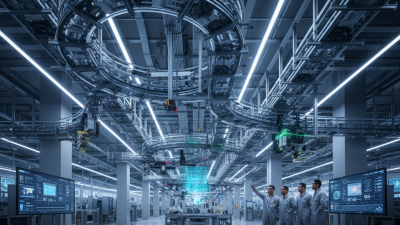
In 2026, global buyers will evaluate overhead conveyor systems beyond simple transport speed. They will examine labor efficiency, floor-space recovery, maintenance access, energy use, and integration with smart factories. The right system can move painted parts above workers, carry cartons through narrow aisles, or sequence automotive components with consistent timing. The wrong system becomes expensive steel overhead.
Industry data supports this shift. MHI’s 2024 Annual Industry Report identifies robotics, automation, sensors, and analytics as major investment priorities for supply-chain leaders. Grand View Research also projects continued growth in the global conveyor systems market through the decade. These reports do not guarantee equal demand for every overhead conveyor design. Regional labor costs, factory height, load weight, corrosion exposure, and local service capability still matter. Sometimes, a simpler system wins.
John Paxton, former president and CEO of MHI, described this wider business value clearly: “The supply chain is no longer just a cost center; it is a strategic differentiator.” That principle applies directly to conveyor selection. Monorail, power-and-free, enclosed-track, chain-on-edge, inverted, and trolley systems each solve different problems. No ranking is perfect. A high-speed conveyor may reduce handling time but increase maintenance sensitivity. A flexible power-and-free line may improve buffering but require more planning. This guide compares the leading overhead conveyor types for global buyers, using practical criteria, current industry evidence, and a necessary question: what happens when the production plan changes?
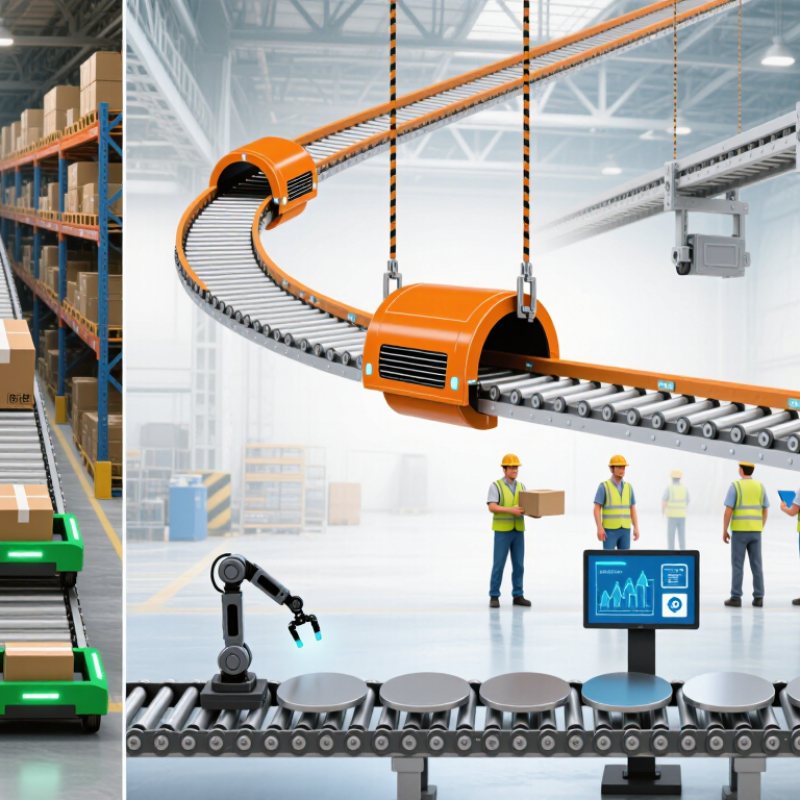
An overhead conveyor moves products above the factory floor. It uses a powered chain, trolley, or cable system. Carriers hang from this moving track. They transport garments, cartons, components, or painted parts between workstations. The system saves floor space and creates clearer walking paths. Common designs include enclosed-track, monorail, and power-and-free conveyors.
The working process is direct. A motor drives the chain through controlled sprockets. Each trolley carries a defined load and follows the overhead route. Switches, stops, and sensors can change product flow. Power-and-free systems also allow carriers to stop independently. This matters when inspection or assembly speeds vary. MHI’s 2024 Annual Industry Report found that 55% of supply-chain leaders planned to increase technology investment. That trend supports smarter material movement, but automation alone cannot fix poor layouts.
Tips: Check load weight, carrier spacing, ceiling height, and cleaning needs before selection. Ask for measured noise and speed data, not only catalog claims. Include maintenance access near curves and drive units. A small design assumption can cause daily delays. No layout is perfect. Recheck it with operators before approval. Safety design should also follow applicable local requirements and professional engineering review.
In 2026, global buyers can choose from several overhead conveyor types for different production needs. Enclosed-track conveyors suit light loads and clean indoor routes. Their compact rails help move parts above operators and floor equipment. Monorail conveyors support continuous movement between processing, assembly, and packing areas. They work well when the route remains relatively simple.
Power-and-free conveyors offer more control for mixed production. Carriers can stop, accumulate, or change spacing without stopping the entire line. This helps when products require inspection or different processing times. Inverted conveyors place the track below the load, supporting cleaner access to upper surfaces. Field experience shows that poor load data causes many design problems. A small weight change can affect speed, curves, and hanger life.
Tips: Confirm product weight, dimensions, temperature, and cleaning methods before selecting a system. Check ceiling height and emergency access early. Ask for load testing, maintenance intervals, guarding details, and local compliance documents. A corrosion-resistant finish may be useful in humid rooms, but it can increase cost. Do not choose the fastest conveyor automatically. A slower, stable line may reduce damage and operator stress. One detail is often missed: future expansion. Leave room for extra carriers, inspection stations, or a longer return track.
Typical operating speed ranges of key overhead conveyor types used in automotive, warehousing, food processing, and general manufacturing applications.
Enclosed-track systems generally operate at lower speeds for light-duty handling, while towline systems can support higher speeds and heavier loads. Actual performance depends on load weight, layout, incline, carrier design, accumulation requirements, and safety standards. Ranges shown are generalized engineering ranges rather than brand-specific specifications.
2026 Top Overhead Conveyor Types for Global Buyers
How to Compare Overhead Conveyor Designs and Performance
Global buyers should compare overhead conveyors by load, route, speed, and service access. Enclosed-track systems suit clean, compact lines with steady loads. Power-and-free conveyors offer accumulation, buffering, and independent carrier control. Monorail designs remain practical for simple, continuous movement. Free movement matters.
A useful comparison starts with the carrier. Check maximum load, hanger spacing, chain speed, turning radius, and vertical clearance. A 30-kilogram garment carrier may perform well on paper, yet fail when shock loads appear at transfer points. Review noise, lubrication needs, emergency stops, and cleaning access. The U.S. material handling industry’s 2024 MHI Annual Industry Report found that 41% of respondents were using robotics and automation. However, this survey does not prove that every conveyor needs advanced controls.
Performance data should come from measured tests, not attractive brochures. Request throughput at full load, empty-carrier energy use, restart behavior, and mean time between failures. The 2024 LogisticsIQ warehouse automation analysis also indicates continuing investment in automated material flow, but market forecasts vary by region and method. That uncertainty deserves attention. An efficient conveyor can still waste money if spare parts require long imports or technicians lack training. My practical concern is often overlooked: buyers compare maximum speed, then discover that safer speeds protect product quality and reduce maintenance. For 2026 projects, inspect a working reference line whenever possible, and record actual cycle times before approving the design.
| Conveyor type | Typical load per carrier | Typical speed range | Track configuration | Accumulation capability | Best-fit applications | Main advantages | Key limitations |
|---|---|---|---|---|---|---|---|
| Continuous monorail | Approximately 10–250 kg | 3–20 m/min | Fixed loop or linear track; curves and elevation changes are possible | Limited; carriers generally move at a common line speed | Painting, coating, curing, washing, and repetitive assembly operations | Simple layout, high routing flexibility, relatively low system complexity | Less suitable when products require independent routing or long dwell times |
| Power-and-free conveyor | Approximately 25–1,500 kg | 3–30 m/min; variable by zone | Separate powered chain and free carrier tracks with switches and stops | High; carriers can stop, queue, merge, and route independently | Automotive components, heavy fabrication, assembly, testing, and multi-stage finishing | Strong process control, high load capacity, and flexible production sequencing | Higher capital cost, more controls, and greater maintenance requirements |
| Enclosed-track conveyor | Approximately 5–100 kg | 2–15 m/min | Enclosed chain and trolley track with compact curves and drops | Low to moderate; depends on stops, buffers, and control design | Parts handling, powder coating, light assembly, laundry, and general material movement | Protects the chain from dust, reduces lubricant contamination, and saves floor space | Lower load range and more restricted access to internal components |
| Inverted monorail | Approximately 10–300 kg | 3–18 m/min | Carrier runs below a floor-mounted or elevated track structure | Limited to moderate | Clean production areas, assembly cells, and applications requiring overhead clearance | Keeps the conveyor above or outside the product working zone and simplifies access | Requires careful guarding and layout planning around the floor structure |
| Towline conveyor | Approximately 100–5,000 kg per load; higher capacities require engineered systems | 2–15 m/min | Floor-level or recessed chain with carts, dogs, and programmable stops | High; carts can be stopped and positioned independently | Heavy equipment, pallets, engines, industrial assemblies, and large fabricated parts | Very high load capacity, accurate positioning, and strong workstation integration | Usually needs floor space, civil work, safety guarding, and careful cart management |
| Slat or flight overhead conveyor | Approximately 5–150 kg per carrier or fixture | 2–12 m/min | Continuous chain with mounted slats, flights, or custom fixtures | Low to moderate; product spacing is normally fixed | Small parts, totes, containers, packaging, and controlled presentation to operators | Stable product orientation, repeatable spacing, and good presentation at workstations | Custom fixtures may increase cost, cleaning effort, and changeover time |
| Reciprocating vertical conveyor | Approximately 100–2,000 kg per platform or carrier | Typical lift speed: 5–30 m/min | Vertical lift with one or more fixed loading and unloading levels | Moderate; buffering depends on platform size and cycle time | Multi-level warehouses, mezzanines, production floors, and vertical transfer points | Uses vertical space efficiently and connects different elevations without ramps | Not normally a continuous transport solution; cycle time can limit throughput |
2026 Top Overhead Conveyor Types for Global Buyers
Which Industries and Applications Suit Each Conveyor Type?
Power-and-free conveyors
suit automotive plants, metal finishing, and heavy assembly. Their carriers can stop, accumulate, or change speed independently. This helps workers access each vehicle body without stopping the whole line. In paint shops, enclosed chain designs reduce exposure to dust and overspray. Selection still depends on load weight, temperature, and cleaning chemicals.
Enclosed-track conveyors
fit food processing, pharmaceuticals, and clean manufacturing. Their protected chain reduces lubricant contamination and supports regular washdown routines. However, buyers should verify hygienic design, drainage, and corrosion resistance before purchase. A conveyor that looks clean may still hide residue inside joints. The 2024 MHI Annual Industry Report found that 55% of surveyed supply-chain professionals already use robotics, while 37% planned adoption within one or two years. That trend increases demand for reliable overhead material flow.
Monorail conveyors
work well in warehouses, apparel facilities, and parcel-handling zones. They provide continuous movement across long routes, especially where floor space is limited. Accumulating models are better for order consolidation and temporary buffering. They are not ideal for every warehouse. Low ceilings, mixed carton sizes, or frequent route changes can reduce their value. Buyers should test real loads, peak rates, noise levels, and maintenance access before approving a 2026 system. Performance on a quiet test line may not survive holiday volume.
2026 Top Overhead Conveyor Types for Global Buyers
How Global Buyers Can Select the Right Overhead Conveyor
Selecting an overhead conveyor starts with the product, not the catalog. A power-and-free system suits buffering, stopping, and mixed production sequences. A monorail system works better for steady movement along a fixed route. Chain conveyors can handle heavier loads, but they may demand stronger support structures and more maintenance access.
Measure the real load.
Record product weight, hanger spacing, cycle time, temperature, dust, and cleaning chemicals. A painted steel frame may fail early in humid or washdown areas. Stainless components can improve durability, but they increase initial cost. The wrong estimate is common. Recheck it with actual peak loads, not average figures.
The MHI 2024 Annual Industry Report found that 55% of surveyed organizations planned to increase supply-chain technology investment. That pressure can encourage automation before the process is ready. Global buyers should compare throughput, energy use, spare-part availability, and local service capability. A conveyor that runs well in a factory trial may behave differently after installation, especially when ceiling height, voltage, labor practices, and regional safety requirements change.
Ask for documented load tests, guarding details, emergency-stop locations, and maintenance intervals. ISO 12100 risk-assessment principles can support safer machinery decisions. A lower purchase price is not always lower cost. Installation delays, unavailable parts, and difficult cleaning can quietly damage the business case.