

Why Choose a Powder Coating Booth?
Choosing a powder coating booth is a practical decision, not merely a purchase of industrial equipment. In a well-designed booth, coated parts move through a controlled space with steady airflow, filtered exhaust, and dependable powder recovery. This helps protect finish quality and keeps the surrounding workshop cleaner. A technician can see the difference on a steel panel: fewer dust marks, more even coverage, and less powder drifting toward nearby tools.
From hands-on coating work, I have found that booth performance depends on more than its size. Air volume, filter access, grounding, lighting, and daily cleaning routines all influence results. A compact powder coating booth may suit small batches, while a larger operation needs better airflow control and recovery capacity. Safety features also matter, including suitable electrical design, clear maintenance access, and procedures that reduce combustible dust risks. No booth solves every problem. That assumption deserves testing. Poorly matched equipment can create overspray, uneven finishes, and unnecessary operating costs. Reliable manufacturers should provide measurable specifications, service guidance, and documentation for installation and maintenance. Buyers should compare these details with their actual parts, coating materials, production rhythm, and available floor space. The best choice is not always the most expensive model. It is the booth that supports consistent work without adding avoidable complexity. Careful evaluation may take longer, but it can prevent expensive changes later.
What Is a Powder Coating Booth? Functions and NFPA 33 Requirements
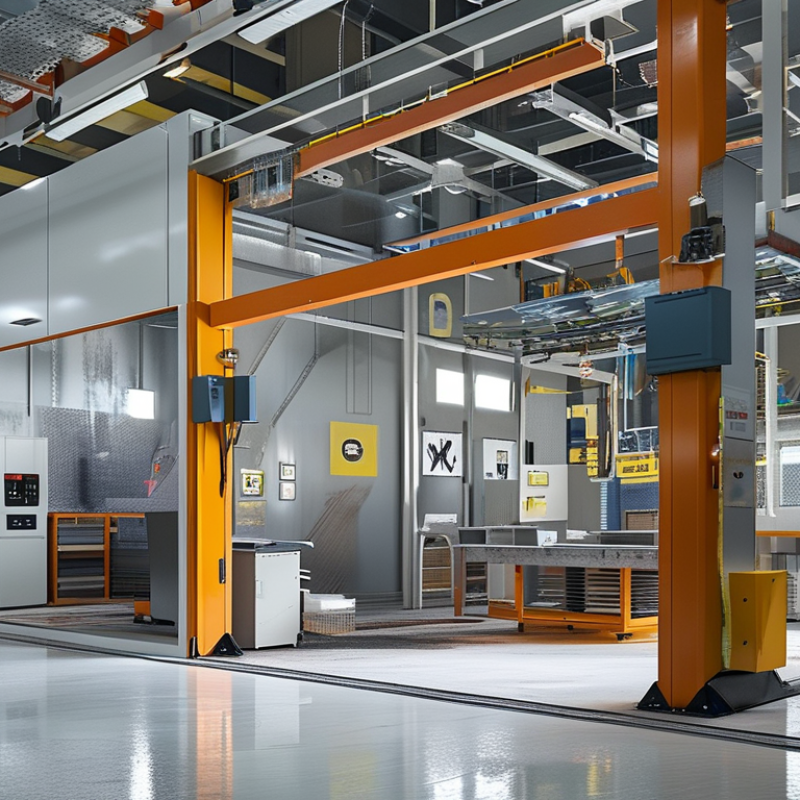
A powder coating booth is an enclosed or semi-enclosed workspace designed to contain overspray during powder application. It directs airborne particles toward filters or a recovery system. This improves finish quality and reduces contamination around the production area. It also helps protect workers from unnecessary dust exposure.
NFPA 33 provides widely recognized requirements for spray application using flammable or combustible materials, including powder. The booth should use suitable construction materials, controlled airflow, and properly maintained exhaust equipment. Electrical components near the spray zone may require specific hazardous-location ratings. All conductive parts need effective bonding and grounding to reduce static discharge risks. Ignition sources must remain controlled, while fire detection or suppression provisions depend on the installation and applicable code edition.
Details matter. Poorly seated filters can allow powder to escape. Blocked ducts can change airflow and increase deposits inside the booth. Operators should inspect filters, clean accumulated powder, and verify airflow regularly. Housekeeping is not optional. It is part of fire prevention.
A booth is not a magic shield. Practical inspections often reveal gaps between design documents and daily habits. Powder buildup on ledges, damaged grounding straps, or improvised wiring can undermine a compliant system. NFPA 33 requirements may also interact with local fire codes and authority-having-jurisdiction reviews. A qualified safety professional should evaluate the complete installation, especially when equipment, powder chemistry, or production volume changes.
Why Choose a Powder Coating Booth? - What Is a Powder Coating Booth? Functions and NFPA 33 Requirements
| Category | What It Is or Does | Typical Technical Considerations | NFPA 33 Safety Relevance | Selection or Inspection Check |
|---|---|---|---|---|
| Definition | A powder coating booth is an enclosed or partially enclosed spray area designed to contain airborne powder during electrostatic application. | The booth normally includes an enclosure, exhaust system, filters or cartridge collectors, powder recovery equipment, lighting, and electrical controls. | The booth and its associated equipment must be evaluated as part of the complete powder spray operation. | Confirm that the booth is suitable for the powder type, part size, production rate, and applicable local fire code. |
| Powder Containment | Contains overspray and helps prevent powder from migrating into surrounding work areas. | Effective containment depends on enclosure geometry, booth openings, airflow balance, doors, conveyors, and operator practices. | Ventilation must control powder emissions and prevent hazardous concentrations from developing outside the intended spray area. | Check for visible powder escape, unstable airflow, blocked filters, and leakage around openings. |
| Ventilation and Exhaust | Moves airborne powder toward the collection system and maintains inward airflow at booth openings. | Airflow is designed from the booth opening area, required capture performance, filter loading, duct resistance, and fan capacity rather than from a single universal airflow value. | Exhaust systems, interlocks, ducts, fans, and discharge locations are important elements of NFPA 33 compliance. | Verify airflow performance, fan rotation, pressure readings, exhaust discharge, and alarm or shutdown interlocks. |
| Powder Recovery | Captures usable overspray or separates powder from exhaust air before air is discharged or recirculated. | Common arrangements use cartridge filters, cyclonic separation, or a combination of collection stages. | Collectors and recovery equipment must be arranged to control combustible powder hazards and prevent unsafe powder accumulation. | Inspect filter condition, differential pressure, cleaning devices, collection bins, seals, and powder removal procedures. |
| Grounding and Bonding | Provides a controlled path for electrical charge from conductive booth components, workpieces, racks, and other metal objects. | Paint buildup, poor rack contact, damaged cables, or loose connections can reduce grounding effectiveness. | NFPA 33 requires conductive objects in the spray area to be properly grounded to reduce ignition risk from static electricity. | Test grounding routinely and keep hooks, racks, hangers, booth panels, and gun components clean and electrically continuous. |
| Electrical Equipment | Includes spray guns, power supplies, booth lighting, motors, sensors, control panels, and interlock devices. | The electrical design must account for the possible presence of combustible powder clouds and deposited powder. | Equipment located in or near the spray area must meet the applicable hazardous-location and ignition-protection requirements. | Review equipment ratings, installation locations, wiring methods, enclosure condition, and compatibility with the current code edition. |
| Fire Protection | Reduces the consequences of ignition through detection, suppression, isolation, emergency shutdown, and safe equipment layout. | The required protection depends on booth construction, powder characteristics, collector configuration, spray process, and installation conditions. | NFPA 33 includes provisions for fire prevention, automatic fire protection where required, system interlocks, and emergency stopping. | Coordinate the design with the authority having jurisdiction, fire protection professionals, and the current NFPA 33 edition. |
| Housekeeping | Removes deposited powder from booth surfaces, ducts, equipment, floors, ledges, and surrounding areas. | Powder layers and hidden deposits can become fuel for a flash fire or secondary dust event if disturbed and ignited. | NFPA 33 emphasizes controlling powder accumulation and using cleaning methods that do not create an ignition source or disperse hazardous dust. | Use a documented cleaning schedule, suitable vacuum equipment, and approved procedures; avoid uncontrolled compressed-air cleaning. |
| Operator Safety | The booth separates the operator from overspray and provides a defined area for safe application and maintenance. | Training should cover personal protective equipment, grounding, spray-gun operation, powder handling, emergency shutdown, and cleaning. | Personnel must be protected from fire, electrical, inhalation, and combustible-dust hazards associated with powder spraying. | Maintain written operating procedures, training records, inspection logs, and emergency response instructions. |
| Energy and Material Efficiency | A controlled booth can improve powder capture, reduce overspray loss, and support the recovery of suitable unused powder. | Actual efficiency depends on transfer efficiency, gun settings, part geometry, powder recovery design, filter condition, and color-change practices. | Efficiency improvements must not compromise ventilation, grounding, fire protection, or housekeeping controls. | Track powder consumption, filter pressure, recovery quality, downtime, and cleaning frequency. |
| Compliance Documentation | Records demonstrate that the booth is designed, installed, operated, and maintained as a controlled powder spray system. | Useful records include drawings, airflow tests, grounding tests, equipment manuals, maintenance logs, training records, and fire-system inspections. | NFPA 33 compliance is affected by the adopted edition, local amendments, building conditions, and authority-having-jurisdiction requirements. | Obtain approval before installation or modification and review the complete system periodically. |
Related Posts
-
Why Choose a Powder Coating Booth for Sale?
-
Mobile Paint Booth Tips for Choosing the Best Setup?
-
Why You Should Consider Buying a Paint Booth for Sale for Your Business
-
The Best Paint Booths for Professional Automotive Finishing and DIY Projects
-

Top 10 Benefits of Using an Automotive Paint Booth?
-
Ultimate Tips for Choosing the Right Powder Coating Equipment Package?
