
OPEN FROM 9AM TO 5PM – CLOSED ON WEEKENDS

2026 Best Powder Coating Booth Types for Global Buyers

Choosing the best powder coating booth in 2026 requires more than comparing catalog photos or advertised capture rates. Global buyers must match booth design with part size, coating volume, powder chemistry, operator workflow, and available floor space. A compact manual booth may suit a repair shop, while an automatic quick-color-change booth supports repeat production. The right choice begins on the shop floor. Measure it carefully.

This guide examines manual, automatic, batch, conveyorized, recovery, and cartridge-filter booth types. It also considers airflow control, filter access, grounding, illumination, cleaning time, and maintenance requirements. Experienced coating specialists know that small details can affect daily output. A poorly positioned exhaust duct may create uneven powder capture. An undersized booth can force awkward handling and increase cleaning delays. These issues often appear after installation, not during a sales meeting.

Safety remains central. Buyers should verify applicable workplace, electrical, ventilation, and fire-safety requirements with qualified local professionals. Supplier documentation, test records, service support, and spare-part availability deserve careful review. No single booth design fits every market. That is the honest part. A low purchase price may become expensive when filters, downtime, energy use, or future expansion are ignored. Some manufacturers also present performance data under ideal conditions, which may not reflect real production.

The following comparison focuses on practical selection rather than broad promises. It helps buyers connect booth construction with operating habits, product quality, and long-term reliability. Inspect the details. Ask better questions. Then choose a system that can perform consistently in the actual workshop.
2026 Best Powder Coating Booth Types for Global Buyers

Powder Coating Booth Basics and Its Role in Industrial Finishing

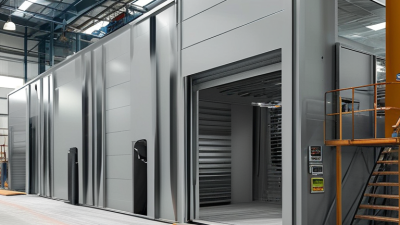
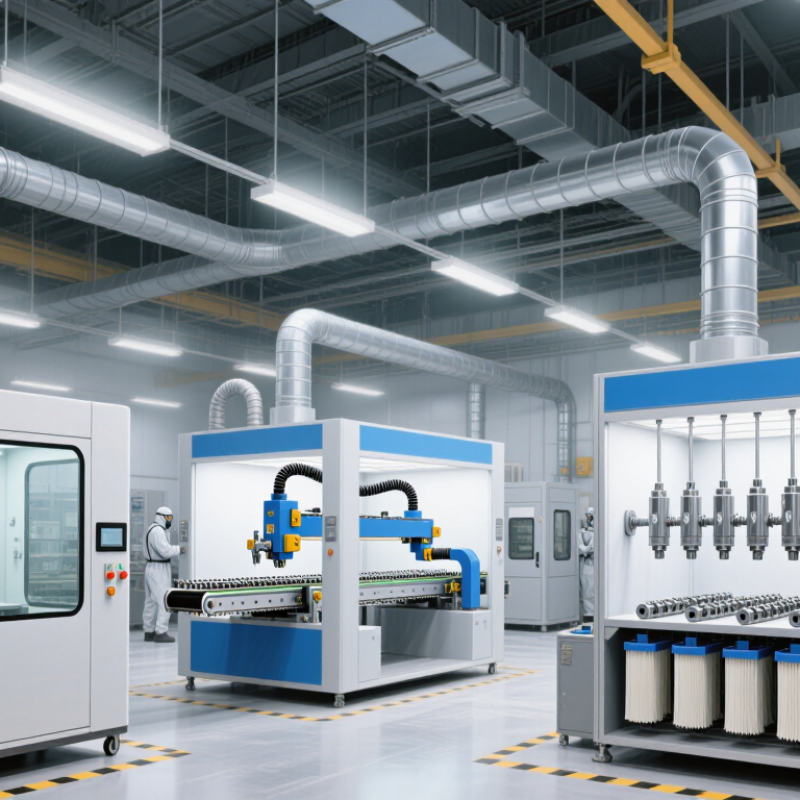
Powder coating booths form the controlled space between spraying and curing. They capture overspray, guide airflow, and protect nearby equipment from powder contamination. Common options include open-front booths, enclosed batch booths, and conveyorized systems for continuous production. Each type suits different part sizes, output levels, and cleaning routines.

A well-designed booth uses balanced airflow rather than maximum airflow. Excessive suction can disturb the powder cloud and reduce transfer efficiency. Insufficient airflow may allow fine powder to escape into the workshop.

Grounded hooks, clean contact points, suitable filtration, and clear access doors support safer operation. Operators should inspect filters, ducts, and recovery areas regularly. A thin powder layer on a floor edge can reveal poor housekeeping before performance declines.

In daily production, booth design directly affects finish consistency. Cleanable interior panels help prevent color contamination during product changes. Enclosed booths usually offer better environmental control, while open-front models can simplify access for large parts. Conveyor systems improve repeatability but require accurate spacing and stable airflow.

The booth does not correct every application problem. Operators sometimes blame the equipment when poor grounding or incorrect gun settings cause defects. That assumption deserves review. Local electrical, ventilation, fire, and workplace requirements also differ, so global buyers should confirm specifications with qualified engineers before installation.

Main Powder Coating Booth Types and Their Operating Principles

2026 Best Powder Coating Booth Types for Global Buyers

Main Powder Coating Booth Types and Their Operating Principles

Open powder coating booths suit small batches, repairs, and frequent color changes. Operators spray inside a partially enclosed workspace. Airflow pulls overspray toward filters, reducing powder escape. Enclosed booths provide stronger containment and more stable airflow. They work well with repeated production and larger components. Booth size, fan capacity, and filter condition directly affect coating quality. A booth can look clean but still perform poorly when airflow becomes uneven.

Recovery booths add another decision. Cyclone systems separate heavier powder particles through centrifugal force, then return usable powder to collection containers. Cartridge recovery systems draw powder through pleated filters. They offer compact layouts and effective fine-powder capture. Automatic booths may use reciprocators or programmed guns for consistent coverage. Manual booths remain flexible, but results depend heavily on operator distance, gun angle, and grounding. The most expensive design is not always the most practical choice. That deserves honest review.

How to Match Booth Design with Production Volume and Coating Needs

2026 Best Powder Coating Booth Types for Global Buyers

Booth design should follow production volume, part size, and color-change frequency. A 2024 market analysis from Grand View Research projects global powder coating demand will grow at about 6% annually through 2030. That growth does not justify choosing the largest booth. High-volume lines usually need an automated booth, continuous conveyor, and fast color recovery. Medium production suits a reciprocating gun system with controlled airflow. Small workshops often gain more from a compact manual booth and flexible loading space.

Part geometry matters as much as output. Deep cavities, sharp edges, and heavy steel frames need stable airflow and reliable grounding. A booth that is too narrow may create powder buildup around corners. A booth that is too large can waste energy and reduce collection efficiency. The U.S. Environmental Protection Agency indicates that well-designed powder systems can approach 95% transfer efficiency. Real results depend on maintenance, operator training, and reclaim control. My practical warning is simple: catalogue capacity can look better than daily performance.

Tips: Measure the largest part, hanger spacing, and conveyor speed before selecting a booth. Reserve space for filters, ducting, and safe cleaning access. Ask for tested airflow figures, not vague “high efficiency” claims. For frequent color changes, prioritize quick-clean surfaces and accessible powder recovery. For low volume, avoid expensive automation unless labor savings are proven. A pilot trial may expose flaws that drawings hide.

Safety, Filtration, Energy Efficiency, and Compliance Requirements

2026 Best Powder Coating Booth Types for Global Buyers

Global buyers should treat the booth as a controlled ventilation system, not a metal enclosure. Safety begins with airflow. NFPA 33 (2024) specifies exhaust interlocking, electrical classification, bonding, and housekeeping controls for spray areas. OSHA 29 CFR 1910.94(c) sets ventilation expectations, while exposure limits depend on powder ingredients. That distinction matters. Request documented airflow tests, grounding checks, and filter differential-pressure records before acceptance.

Filtration design affects safety, finish quality, and operating cost. A staged cartridge system should capture overspray before it reaches the exhaust fan. A final filter can protect downstream pathways, but it never replaces source capture. Use pressure gauges, not visual guesses. The U.S. Department of Energy’s Improving Fan System Performance sourcebook reports potential fan-energy savings of 20–50% through correct sizing and controls. Variable-frequency drives can help, but only when airflow remains stable during loading changes.

Compliance must match the installation country. European projects may require ATEX assessment, while other regions use different fire and electrical frameworks. An export-ready booth needs a compliance matrix, test records, and clear maintenance instructions. Paperwork is not decoration. Yet a perfect specification is unlikely. Filters clog, operators improvise, and airflow drifts. Budget for alarms, spare cartridges, training, and periodic verification. The Powder Coating Institute’s technical guidance also emphasizes grounding and housekeeping as daily controls, not occasional inspections. Those practical gaps deserve more attention than glossy efficiency claims.

2026 Best Powder Coating Booth Types for Global Buyers - Safety, Filtration, Energy Efficiency, and Compliance Requirements

Booth Type Best Application Typical Airflow and Filtration Safety Requirements Energy Efficiency Powder Recovery Potential Key Compliance Considerations
Open-Face Booth Manual coating of small and medium workpieces; frequent color changes; low-to-medium production volume. Usually uses a rear or side exhaust plenum with cartridge or panel pre-filtration. Face velocity is commonly designed around 100–150 ft/min (0.5–0.75 m/s), subject to local risk assessment and booth geometry. Effective capture at the operator opening, bonded and grounded conductive parts, interlocked spray equipment, accessible emergency stop, and routine filter inspection. Generally low capital energy demand, but uncontrolled room-air exhaust can increase heating or cooling loads. Variable-speed exhaust control can reduce fan energy when production is reduced. Limited to moderate. Suitable for reclaiming compatible powder only when the exhaust and recovery system is designed for separation and contamination control. Ventilation, combustible-dust control, electrical classification, grounding, and fire protection should be assessed under applicable local rules such as NFPA 33, OSHA requirements, or equivalent national standards.
Enclosed Manual Booth General-purpose manual coating where improved overspray containment and operator separation are required. Balanced supply and exhaust airflow with cartridge filters, final filters where required, and monitored differential pressure. Airflow should maintain inward capture without disturbing the powder cloud. Enclosed access, door or panel interlocks, grounding verification, filter-loading alarms, safe powder-cleaning procedures, and prevention of powder accumulation on ledges and equipment. More efficient containment than an open-face booth. Heat recovery or controlled make-up air may reduce building HVAC losses in cold or hot climates. Moderate to high when a dedicated recovery module is used; color-change procedures are still needed to prevent cross-contamination. Requires documented electrical bonding, dust housekeeping, exhaust discharge control, safe filter removal, and conformity with applicable machinery, workplace, and explosion-protection requirements.
Crossdraft Booth Long or tall parts requiring a clear spray path and relatively simple horizontal airflow. Air moves from the operator side toward a rear filter wall or exhaust chamber. Cartridge filtration is common; airflow must be uniform across the working zone. Control of powder migration beyond the booth, protection from blocked filter surfaces, grounded fixtures, and safe access for cleaning the rear filter section. Usually moderate. Pressure drop increases as filters load, so differential-pressure monitoring and timely filter maintenance are important for stable fan performance. Moderate. Recovery quality depends on filter design, powder chemistry, color separation, and the ability to clean the airflow path between jobs. The design should address exhaust airflow, combustible-dust deposits, fan location, electrical equipment suitability, grounding, and emergency shutdown provisions.
Downdraft Booth Large, heavy, or geometrically complex parts where downward overspray removal helps reduce operator exposure and floor contamination. Air is drawn downward through a grated floor, trench, or lower collection zone. Filtration may use cartridge banks or a wet collection system, depending on the design and jurisdiction. Structural floor loading, safe grate access, protection against powder accumulation below floor level, grounding of workpieces and grates, and verified airflow distribution. Typically higher fan and installation energy than simpler crossdraft designs because of the larger airflow path and pressure drop. High-efficiency motors and variable-speed drives can reduce demand. Moderate. Recovery can be technically effective, but material handling and cleaning of the lower collection area may increase operating labor. Requires careful engineering for combustible dust, floor and trench cleaning, fire protection, exhaust discharge, access safety, and local building-code approval.
Cartridge Filter Recovery Booth Medium-to-high production with regular powder collection and a need to reduce powder loss. Primary cartridge filters collect overspray; pulse cleaning restores filter permeability. A secondary final filter may be used before exhaust, depending on the system design and local requirements. Pulse-cleaning controls, grounded filter housings, pressure-relief evaluation, filter differential-pressure monitoring, safe powder discharge, and strict housekeeping to avoid dust layers. Good when airflow is automatically controlled and filters are maintained. Excessive pressure drop increases fan power, while over-cleaning can shorten filter life and increase powder handling. High for single-color or controlled-color production. Recovered powder should be evaluated for contamination, particle-size changes, and acceptable blend ratios before reuse. Explosion-protection measures, filter certification, grounding and bonding, safe compressed-air systems, waste handling, and applicable NFPA, ATEX, IECEx, or national requirements should be reviewed.
Cyclone Pre-Separator Booth High-throughput operations with relatively stable colors and substantial overspray volumes. A cyclone separates a substantial portion of powder before final filtration. Final cartridge or secondary filters protect the exhaust system and help control fine particles. Grounded ducting, inspection access, protection against powder buildup, safe collection-container changes, pressure monitoring, and suitable explosion-relief or suppression provisions where required. Potentially efficient at high production rates because the pre-separator reduces final-filter loading. Fan sizing must account for cyclone and duct pressure losses. High for dedicated-color lines. Recovered powder is generally not suitable for unrestricted reuse across different colors without documented quality controls. Requires a documented dust-hazard assessment, compliant ductwork and electrical equipment, safe powder discharge, fire and explosion protection, and local environmental approval for exhaust emissions.
Automatic Reciprocator Booth Continuous conveyor lines with repeatable part geometry, controlled gun paths, and higher production volumes. Enclosed airflow zone with cartridge or cyclone-assisted recovery. Gun motion, conveyor speed, airflow, and powder feed should be coordinated to maintain consistent transfer efficiency. Interlocked booth doors and conveyor, gun-trigger safety logic, grounded hooks and parts, automatic shutdown on airflow failure, safe access controls, and verified clearance around moving equipment. Very good potential because automatic guns reduce overspray and can operate with optimized airflow. Servo drives, variable-speed fans, and demand-based controls can further reduce energy use. High when production uses stable colors and an integrated recovery system. Frequent color changes require purge cycles and dedicated cleaning procedures. Requires machinery risk assessment, guarding, emergency stops, electrical and dust-zone assessment, grounding verification, maintenance access, and compliance with applicable machinery and explosion-protection laws.

Buyer Selection Notes

Airflow figures are indicative design ranges rather than universal acceptance limits. Final values must be calculated from booth dimensions, opening area, powder characteristics, equipment layout, local exposure limits, and the applicable authority having jurisdiction.

Common reference frameworks include NFPA 33 for spray application using flammable or combustible materials, OSHA ventilation and hazardous-location requirements where applicable, ATEX 2014/34/EU and 1999/92/EC in relevant European applications, IEC 60079 series requirements for explosive atmospheres, and applicable local machinery, building, electrical, fire, and environmental regulations.

Powder recovery should not be judged only by collection rate. Reuse decisions should also consider color contamination, powder chemistry, particle-size distribution, cure performance, waste classification, and documented quality-control procedures.

Global Buyer Checklist for Choosing a Powder Coating Booth in 2026

Global Buyer Checklist for Choosing a Powder Coating Booth in 2026

Market momentum matters. Grand View Research estimates the global powder coatings market will expand at about 5.7% annually from 2024 to 2030. That growth does not make every booth suitable. Measure your largest workpiece, daily batch count, powder colors, and available floor height. Leave access space for filters, ducts, and cleaning tools. A booth that fits the product but blocks maintenance access is a poor purchase.

Check airflow, powder recovery, filter access, lighting, grounding, and control-panel documentation. NFPA 33 and EN 16985 provide useful safety references, but local authorities may impose additional requirements. Ask for tested airflow data, electrical classifications, noise readings, and spare-parts availability. Do not accept only a sales drawing. Request a factory acceptance test using your actual part geometry, especially deep cavities and thin edges.

Energy use deserves closer attention. The International Energy Agency reports that industrial motors and systems account for a major share of industrial electricity demand, so fan efficiency can affect long-term cost. Compare fan power, filter pressure loss, cleaning frequency, and compressed-air demand.

A low purchase price can hide expensive maintenance. I have seen buyers overestimate future capacity. That mistake is common. Recheck production forecasts, cleaning time, operator reach, and shipment constraints before signing. Also confirm installation support, training records, warranty terms, and documentation in the destination country’s language.

Amet mattis vulputate enim nulla aliquet. Id porta nibh venenatis cras sed felis dictumst vestibulum rhoncus est.
This error message is only visible to WordPress admins

Error: No feed found.

Please go to the Instagram Feed settings page to create a feed.

Quick links