
OPEN FROM 9AM TO 5PM – CLOSED ON WEEKENDS

What Is an Automotive Paint Booth and How Does It Work?

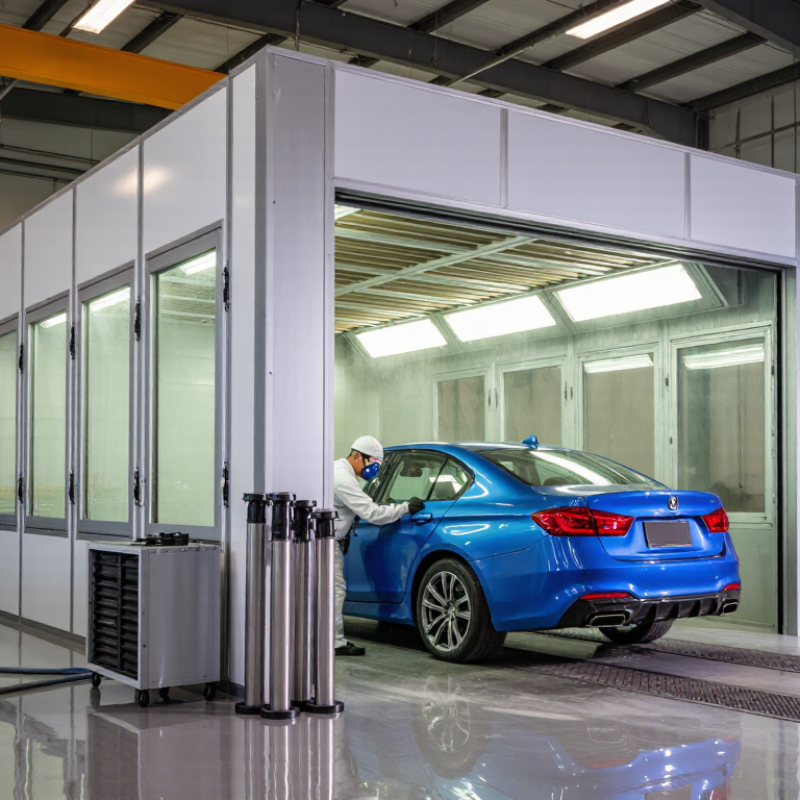
An automotive paint booth is a controlled workspace designed for spraying primers, basecoats, and clearcoats. It manages airflow, overspray, temperature, and contamination during vehicle refinishing. The booth may look like a large metal enclosure. That description misses its engineering purpose.

During painting, filtered air enters through the ceiling or rear wall. It moves across the vehicle and carries airborne particles toward exhaust filters. This airflow protects the finish from dust and helps reduce overspray exposure. A clean, glass-like panel depends on more than paint quality. It also depends on air balance, filter condition, lighting, and technician technique.

The U.S. Environmental Protection Agency’s National Emissions Standards for Hazardous Air Pollutants, commonly called the Autobody Rule, addresses emissions from motor vehicle surface coating operations. Its requirements emphasize approved application methods, pollution controls, and proper booth operation. OSHA’s 29 CFR 1910.107 also outlines safeguards for spray-finishing areas, including ventilation, electrical protection, and fire prevention. These standards show why booth design is a safety issue, not merely a purchasing decision.

Industry refinishing guidance from I-CAR also highlights preparation, spray technique, and process control as major factors in repair quality. In real workshops, performance can still vary. Filters clog. Doors remain open. Technicians rush. The booth cannot correct every mistake.

A reliable automotive paint booth creates repeatable conditions. It helps technicians see wet edges, control overspray, and maintain a consistent coating environment. This article explains the booth’s main components, airflow path, operating sequence, and practical role in modern collision repair.
What Is an Automotive Paint Booth and How Does It Work?

What Is an Automotive Paint Booth?

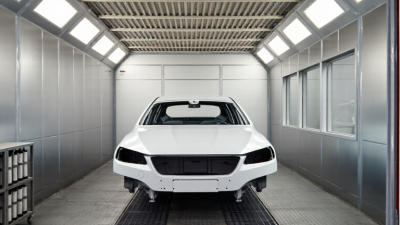
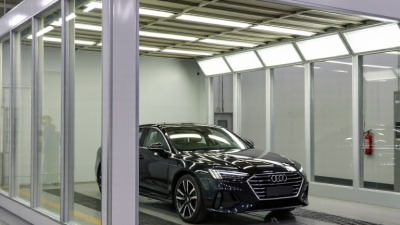
An automotive paint booth is an enclosed, controlled workspace for preparing and coating vehicle surfaces. It separates paint work from dust, wind, moisture, and nearby repair activity. Most booths use filtered intake air, exhaust fans, sealed panels, and strong lighting. These features create a cleaner environment than an open workshop. Some designs also control temperature and humidity, which affect drying and finish quality. Clear visibility matters. Good lighting helps technicians notice dry spray, runs, pinholes, and uneven coverage. That practical detail is easy to underestimate.

During operation, filtered air enters through the ceiling or side walls. Exhaust air moves through filters and exits through a dedicated ventilation path. Balanced airflow carries overspray away from the vehicle and reduces airborne contamination. Pressure inside the booth may be slightly positive or negative, depending on its design. Some booths support spraying only, while others support spraying and curing. A curing cycle uses controlled heat or airflow to help coatings harden. Not every booth performs both jobs. Specifications must be checked carefully. I have found that a booth is not a magic box. Poor cleaning, blocked filters, or rushed setup can still damage a finish. That limitation deserves honest attention.

Tips: Inspect filters before each job and replace damaged ones. Keep the floor and walls clean. Use suitable protective equipment and verify airflow before spraying. Record temperature and humidity when finish quality matters. Small notes can reveal repeated problems. Local workplace requirements still matter.

Why Automotive Paint Booths Are Used

An automotive paint booth is a controlled enclosure for spraying, drying, and inspecting vehicle finishes. Its main purpose is not simply appearance. It controls overspray, airborne solvents, dust, and worker exposure.

The U.S. Environmental Protection Agency’s 2020 National Emissions Inventory identifies vehicle refinishing as a solvent-related emissions source. A booth captures contaminated air through filters and exhaust systems. This helps reduce particles settling on wet panels. It also supports more consistent airflow, temperature, and finish quality. OSHA’s Technical Manual emphasizes effective ventilation and respiratory protection during spray operations. A booth cannot replace proper training. That point is often underestimated.

In real workshops, small failures create visible problems. A clogged filter can produce uneven airflow. Poor cleaning may leave dust inside the booth. The result is expensive rework, even when the paint itself is high quality.

Tips: Check airflow before spraying. Replace filters according to pressure readings, not guesswork. Keep doors closed during application. Record temperature, humidity, filter changes, and cleaning tasks. These simple records support safer decisions and reveal recurring process weaknesses. A practical review should also compare booth performance with local safety requirements and the equipment manufacturer’s technical instructions.

What Is an Automotive Paint Booth and How Does It Work? - Why Automotive Paint Booths Are Used

Aspect What It Is How It Works Why It Is Used Typical Data or Considerations
Automotive Paint Booth A controlled enclosure designed for vehicle preparation, paint spraying, drying, and curing. The booth controls airflow, filtration, lighting, temperature, and exhaust while paint is applied or cured. It improves finish quality, limits dust contamination, captures overspray, and supports safer working conditions. The final design must comply with applicable fire, electrical, ventilation, environmental, and occupational-safety requirements.
Airflow Direction The planned path that clean air follows through the booth. Supply fans introduce filtered air, and exhaust fans move contaminated air away from the spray area. Consistent airflow carries overspray away from the vehicle and reduces the chance of particles settling on wet paint. Airflow must be balanced to avoid excessive turbulence, dead zones, or paint being pulled unevenly across the vehicle.
Crossdraft Booth A booth in which air moves horizontally from the front toward the rear. Filtered air enters near the front of the booth and exits through rear exhaust filters or plenums. It generally has a simpler layout and can be economical for common refinishing work. The front of the vehicle may receive cleaner airflow than areas farther downstream; filter maintenance is important.
Downdraft Booth A booth that moves air vertically from the ceiling toward the floor. Clean air enters through ceiling filters and carries overspray downward into a floor-level exhaust system or pit. It helps direct contaminants away from the painted surface and is commonly selected where high finish quality is required. Construction may require a suitable exhaust pit or raised floor, increasing installation complexity and cost.
Semi-Downdraft Booth A hybrid booth combining downward airflow with a rearward airflow component. Air enters through a limited ceiling supply area and moves toward rear exhaust points. It provides improved contaminant control compared with a basic crossdraft layout without always requiring a full pit. Performance depends heavily on booth geometry, fan capacity, filter loading, and correct air balancing.
Filtration System A set of intake and exhaust filters used to remove particles and capture paint overspray. Intake filters clean incoming air, while exhaust filters retain overspray before air leaves the booth. Filtration protects the paint finish, reduces airborne contamination, and helps limit emissions. Filters should be replaced when loaded or when pressure drop and airflow readings indicate restricted performance.
Ventilation and Exhaust The mechanical system that supplies fresh air and removes vapors, overspray, and heat. Fans create a controlled pressure and airflow pattern, with exhaust discharged through an approved duct system. Ventilation reduces the concentration of flammable vapors and helps maintain consistent spraying conditions. There is no single universal airflow value; required airflow depends on booth size, design, coating materials, and local regulations.
Temperature and Humidity Control Systems that condition the air entering the booth. Heating, cooling, and sometimes humidity-control equipment adjusts incoming air before it reaches the spray area. Stable conditions improve atomization, flash-off, drying, color consistency, and coating adhesion. Many coating systems perform best near normal controlled workshop conditions; the coating technical data sheet defines the exact limits.
Curing or Bake Mode A controlled drying cycle used after spraying when the coating system permits heated curing. The booth raises and maintains air temperature for a specified time, often using a separate bake setting. It shortens drying time and can increase production capacity. Typical automotive refinish bake cycles may use approximately 140–160°F (60–71°C) metal or booth conditions, but the coating manufacturer’s instructions control.
Lighting Enclosed, evenly distributed lighting installed to illuminate the vehicle and work area. Light fixtures are positioned to reduce shadows and allow technicians to see coverage, defects, and color variation. Good lighting supports uniform application and helps identify runs, dry spray, dirt, and surface imperfections. Fixtures must be suitable for the hazardous environment and protected according to applicable electrical requirements.
Common Booth Dimensions The internal length, width, and height available for the vehicle and airflow system. Dimensions are selected to provide clearance around the vehicle while maintaining the intended airflow pattern. Adequate space improves technician access, overspray control, and safe movement around the vehicle. A typical full-vehicle booth may be approximately 24–30 ft long, 14–16 ft wide, and 10–12 ft high; actual dimensions vary by vehicle and design.
Paint Overspray Control The capture and removal of paint particles that do not land on the vehicle. Airflow transports overspray toward exhaust filters, where particles are trapped before exhaust is discharged. It protects nearby surfaces, reduces cleanup, improves workplace air quality, and helps meet emission-control requirements. A booth captures overspray but does not eliminate hazardous vapors; approved respirators and personal protective equipment may still be required.
Safety Features Controls and construction features intended to reduce fire, explosion, electrical, and exposure risks. Interlocks, emergency stops, compliant fans, grounded components, suitable lighting, and ventilation work together during operation. They help protect workers and facilities when flammable coatings, solvents, and combustible residues are present. Installation and operation should follow applicable local fire codes, electrical codes, ventilation rules, and workplace-safety regulations.
Main Reasons for Use The operational and quality objectives supported by a paint booth. Controlled air, filtration, lighting, temperature, and exhaust create a repeatable painting environment. The primary benefits are cleaner finishes, more consistent color, faster drying, lower contamination, improved productivity, and better control of overspray. Results depend on correct booth sizing, regular maintenance, proper spray technique, suitable coatings, and compliance with safety procedures.

How an Automotive Paint Booth Works Step by Step

An automotive paint booth is a controlled room for spraying, flashing, and curing vehicle coatings. The process begins before the spray gun moves. Technicians inspect filters, clean the floor, check airflow, and confirm that lights and interlocks work. OSHA 29 CFR 1910.107 uses 100 feet per minute as a benchmark for airflow across many open spray-booth faces. That figure matters because weak airflow can leave solvent vapor and overspray near the painter.

The booth then draws filtered air through the ceiling or rear intake. This creates a steady path across the vehicle. The spray gun atomizes coating into fine droplets, while exhaust air carries overspray toward arrestor filters. Pressure gauges reveal when filters become loaded. During the flash stage, airflow continues while solvents leave the coating. Curing may use heated air, but temperature must rise evenly. NFPA 33, 2024 edition, emphasizes ventilation, ignition control, and safe booth construction. In practice, airflow is rarely as uniform as a diagram suggests. Vehicle shape, open doors, and dirty filters can change the pattern.

Tips: Keep the vehicle centered, and measure airflow before spraying. Replace loaded filters promptly. Do not trust appearance alone; inspect the finish under strong, angled light. EPA AP-42 emission guidance identifies spray application as a VOC source, so capture efficiency deserves regular attention. A small pressure drop can signal a larger maintenance problem. Technician judgment still matters.

Main Types of Automotive Paint Booths

An automotive paint booth is a controlled enclosure for spraying and drying vehicle coatings. It manages airflow, filtration, lighting, and temperature. The right design protects the finish and reduces airborne overspray. It also helps technicians work with consistent visibility and cleaner surfaces.

Downdraft booths pull air from the ceiling toward a filtered floor. They usually provide excellent overspray control and a smooth finish. Crossdraft booths move air horizontally from one wall to another. They cost less and can suit smaller workshops, although airflow may carry overspray across the vehicle. Sidedraft booths draw air from the ceiling and exhaust it through side walls. They offer a practical balance between finish quality, installation cost, and floor construction.

Open-face booths use a filtered front wall and an exhaust system behind the vehicle. They are useful for preparation and selected coating tasks, but they need careful airflow management. Some facilities also use enclosed drying booths with controlled heat and ventilation. A trained technician should match the booth to vehicle size, coating process, workshop layout, and local requirements. Poor lighting can hide dry spray. Weak filtration can contaminate fresh paint. No booth is perfect. Even a well-designed system needs filter changes, airflow checks, and regular cleaning. In practice, layout decisions are sometimes compromises, and those choices should be documented rather than guessed.

What Is an Automotive Paint Booth and How Does It Work?

Automotive paint booths control airflow, filtration, overspray, and curing conditions. The chart compares representative target airflow velocities commonly used in different booth designs. Actual specifications vary by booth size, local regulations, and coating system.

Crossdraft booths move air horizontally, while semi-downdraft, side-downdraft, and downdraft booths guide contaminated air downward or toward lower-level exhaust points.

Essential Safety and Maintenance Practices

What Is an Automotive Paint Booth and How Does It Work?

An automotive paint booth is an enclosed workspace designed to control airflow, overspray, dust, and fumes. Exhaust fans pull contaminated air through filters and discharge it safely through approved ventilation systems. Fresh, filtered air then moves across the vehicle, helping create an even finish. The booth also reduces ignition risks when electrical equipment and lighting are properly rated.

Safety depends on disciplined habits, not appearance alone. Wear suitable respiratory protection, gloves, eye protection, and flame-resistant clothing. Keep solvents, rags, and other combustible materials outside the booth unless procedures specifically require them. Ground the vehicle and spray equipment before work begins. Check airflow indicators, fan belts, lights, door seals, and emergency controls during every scheduled inspection. Small faults can become serious quickly.

Filter maintenance deserves close attention. A loaded intake filter can reduce airflow, while a saturated exhaust filter may increase contamination and fire risk. Replace filters according to measured pressure or facility procedures, rather than guesswork. Record each change, inspection, and repair. Good records support reliable decisions.

Keep the floor clean and slightly damp only when the booth design permits it. Never use improvised cleaning chemicals. Follow the equipment manual and local workplace rules. I have seen teams focus on shiny walls while ignoring blocked filters. That mistake is easy to repeat. Look closely. Safety checks should remain practical, documented, and consistent, even on busy days.

Amet mattis vulputate enim nulla aliquet. Id porta nibh venenatis cras sed felis dictumst vestibulum rhoncus est.
This error message is only visible to WordPress admins

Error: No feed found.

Please go to the Instagram Feed settings page to create a feed.

Quick links