
OPEN FROM 9AM TO 5PM – CLOSED ON WEEKENDS
Choosing a used powder coating oven from China requires more than comparing prices and photographs. The right decision depends on heating performance, chamber condition, controls, airflow, and available service support. A low purchase price can become expensive when burners, insulation, or electrical components need replacement.
In practical inspections, technicians should examine the oven frame for rust, cracks, warped panels, and heat damage. Open the access doors. Check the gasket condition. Ask for internal photographs, heating records, maintenance reports, and the original model information. A clean exterior can mislead. It happens more often than buyers expect. The oven should also be tested at operating temperature, not only powered on during a video call. Temperature uniformity matters because uneven heat can produce dull finishes, poor adhesion, or rework.
Reliable Chinese manufacturers and exporters should explain the oven’s heating method, maximum temperature, conveyor dimensions, control system, and safety features. Request a clear list of replaced parts and confirm whether critical components remain available. Independent inspection can verify insulation thickness, airflow, burner performance, and electrical protection. Local technical requirements must also be reviewed before shipment, including voltage, ventilation, fire prevention, and workplace safety provisions.
Experience still has limits. A technically sound used powder coating oven may not suit every production line. Your coating chemistry, workpiece size, daily volume, and future expansion should guide the choice. Compare documented performance rather than promises. Speak with qualified engineers, inspect the unit carefully, and allow a realistic budget for transport, installation, commissioning, and possible repairs. A cautious decision usually protects both coating quality and long-term operating costs.
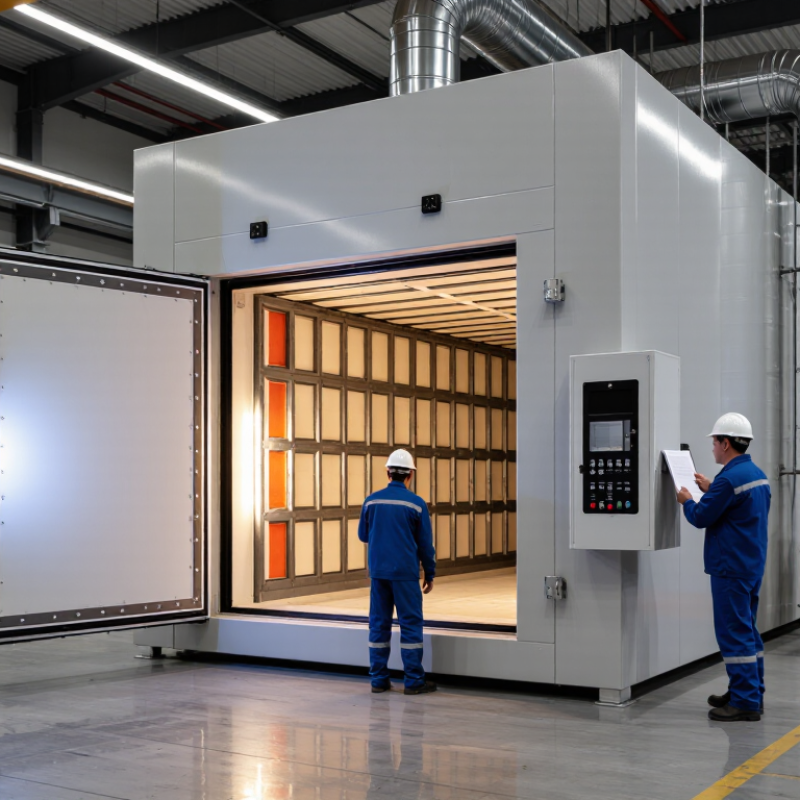
Before choosing a used powder coating oven from China, define the work it must perform. Record the largest part dimensions, average load weight, coating type, curing temperature, and required cycle time. A 3-meter rail may need a very different chamber from small cabinet panels. Measure your production target in batches per shift, not vague monthly promises. Include future capacity.
Energy deserves careful attention. The U.S. Department of Energy reports that process heating represents about 51% of manufacturing energy use. Ask for burner output, insulation thickness, heating method, exhaust volume, and temperature-uniformity records. For a used oven, request photographs of the chamber, serial plate, control cabinet, fan, seals, and floor. A previous repair may be more important than its age.
Powder recovery also affects production goals. Technical guidance from the Powder Coating Institute indicates that transfer efficiency can exceed 95% when application settings and recovery systems are properly controlled. This does not guarantee your result. Test your powder, part geometry, and line speed together. Specify a practical uniformity target, such as ±5°C across the load, and require documented testing. Do not accept “fully refurbished” without component-level evidence. I once underestimated loading time; the oven met its curing temperature but missed the shift target. That assumption needs challenging. Ask for commissioning support, electrical documentation, safety records, and spare-part availability before comparing prices.
A used powder coating oven should match your actual production, not an imagined future. Start with the oven type: electric systems offer cleaner temperature control, while gas systems may reduce running costs in areas with affordable fuel. Infrared heating can cure certain parts quickly, but it may create uneven results on deep or complex shapes. Ask for temperature records, wiring photos, and maintenance history. Factory claims are useful, but measured evidence is better.
Size affects both quality and energy use. Measure your largest workpiece, rack clearance, loading path, and available floor space. A chamber that is too small causes poor airflow and damaged coatings. An oversized oven wastes heat during every cycle.
Check the heating system carefully. Inspect burners, heating elements, fans, ducts, insulation, and door seals. Small leaks become expensive over time. Confirm the local voltage and safety requirements before purchase.
I once underestimated loading space; the oven worked, but daily handling became frustrating.
Tips: Request a live test with a temperature logger. Compare several points inside the chamber, not just the control panel. Review energy consumption under a normal load. Ask whether replacement parts are standard and locally serviceable. Keep photographs of worn components. Some sellers may not document every repair, so leave room for a professional inspection and unexpected costs. Efficiency is not only about the heater; airflow, insulation, curing time, and operator habits matter equally.
Choosing the best used powder coating oven from China starts with supplier reliability, not the lowest quote. Ask for business registration, export records, service contacts, and recent customer references. Request a live video call from the workshop, not a polished showroom. Experienced suppliers should explain airflow, burner controls, insulation, and electrical protection clearly. I once inspected an oven with clean panels but worn circulation-fan bearings. Appearance can mislead. Reliable suppliers admit defects and document them.
Demand the oven’s manufacture date, operating hours, heating source, previous application, and maintenance records. Ask why the equipment was removed. Request temperature charts and photographs taken before refurbishment. Check chamber corrosion, door seals, fan shafts, heating elements, control cabinets, and sensors. Proper refurbishment should include cleaning, safe wiring replacement, sensor calibration, insulation inspection, and loaded temperature testing. Obtain test reports showing temperatures at several chamber points. Repainting the exterior is not refurbishment.
Tips: Compare temperature claims with signed test records. Ask for spare-parts lists and remote troubleshooting plans. Confirm voltage, gas or electrical requirements, chamber dimensions, and shipping protection. If the supplier cannot explain its testing method, pause the purchase. I would accept scratched paint before hidden mechanical wear. Used equipment always carries uncertainty. That caution can prevent costly downtime.
| Evaluation Dimension | Used Oven A | Used Oven B | Used Oven C | Used Oven D | Recommended Acceptance Standard |
|---|---|---|---|---|---|
| Internal Working Size | 6.0 m L × 2.0 m W × 2.0 m H | 8.0 m L × 2.5 m W × 2.2 m H | 5.0 m L × 1.8 m W × 1.8 m H | 10.0 m L × 3.0 m W × 2.5 m H | At least 100–150 mm clearance around the largest workpiece |
| Design Temperature Range | Ambient to 220°C | Ambient to 250°C | Ambient to 200°C | Ambient to 230°C | Normally 180–220°C for common powder coating processes |
| Heating Method | Indirect gas heating | Electric resistance heating | Direct gas heating | Electric resistance heating | Heating method must match site utilities, ventilation, and product requirements |
| Approximate Equipment Age | 7 years | 11 years | 14 years | 5 years | Prefer equipment with documented operating history and accessible replacement parts |
| Documented Operating Hours | 18,400 hours | 31,700 hours | Not available | 9,600 hours | Operating hours should be supported by maintenance logs, controller records, or production records |
| Original Commissioning Records | Complete | Partial | Absent | Complete | Request installation date, original specifications, wiring diagrams, and commissioning results |
| Maintenance History | Service records for burners, fans, seals, and temperature sensors | Records for heating elements only | No verifiable records | Quarterly inspection records available | Records should identify dates, parts replaced, faults, and corrective actions |
| Temperature Uniformity Test | ±4°C at 200°C | ±7°C at 200°C | Not tested | ±3°C at 200°C | Target is commonly within ±5°C, measured at multiple points under stable conditions |
| Refurbishment Scope | Deep cleaning, insulation repair, sensor replacement, control-panel inspection | Cleaning and repainting only | Fan replacement only | New seals, tested heating elements, control upgrade, insulation repair | Refurbishment must address thermal performance, safety, controls, and structural condition |
| Insulation Condition | Minor compression; repaired in hot zones | Visible aging around access doors | Severe deterioration in several panels | Insulation thickness and condition verified | No exposed insulation, excessive heat loss, hot spots, or damaged panel joints |
| Door and Seal Condition | New high-temperature seals installed | Original seals, moderate wear | Gaps visible around both doors | Seals replaced and compression checked | Doors should close evenly with no visible gaps or uncontrolled air leakage |
| Air Circulation System | Fan vibration checked; airflow verified | Fan operates but airflow test unavailable | Bearing noise reported during operation | Fan balance, motor current, and airflow verified | Require stable airflow, acceptable vibration, and no abnormal motor temperature |
| Control and Sensor Condition | Temperature controller and sensors calibrated | Controller functional; calibration overdue | Manual control with inconsistent readings | Controller, sensors, alarms, and data logging tested | Controls should provide stable temperature regulation, alarms, and repeatable readings |
| Safety Devices | Over-temperature cutout, emergency stop, and door interlock tested | Emergency stop tested; interlock status unclear | Safety circuit documentation unavailable | All listed safety functions tested and documented | Do not accept equipment without verified emergency stop and over-temperature protection |
| Electrical Documentation | Updated wiring diagram and component list supplied | Old wiring diagram only | No electrical documentation | Updated drawings and test records supplied | Drawings should reflect the actual refurbished configuration |
| Pre-Shipment Inspection | Video and checklist | Video only | Photos only | Live test and checklist | Request a live heating test, alarm test, airflow check, and dimensional confirmation |
| Spare Parts Availability | Common sensors, seals, relays, and heating parts identified | Some parts require custom fabrication | Several parts have unknown specifications | Parts list and recommended two-year stock supplied | Confirm availability of consumables and critical parts before purchase |
| Warranty and After-Sales Support | 6-month limited warranty; remote troubleshooting included | 3-month functional warranty | Warranty terms unclear | 12-month limited warranty; commissioning support included | Warranty should cover refurbished parts, controls, heating, and workmanship |
| Overall Screening Result | 82 / 100 — Strong Candidate | 64 / 100 — Conditional Approval | 38 / 100 — High Risk | 91 / 100 — Preferred Candidate | Prioritize documented history, verified testing, complete refurbishment, and safety compliance |
A used powder coating oven needs more than a clean exterior. Open the access panels and inspect the chamber, insulation, heating elements, burners, and circulation fans. Look inside. Rust around the floor may indicate moisture damage or poor drainage. Darkened insulation can suggest overheating, while cracked door seals may cause uneven temperatures and wasted energy. Ask for maintenance records, previous operating temperatures, and photographs taken during operation.
Safety features deserve careful testing. Check the emergency stop, over-temperature cutoff, door interlock, grounding, and ventilation system. Each control should respond correctly, not merely look functional. Confirm that temperature sensors provide stable readings at several points inside the chamber. A ten-degree difference between zones can affect coating quality. Request a live demonstration whenever possible. Do not guess. A seller’s description cannot replace a practical test.
Examine the control cabinet for loose wiring, burned terminals, outdated relays, or moisture marks. Ask a qualified technician to estimate repairs before negotiating the price. Replacement fans or heating components may seem minor, but labor and shipping can increase the final cost quickly. Some older ovens have modified controls that are difficult to document. That matters. I would record every defect with photographs and separate essential repairs from cosmetic work. My own inspection process is not perfect; hidden corrosion can remain beneath insulation or flooring. A second technical opinion is often worth the delay.
The lowest purchase price rarely shows the real cost of a used powder coating oven. I once compared two offers by equipment price alone. That was a mistake. Ask for service records, burner condition, chamber dimensions, control upgrades, and missing parts. Replacement fans or damaged insulation can quickly change the budget. Request clear photos of the interior, electrical cabinet, seals, and exhaust system.
Shipping terms also deserve careful attention. Confirm whether the quotation includes export packing, inland transport, loading, ocean freight, insurance, and destination charges. Different trade terms can shift unloading and customs responsibilities to you. Ask for the packed weight and crate dimensions. A small error here can delay installation and increase warehouse fees. Keep every cost in one spreadsheet.
Installation support can make an unfamiliar machine usable. Check whether remote guidance, wiring diagrams, commissioning instructions, and operator training are included. Paid on-site support may be valuable for complex controls. However, define travel costs and response times in writing. Warranty coverage should identify covered components, claim procedures, and exclusions. A short warranty is not always unacceptable for used equipment, but vague language is risky. My own checklist still missed a sensor once. Inspect local electrical and safety requirements before purchase, even when the seller provides technical documents.