
OPEN FROM 9AM TO 5PM – CLOSED ON WEEKENDS

How to Choose a Small Spray Booth in 2026?

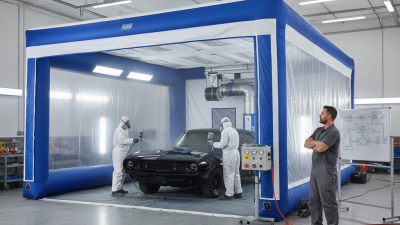
Choosing a small spray booth in 2026 requires more than comparing prices and exterior dimensions. A suitable booth should control overspray, support clean work, and fit safely within your available space. The right choice depends on your materials, project size, working frequency, and ventilation conditions. Small does not mean simple.

A practical evaluation starts with airflow. Check the booth’s rated airflow, filter design, noise level, lighting, and access door size. A clear viewing window can reveal uneven coverage before the finish dries. Replaceable filters matter too, especially when paint particles quickly cover the intake surface. Measure your workspace carefully, including duct routes, electrical access, and room clearance. A booth that fits on paper may feel cramped beside a workbench.

Safety should guide every decision. Review the manufacturer’s installation instructions and confirm that the model suits your approved coating materials. Ask qualified professionals about local ventilation, fire prevention, electrical, and workplace requirements. Reliable suppliers should provide technical specifications, maintenance guidance, and realistic performance information. Be cautious of vague claims such as “completely safe” or “maintenance-free.” Those promises deserve questions. My own experience suggests that convenience can hide ongoing costs, particularly filter replacement and cleaning time. I may still overlook a factor, because every workshop behaves differently. Use this guide to compare booth construction, airflow performance, usability, maintenance, and long-term value before making a purchase. A good small spray booth should make controlled finishing easier, not create another problem beside your work.
How to Choose a Small Spray Booth in 2026?

Define Your Small Spray Booth Needs and Intended Applications

Before choosing a small spray booth, define what you will spray, how often, and on what surface.

A hobby booth for model parts needs different airflow than one handling furniture panels or automotive components. Measure the largest workpiece, including your hand movement and spray gun clearance. A cramped booth creates uneven coating and overspray.

Airflow must match the application. OSHA guidance identifies 100 feet per minute as a reference velocity for many open-face spray booths, but actual design depends on booth geometry and coating hazards. Check the manufacturer’s airflow curve, not only the fan’s advertised volume.

The 2024 Global Spray Booth Market report by Grand View Research projects continued market growth, reflecting wider demand for controlled finishing environments. Growth does not guarantee a suitable booth.

Consider coating chemistry, drying time, noise, filter replacement, and electrical requirements. Water-based coatings may reduce solvent exposure, but they still produce airborne particles.

Solvent-based work demands carefully specified ventilation and approved equipment. NFPA 33 emphasizes controlling ignition sources and maintaining proper separation around spray operations. That detail is easy to overlook.

A simple test helps: place a lightweight strip of paper near the opening and observe whether airflow remains steady during spraying. It is not a certified measurement, and I would not rely on it alone.

Record your daily workload, peak object size, and cleaning routine before selecting booth dimensions.

Compare Booth Types, Sizes, Materials, and Ventilation Designs

How to Choose a Small Spray Booth in 2026?

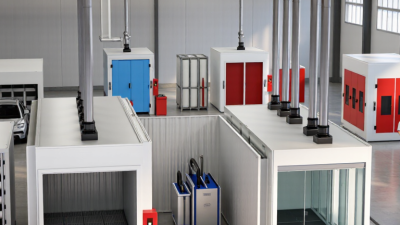
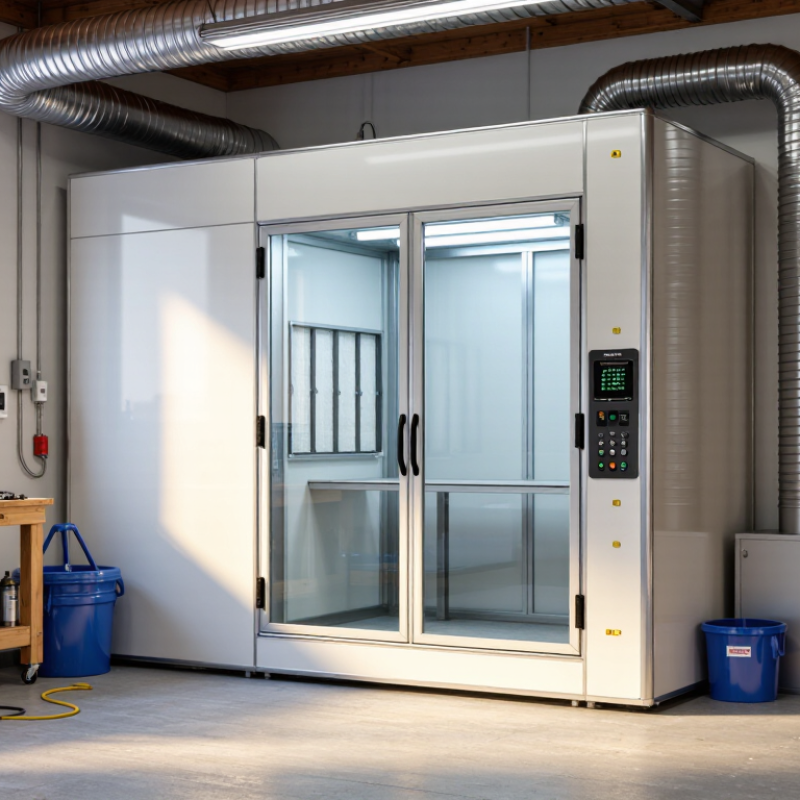
Choosing a small spray booth in 2026 starts with the workpiece, not the catalog. A bench booth suits model parts, trim, and small panels. A walk-in booth handles larger pieces but needs more floor clearance and stronger airflow. Measure the widest item, then add room for your hands, lighting, and a safe spray distance. A tight booth wastes money. It also makes consistent coating difficult. One planning mistake is ignoring door clearance and filter access.

Booth materials affect durability and cleaning. Galvanized steel offers practical strength for regular workshop use. Stainless steel resists corrosion but usually costs more. Composite panels can reduce weight, yet damaged surfaces may be harder to repair. Ventilation needs careful comparison. Crossdraft designs move air from the front toward the rear filters. Downdraft systems pull overspray downward and often provide cleaner results, but they require suitable floor space. Use compatible filters, verify airflow with a qualified technician, and follow local electrical and ventilation requirements. Airflow can weaken as filters load. That detail is easy to miss.

Tips: Choose the booth around your largest regular project, not a rare oversized job. Keep replacement filters available. Check noise levels before installation. Leave service access around the fan and ducting. I would also test the layout with cardboard first. It feels simple, but it can reveal awkward reach angles.

How to Choose a Small Spray Booth in 2026?

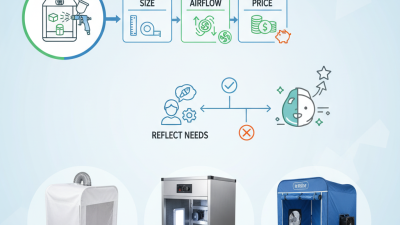
Comparison of representative small-booth types using typical internal dimensions and estimated exhaust airflow.

The airflow figures are planning estimates calculated from the booth opening area multiplied by a 100 fpm face-velocity reference. Benchtop booths are suited to small parts, while crossdraft and downdraft layouts provide more working space and more demanding exhaust requirements. Steel is commonly selected for durability, stainless steel for corrosion resistance and easier cleaning, and composite panels for lightweight modular construction. Final dimensions, filtration, grounding, fire protection, and ventilation must be verified against local regulations and the coating manufacturer's requirements.

Booth type Typical size (W × D × H) Common material Ventilation design
Benchtop 3 × 2 × 2 ft Powder-coated steel Rear exhaust
Compact crossdraft 4 × 4 × 7 ft Galvanized steel Front-to-rear airflow
Compact downdraft 4 × 4 × 7 ft Stainless steel or coated steel Top-to-floor exhaust
Wide crossdraft 6 × 4 × 7 ft Galvanized steel Front-to-rear airflow

Evaluate Filtration, Airflow, Lighting, and Overspray Control

Choosing a small spray booth in 2026 requires more than checking its footprint. Filtration, airflow, lighting, and overspray control determine daily safety and finish quality. OSHA 1910.94(c) identifies mechanical ventilation and controlled airflow as essential for spray operations. For many open-face designs, the commonly referenced benchmark is 100 feet per minute across the booth opening. Verify the actual requirement for your coating process.

Measure airflow with an anemometer, not by trusting fan noise. Filters should capture particles without creating excessive pressure drop. A pressure gauge helps reveal when a filter is loaded. I have seen operators replace filters by appearance alone. That is unreliable. A pale filter can still restrict airflow. Review EPA AP-42 emission guidance when estimating coating losses and ventilation needs.

Lighting deserves equal attention. Use sealed, cleanable fixtures outside the spray zone, following NFPA 33 requirements for spray application areas. Even illumination helps reveal dry edges, runs, and uneven coverage. Overspray control also depends on booth depth, baffle placement, and stable airflow. If paint settles on nearby walls, the system is not controlling capture effectively. Keep replacement filters accessible, but avoid placing them where wet coating can bypass the intake. Small booths often compromise visibility first. That compromise is easy to regret.

How to Choose a Small Spray Booth in 2026? — Evaluate Filtration, Airflow, Lighting, and Overspray Control
Evaluation Dimension Compact Benchtop Booth Small Floor-Standing Booth Enclosed Professional Booth What to Check Before Buying
Typical Workpiece Size Small models, parts, miniatures, and components up to approximately 300 mm wide. Small furniture parts, panels, helmets, and assemblies up to approximately 600–900 mm wide. Larger parts or repeated production work requiring operator access inside or near the booth. Measure the largest workpiece, spray-gun movement area, turntable, and required clearance. Leave space for air filters and service access.
Recommended Face Velocity Target: about 0.5 m/s
Approximately 100 ft/min across the open face.
Target: about 0.5 m/s
Approximately 100 ft/min across the working opening.
Use the design value required by local code
Many spray-booth designs use approximately 100 ft/min as a planning reference for open-face capture.
Confirm the velocity at the face with a calibrated anemometer after filters are installed. Local fire, occupational-safety, and environmental rules take priority.
Estimated Airflow Approximately 250–350 CFM for a 24 × 18 in opening at about 100 ft/min. Approximately 500–650 CFM for a 36 × 24 in opening at about 100 ft/min. Approximately 1,000–1,300 CFM for a 48 × 36 in opening at about 100 ft/min. Basic calculation: opening area in square feet × target face velocity in ft/min = minimum theoretical airflow. Add allowance for filter loading, duct resistance, bends, and exhaust losses.
Primary Filtration Replaceable synthetic overspray pad or pleated particulate filter. Multi-stage filtration is preferable: pre-filter followed by a dedicated overspray filter. Multi-stage particulate filtration with a serviceable final stage where required by the coating process and regulations. Choose filters rated for paint or coating overspray, not ordinary household dust. Check filter size, availability, pressure-drop data, and replacement cost.
Filter Loading and Maintenance Inspect frequently; compact filters can load quickly during heavy spraying. Use a differential-pressure gauge or a clearly defined replacement schedule. Continuous pressure monitoring and documented filter-change intervals are recommended. Replace filters when airflow falls noticeably, pressure drop reaches the manufacturer’s limit, or visible loading affects capture. Do not wash disposable paint filters unless specifically approved.
Overspray Capture Moderate
Suitable for light-duty, low-volume spraying with the workpiece kept close to the filter plane.
Good
Better capture zone and more stable airflow for regular small-part work.
Very good
Enclosure, baffles, and controlled exhaust reduce escape of airborne coating particles.
Look for an unobstructed airflow path, rear or side exhaust, correctly fitted filters, smooth internal surfaces, and enough depth to keep the spray pattern inside the capture zone.
Lighting Level Approximately 500–750 lux at the work surface. Approximately 750–1,000 lux for color matching and surface inspection. Approximately 750–1,000 lux, with even illumination and minimal glare or shadowing. Use sealed, cleanable LED fixtures positioned outside the contaminated airstream when possible. A high color-rendering rating is useful for paint inspection.
Lighting Safety Suitable only for coatings and solvents allowed by the booth’s electrical classification. Use fixtures and wiring appropriate for the hazardous-area requirements of the process. Verify that lighting, switches, motors, and controls meet applicable electrical and fire-safety requirements. Do not assume that an LED lamp is automatically safe around flammable vapors. Check the coating Safety Data Sheet and local electrical requirements.
Exhaust and Ducting Short, smooth, dedicated exhaust route is preferred; avoid recirculating contaminated air into occupied rooms. Use rigid, electrically bonded ducting where required and minimize sharp bends. Dedicated exhaust system with accessible inspection points and discharge location compliant with local regulations. Confirm fan performance at the required static pressure, not only its free-air CFM rating. Keep exhaust discharge away from air intakes, doors, and occupied areas.
Noise Expectation Typically around 60–70 dBA, depending on fan speed and filter resistance. Typically around 65–75 dBA because of higher airflow requirements. Typically around 70–80 dBA unless acoustic controls are included. Compare sound levels at the operator position and consider hearing protection when exposure and local regulations require it.
Coating Compatibility Best for water-based, low-volume, or low-hazard coatings when permitted by the equipment instructions. Suitable for a broader range of small-part coatings when ventilation and electrical requirements are satisfied. Appropriate for higher-volume or more demanding processes only when the complete system is approved for the specific coating. Review the Safety Data Sheet for flammability, vapor hazards, respiratory protection, ventilation, and waste-disposal requirements. Never spray unknown or incompatible chemicals.
Energy Use Lowest power demand; commonly suitable for standard single-phase electrical service. Moderate power demand; verify the fan motor, lighting, and circuit capacity together. Highest power demand; may require dedicated circuits, larger motors, or additional controls. Check running current, startup current, voltage, plug type, duty cycle, and whether the fan is rated for the intended atmosphere.
Best Choice For Occasional hobby work, small components, airbrushing, and limited spray volume. Frequent small-part production, craft work, repair, and better control of overspray. Consistent professional use, larger workpieces, higher throughput, and stricter process control. Select the smallest booth that maintains the required face velocity and safely contains the entire spray pattern without restricting operator movement.

Planning note: Airflow values are indicative engineering estimates based on the stated opening sizes and an approximate 100 ft/min face-velocity reference. Final selection, installation, electrical classification, exhaust discharge, fire protection, and coating limits must comply with applicable local codes, workplace rules, and the coating Safety Data Sheet.

Check Safety Standards, Workspace Requirements, and Installation Options

Choosing a small spray booth in 2026 starts with safety, not appearance. Check current local requirements for ventilation, electrical systems, fire protection, and workplace exposure limits. A booth should capture overspray efficiently and discharge air through a properly designed exhaust route. Ask for airflow data, filter specifications, grounding details, and emergency shutoff access. Do not rely on vague claims such as “industrial grade.” Request documents.

Measure the workspace before comparing booth dimensions. Leave enough room for the operator, workpiece, doors, lighting, and routine cleaning. A narrow booth may fit on paper but feel unsafe when handling a large panel. Keep combustible materials away from the exhaust and intake areas. Provide suitable lighting without creating ignition risks. Keep it clear. Also check whether replacement filters and duct components can enter the room easily.

Installation choices usually include freestanding, wall-mounted, or custom-built arrangements. Freestanding units may simplify relocation, while wall-mounted designs can save floor space. However, the exhaust path still needs adequate length, support, and weather protection. A qualified installer should inspect airflow, electrical connections, noise, and structural loading before use. I have seen planning focus too heavily on booth size and overlook maintenance access. That mistake is easy to repeat. Measure twice. Leave room for future repairs, even if the workshop feels crowded today.

Estimate Total Costs, Maintenance Needs, and Long-Term Usability

Choosing a small spray booth in 2026 starts with the complete bill, not the sticker price. Measure the available floor area, door width, and electrical capacity before comparing models. Add delivery, installation, ducting, lighting, filters, and protective equipment to your estimate. Installation may require professional electrical or ventilation work. Local requirements can change the final cost. Do not guess.

Filter replacement is often the quietest recurring expense. Fine overspray can block airflow and increase drying problems. Keep spare filters sealed and stored nearby. Inspect the filter surface every few work sessions. A washable pre-filter may reduce waste, but it still needs regular cleaning. Cleaning time also has a cost. I once underestimated it. That mistake delayed small projects.

Long-term usability depends on access and repair options. Check whether filters, fans, lamps, seals, and switches remain available after purchase. A compact booth with a narrow service panel can become frustrating quickly. Consider noise, heat, storage space, and daily setup time. Simple controls are easier to maintain than complicated systems. Record filter changes and unusual airflow sounds. That habit supports safer decisions. Some estimates will be imperfect, so leave a modest reserve for repairs and replacement parts.

Amet mattis vulputate enim nulla aliquet. Id porta nibh venenatis cras sed felis dictumst vestibulum rhoncus est.
This error message is only visible to WordPress admins

Error: No feed found.

Please go to the Instagram Feed settings page to create a feed.

Quick links