

How to Choose Powder Coating Equipment for Sale?
Choosing powder coating equipment for sale is not just a price comparison. The right setup must match your parts, coating volume, workspace, and finishing goals. A small repair shop may need a compact spray booth and curing oven, while a production line needs reliable throughput and repeatable temperature control. Think about the largest part you coat, not only your average job. A wide oven that sits half empty can waste energy; a cramped one can limit future orders. Details matter. Ask vendors for operating ranges, installation requirements, service options, and clear specifications. Product photos can help, but they do not show airflow, controls, or daily maintenance needs.
Before comparing quotes, map your actual process from surface preparation through curing. Note part dimensions, material types, batch sizes, available power, ventilation, and operator experience. Then compare booth design, gun controls, recovery systems, oven uniformity, and safety features against those needs. A lower purchase price may hide costs for shipping, setup, filters, or replacement parts. Request a demonstration or reference installation when possible, and verify claims with technical documents rather than relying on sales language alone. There is no universal best system. Some buyers overestimate planned growth; others underestimate how quickly bottlenecks appear. Be candid about uncertainty. This guide explains practical selection criteria, common trade-offs, and questions worth asking before you invest, so your equipment supports consistent finishes without buying capacity you cannot use.
Define Your Production Needs and Coating Requirements
How to Choose Powder Coating Equipment for Sale?
Define Your Production Needs and Coating Requirements
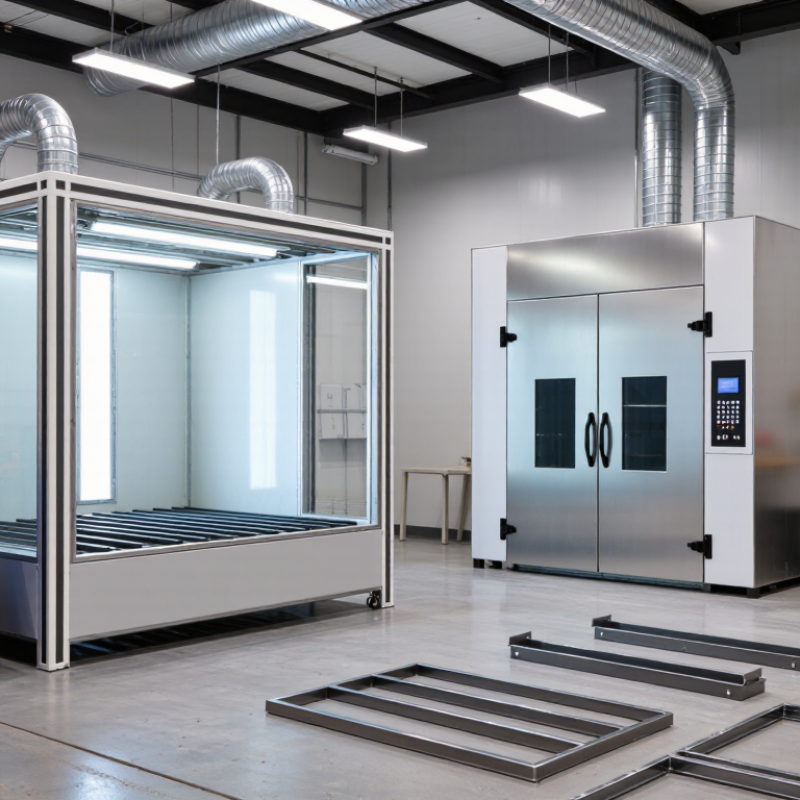
Before comparing equipment for sale, map out your actual production. Estimate the number of parts per shift, their dimensions, and how often product types change. A compact line may suit small batches, while higher volumes can require faster conveyance and more curing capacity. Small batches differ. Note the largest part you plan to coat, too; a booth that looks spacious in a brochure may feel tight once racks are loaded.
Define the finish you need. Record the part materials, target film thickness, powder type, and acceptable color variation. These details help determine whether a manual or automated gun setup is appropriate, and what booth airflow and oven controls you’ll need. Ask suppliers for operating ranges and test results using parts similar to yours, not just ideal sample panels.
Tips: Measure parts and loaded racks before requesting quotes. Check available floor space, electrical supply, and ventilation requirements with qualified staff. Leave room for maintenance access. Estimates can be imperfect, so document your assumptions and confirm them during a site assessment. A lower purchase price may not reflect the cost of energy, filters, or routine servicing over time.
| How to Choose Powder Coating Equipment for Sale? - Define Your Production Needs and Coating Requirements | ||||||
|---|---|---|---|---|---|---|
| Production Profile | Typical Output | Workpiece Size and Mix | Suitable Equipment Setup | Booth and Powder Recovery | Curing Oven Considerations | Key Selection Checks |
| Prototypes, repairs, and occasional jobs | Several parts per day to small batches | Small or medium parts; frequent changes in shape and color | Manual spray gun, compact booth, and batch oven | A simple cartridge-filter booth is often suitable. Confirm booth dimensions and airflow meet applicable safety requirements. | Batch oven sized for the largest load, with a reliable temperature-control system and adequate airflow. | Check available floor space, electrical supply, ventilation, and whether parts can be loaded and unloaded safely. |
| Small production batches | Roughly 20–100 parts per shift, depending on part size and handling time | Small to medium parts with a moderate range of colors | Manual or assisted spray booth, batch oven, and a defined hanging and cooling area | Choose booth size based on the largest parts and operator working clearance. Consider powder recovery if reclaiming compatible powder is appropriate. | Calculate oven capacity from load size, loading pattern, and required time at the part’s curing temperature. | Evaluate changeover time, grounding, part presentation, and how consistently operators can reach all coated surfaces. |
| Steady production of similar parts | Several hundred parts per shift may be achievable when part size, staffing, and process time allow | Repeatable parts that fit a consistent hanging arrangement | Manual or automatic guns with a conveyorized booth and continuous or indexed oven | Plan booth width, conveyor openings, airflow, and recovery equipment around the part envelope and powder-change frequency. | Set conveyor speed and heated length to provide the required cure time after the parts reach the specified metal temperature. | Confirm conveyor load capacity, line speed range, oven temperature uniformity, and room for maintenance access. |
| High-volume, repeatable production | Continuous output; actual rate depends on part spacing, line speed, and curing time | High quantities of similar parts with limited variation | Automated spray system, conveyorized booth, powder recovery, and continuous oven | Match gun layout and booth dimensions to part geometry. Verify recovery design, color-change needs, and safe powder-handling provisions. | Size the oven around the required dwell time at part metal temperature, production rate, and thermal load. | Assess automation needs, recipe control, line balancing, spare capacity, and procedures for quality monitoring. |
| Large, heavy, or irregular components | Low to moderate output, often limited by handling and oven capacity | Large frames, fabricated assemblies, or parts with deep recesses | Large manual booth or purpose-designed booth, heavy-duty handling equipment, and a walk-in or tunnel oven | Check the largest part’s dimensions plus clearance for operators, gun movement, and safe material handling. | Verify usable oven dimensions, floor loading, heat distribution, and the time needed for the entire part to reach curing temperature. | Confirm lifting and conveyor capacity, access for maintenance, and whether the part can be coated and cured without masking critical areas. |
| Frequent color changes or varied job-shop work | Variable; output depends significantly on cleaning and changeover time | Mixed part geometries and multiple colors | Manual application or a quick-change booth arrangement with a batch oven | Prioritize accessible booth surfaces and a practical cleaning process. Dedicated equipment or recovery settings may be preferable for demanding color changes. | A batch oven can accommodate changing workloads, provided each load meets the powder supplier’s curing specification. | Compare color-change time, powder waste, cleaning access, and the cost of keeping separate equipment for common colors. |
| Any production profile: pretreatment and quality needs | Based on the required finish, substrate, and service environment | Steel, aluminum, or other compatible substrates; surface condition affects results | Add suitable cleaning and pretreatment stages when required by the coating specification | Keep pretreatment, drying, booth operation, and powder storage compatible with the selected process and site conditions. | Follow the powder manufacturer’s stated cure schedule. Cure time is generally based on the part reaching the specified metal temperature, not just oven air temperature. | Define corrosion resistance, appearance, film thickness, inspection method, and applicable environmental and workplace requirements before purchasing. |
| Planning note: Output figures are indicative rather than guaranteed. Actual capacity depends on part geometry, coating coverage, operator or automation level, line balance, changeovers, and curing requirements. Final equipment sizing should be confirmed using representative parts and the selected powder’s technical data. | ||||||
Related Posts
-
Top 10 Powder Coating Equipment Suppliers Worldwide?
-
China Best Powder Coating Equipment for Sale?
-

Understanding the Benefits of Powder Coating Equipment for Your Business Growth
-

Top Powder Coating Equipment Trends to Watch in 2025
-
Why Choose a Powder Coating Equipment Package for Your Business?
-
How to Choose the Best Powder Coating Equipment for Your Needs?
